E-Paper



80% dip in infection risk for health staff on HCQ: Study
The results of the study are based on a case control study for which participants were randomly drawn from the countrywide Covid-19 testing data portal maintained by ICMR.

 Prefer HTon Google


As many as 80% of the health care workers (HCWs) on six or more prophylactic doses of the anti-malarial drug hydroxychloroquine (HCQ) were not infected by Sars-CoV-2, the virus that causes the coronavirus disease (Covid-19), according to a new pre-print study by the Indian Council of Medical Research (ICMR) -- a finding that could establishing the prophylactic properties of the drug against Covid-19, even as several international studies have dismissed its utility as a therapeutic.
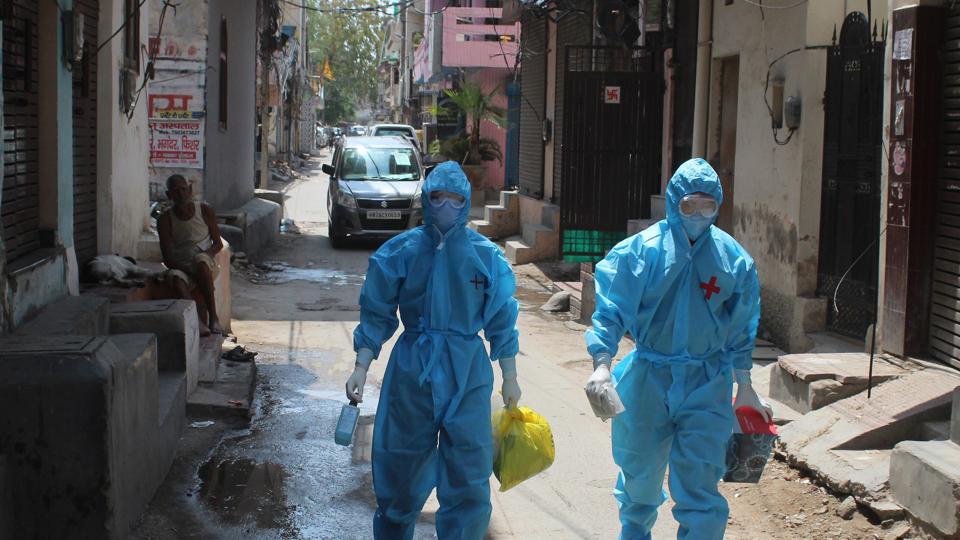
The study results were one of the driving factors behind India last week expanding the use of HCQ as a prophylactic drug beyond health care workers in Covid-19 hospitals and close contacts of infected people to frontline workers such as surveillance staff deployed in containment zones, and paramilitary or police personnel involved in Covid-19 related activities.
Also read: From petrol price, new trains and flights: What will change in lockdown 5.0
The results are based on a case control study for which participants were randomly drawn from the countrywide Covid-19 testing data portal maintained by ICMR. The test results and contact details of health care workers (HCWs), diagnosed as positive (cases) or negative (controls) for Sars-CoV-2 using the reverse transcription-polymerase chain reaction (RT-PCR) test, were available from this database.
“The main conclusion that can be drawn after analyzing the data is that HCQ has beneficial effects in infection risk reduction from fourth dose onwards. The first loading dose of 800mg and then every week a dose of 400 mg for 4, 6 or more weeks as per your physician’s advice will help cut the risk of infection by 80% in healthcare workers who are not already sick,” says Dr Samiran Panda, director, ICMR-National AIDS Research Institute, the study co-author.
Data collection for this investigation was done during May 8-23. HCWs tested between the first week of April 2020 and the end of first week of May 2020 formed the sample pool, from which cases and controls were drawn. About 378 and 373 individuals could be contacted in the case and control groups, respectively.
Also read: Covid-19: What you need to know today
“… Ability of this compound to inhibit the infection by SARS-CoV-2, as well as viral replication in cell cultures in a time- and dose-dependent manner made it a primary choice… These laboratory findings encouraged researchers to consider HCQ, originally used for malaria, as a repurposed agent for prophylaxis against SARS-CoV-219,” says the study.
The National Task Force for Covid-19 in India took cognizance of this evidence and empirically recommended the use of HCQ as prophylaxis against Sars-CoV-2 infection among a select group of asymptomatic people.
“Until results of clinical trials for HCQ prophylaxis become available, this study provides actionable information for policymakers to protect HCWs at the forefront of COVID-19 response. Also, it is to be kept in mind that merely taking HCQ is not enough, you cannot go easy on wearing personal protection equipment and other infection control measures,” says Dr Panda.