Last month, the Manipur government’s education department directed all high schools and higher secondary schools to set up anti-discrimination cells to ensure greater enrolment and retention of transgender students. The deadline it put forward was April 15. The secretariat may well have been aware of the significance of that date: nine years ago, the Supreme Court delivered the National Legal Services Authority (NALSA) versus Union of India judgement, which legally recognised the gender identity of transgender persons, granting the community
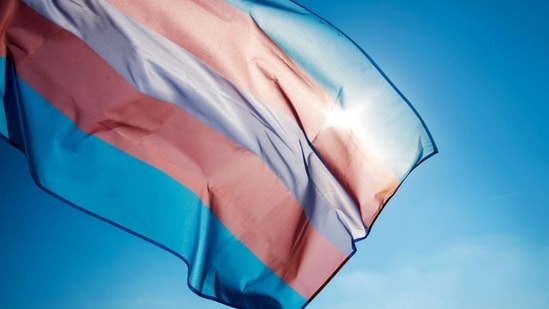
Last month, the Manipur government’s education department directed all high schools and higher secondary schools to set up anti-discrimination cells to ensure greater enrolment and retention of transgender students. The deadline it put forward was April 15. The secretariat may well have been aware of the significance of that date: nine years ago, the Supreme Court delivered the National Legal Services Authority (NALSA) versus Union of India judgement, which legally recognised the gender identity of transgender persons, granting the community a raft of rights and entitlements and paving the way for the Parliament to enact the Transgender Persons (Protection of Rights) Act, 2019.
While the Act itself has been criticised for not ensuring reservation in education and employment, and has been challenged in court as unconstitutional on several counts, activists around the country and particularly in the eastern states hold up the NALSA verdict to urge the Central and state governments to implement its directives with haste.
For instance, in 2015, the Ministry of Social Justice & Empowerment (MSJE) directed the state governments to implement five schemes for transgender people in relation to secondary and higher education, skills building, old age pension, and financial support for parents of transgender children. But it was only in 2021-22 that these directives saw traction. The SMILE scheme aims at rehabilitating and providing welfare to trans communities, but it too has had a rocky start. For instance, while the Centre opened shelter homes, or Garima Grehas, several have not received funds to run them in the past year. What’s more, all states have the mandate to implement welfare projects, which means that the status of trans persons’ welfare schemes — or the situation they find themselves in — isn’t equal at all across the country.
As the Manipur education department’s order shows, many of the important developments around transgender rights have taken place in the eastern and north-eastern states, contrary to the perception that these states often play catch-up with the rest of the country.
First, an overview
While community mobilisation in the form of support groups and collectives is picking up in Arunachal Pradesh, Sikkim and Tripura, transgender communities in Mizoram and Nagaland still have to contend with strong religious stigma. Manipur, Odisha, West Bengal and to a lesser degree Assam and Meghalaya have had long histories of community action which have increasingly led to concrete policies and programmes. South Asia’s very first rainbow pride walk took place in Kolkata in July 1999. Since then, pride walks have reached almost all the states, with some states having walks in multiple cities. Transgender movements in the region are making their presence felt in the cultural sphere. In Manipur, Nupi Maanbi (transgender women) activists and researchers are delving into archival records to bring forth the existence of multiple genders in Manipuri society since antiquity. Last year, sessions on transgender and queer writings made a debut at the Arunachal Literature Festival. Community action in the region is spearheaded by some of the oldest queer support groups of India like Amitie’ Trust, Swikriti, and Sappho for Equality in West Bengal as well as younger ones like Xomonnoy in Assam and AP Queerstation in Arunachal Pradesh.
Access to education
According to the 2011 census, the literacy rate among the trans communities in most states in the region, barring Mizoram, was far below the national average of 74% (example 54% both in Assam and Odisha). With this backdrop, non governmental organisations working in the field have employed the Right of Children to Free and Compulsory Education Act, 2009, the NALSA verdict, and a subsequent University Grants Commission directive on transgender inclusion to advocate for prevention of bullying against transgender students, flexible uniform and hairstyle codes, ensuring they do not drop out of school or college, and overhauling the curricula to reflect transgender and queer issues.
In Manipur, Meghalaya and Nagaland, NGOs like All Manipur Nupi Maanbi Association (AMaNA), Empowering Trans Ability, Solidarity and Action Against The HIV Infection in India (SAATHII) and Shamakami have been conducting sessions on gender and sexuality in schools and colleges since 2015.
Similarly, in Odisha, transgender community-based groups and SAATHII have sensitised more than 2,000 CBSE teachers and headmasters on gender and sexuality diversity. These NGOs have managed to engage the Zonal Education Officers and District Institutes of Education and Training for these sessions, gradually setting the ground for outcomes like the Department of Education order in Manipur.
In Assam, Meghalaya and West Bengal, transgender issues have found inclusion in higher education in Gauhati University, Tezpur University, Martin Luther Christian University, Jadavpur University and St. Xavier’s College (Autonomous). In 2016, the West Bengal University of Juridical Sciences went a step ahead and consulted community groups to draft an organisational transgender policy. Sadly, this imaginative endeavour was never implemented. If it had been, it would have set an important precedent for universities to work towards becoming trans inclusive spaces.
Livelihoods and social welfare
Odisha seems to be setting policy and programmatic precedents not just for the region but the rest of India as well. Unlike Manipur and West Bengal, the state does not have a transgender welfare board. But its draft Transgender Policy (2017) and Equal Opportunity Policy for the workplace (2021) framed in consultation with community groups seem to be more effective. The state government implements Sweekruti, an integrated education, livelihood, social security and public health programme for transgender communities in collaboration with a dozen NGOs.
SAATHII also implements a similar programme in the state – Susthiti – though its remit extends to all queer communities. Susthiti facilitates education, skilling, wage employment, and self-employment opportunities in coordination with Sweekruti. Since 2020, these programmes have together facilitated the formation of 37 transgender self-help groups (SHGs) with 211 members; 10 of these SHGs have received seed money grants from Sweekruti to run small businesses; and five of the SHGs have been awarded contracts by urban local bodies for projects like dry waste management, managing sewerage treatment plans, and running parking lots.
Samikshya Behera, a transgender woman, works as City Mission Manager with the State Urban Development Agency, Odisha. Her responsibility is to ensure that marginalised communities in and around Bhubaneswar have easy access to the state government’s welfare schemes around food, shelter, housing, credit access, and SHGs. Clarifying that her work is not limited to transgender people, she says, “Earlier, we were mocked at and harassed in public; we weren’t allowed to enter malls. But today there are more educational and job opportunities for transgender persons. There’s definitely more respect for us.”
In contrast, in Manipur and West Bengal, the onus to facilitate livelihood opportunities seems to be largely on NGOs like Matai Society, Sappho For Equality and Varta Trust. The West Bengal Police is planning to recruit transgender persons as sub-inspectors, but it is early days yet. Among the corporate bodies, Tata Steel has framed transgender-inclusive workplace policies and tied up with community groups like Bengal Transmen and TISAR for recruitment drives in West Bengal, Odisha and Jharkhand.
Among the other states, Meghalaya formed a State Transgender Social Justice Board and two district level boards as recently as in 2021.
Legal aid
NALSA is one of the first statutory bodies in India that opened up to transgender inclusion. In line with this, the State Legal Services Authorities in Manipur, Odisha and West Bengal were proactive about providing legal aid to transgender persons even before the NALSA verdict. This is today reflected in legal aid clinics being run by SAATHII in Manipur and Odisha in collaboration with the respective SLSAs. The clinic in Manipur has handled 59 cases since October 2021. In West Bengal, at least two transgender women have served as Lok Adalat judges since 2017. The supportive stance of the SLSA has also led to extensive police sensitization in Manipur, though not as much in the other states. According to NGOs like SAATHII and Varta Trust, in recent years, Odisha and West Bengal have seen several instances of adult queer couples seeking judicial intervention and NGO support to stop their natal families and police from trying to separate them.
Another challenge that the NGOs grapple with is in assisting community members with limited digital literacy acquire transgender identity certificates through the MSJE portal set up in 2020. This certificate acts as the gateway for transgender persons to acquire identity documents that reflect their desired gender identity, and apply for jobs or access social welfare schemes as transgender persons. Wide variations can be seen among the states. While more than 2,000 individuals in Odisha have received their certificates, less than 200 have done so in West Bengal. Transgender activists point out that the applications are submitted through the national portal, but the certificates are issued by District Magistrates in each state. They feel that the central-state political tensions have resulted in a poor rate of issuance in West Bengal. Ultimately, a writ petition filed by a transgender professor in December last year forced the state government to restart a process stalled for over a year.
Public health
For transgender people in the region, even till a decade ago, HIV was the only public health issue that received some attention. Gradually, mental health and gender affirmative care (GAC) have come to the fore. The Manipur chapter of the Indian Psychiatric Society is active in sensitising doctors on transgender issues. Meghalaya’s new mental health policy is transgender inclusive and calls out conversion therapy. In West Bengal, Sappho for Equality published a good practices guide on GAC in 2017, now an important reference nationally.
However, as Imphal-based Sougaijam Thoujal Khuman, a Nupa Maanba (transgender man) associate of AMaNA points out, “There is a shortage of trans affirmative psychologists and endocrinologists in Manipur. Surgeries for mastectomy and breast augmentation do take place in the Regional Institute of Medical Sciences and private hospitals, but quality and safety concerns remain.”
Government hospitals in Assam, Odisha and West Bengal are yet to offer inexpensive and reliable services. Delhi, Bengaluru, Mumbai and even Thailand are popular destinations for transgender persons seeking GAC services.
Possibly, the area that needs much greater attention from the government and activists in the region is community representation in both voter rolls and public offices. In the 2019 Lok Sabha polls, only Manipur and pockets of West Bengal saw community engagement with the Election Commission to increase the number of transgender voters. Similarly, more transgender faces visible in public offices at different levels may help to change social perceptions, reduce barriers, and boost community confidence.
Pawan Dhall has been engaged with queer community mobilisation since the 1990s. He worked with SAATHII from 2002-14 on universal access to health and social justice, and now leads Varta Trust as Founding Trustee. He is the author of Out of Line and Offline: Queer Mobilizations in ‘90s Eastern India published by Seagull Books, Kolkata in 2020
One Subscription.
Get 360° coverage—from daily headlines
to 100 year archives.
Archives
HT App & Website