Nights and early mornings are likely to be chilly with below normal minimum temperatures over most parts of north, northwest and central and some parts of east India, while day temperatures are likely to be above normal over the same regions, according to India Meteorological Department (IMD)’s seasonal outlook for December to February.
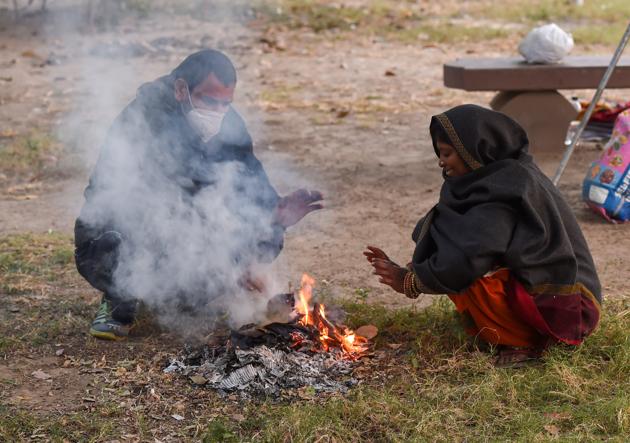
This also indicates that these regions are likely to see more clear sky days, leading to radiational cooling at night during the coming winter months. The diurnal temperature variation (difference between day and night temperatures) is likely to be high in most subdivisions of north, northwest, central and a few subdivisions of east India.
But most subdivisions of northeast India, a few subdivisions of west coast and south peninsular India are likely to experience above normal minimum temperatures during the next three months. Most of the subdivisions of south peninsular India, however, are likely to experience cold days or below normal maximum temperatures, the outlook based on IMD’s Monsoon Mission Coupled Forecasting System (MMCFS) Model forecast.
For example, as per the model there is a 60-70% probability that Delhi, Haryana, Chandigarh subdivisions will record below normal minimum temperatures (about 0.42 degree C below normal on average) during the season. There is 100% probability of west Rajasthan recording below normal temperatures to the tune of 1.17 degrees C below normal. Similarly, there is a 100% probability that Punjab, Haryana, Delhi, Uttar Pradesh, Bihar, Jharkhand, West Bengal, Odisha etc will record above normal day temperatures. Day temperatures in Punjab, Haryana, Chandigarh and Delhi could be 1 to 0.99 degree C above normal.
There is a 40 to 60% probability that night or minimum temperatures will be above normal in Kerala, Karnataka, Tamil Nadu, Rayalseema etc., and a 60% to 100% probability that maximum temperatures will be below normal in these regions. “The model is showing that there is a probability of high diurnal variation in temperatures in northwest; north and some parts of India. This could mean there will more clear sky days in the north. Below normal minimum temperatures are also expected over north India due to the effect of La Nina. In Peninsular India, we are seeing the opposite, which indicates there may be clouding and rain in the region; it will lead to warmer nights and early mornings,” explained DS Pai, senior scientist at IMD Pune.
{{/usCountry}}There is a 40 to 60% probability that night or minimum temperatures will be above normal in Kerala, Karnataka, Tamil Nadu, Rayalseema etc., and a 60% to 100% probability that maximum temperatures will be below normal in these regions. “The model is showing that there is a probability of high diurnal variation in temperatures in northwest; north and some parts of India. This could mean there will more clear sky days in the north. Below normal minimum temperatures are also expected over north India due to the effect of La Nina. In Peninsular India, we are seeing the opposite, which indicates there may be clouding and rain in the region; it will lead to warmer nights and early mornings,” explained DS Pai, senior scientist at IMD Pune.
{{/usCountry}}“During La Nina years we expect winters to be colder than normal. La Nina is also associated with WDs (western disturbances) and their impact reaching southwards towards the plains. So, this fall in minimum temperatures can be linked to the overall La Nina impact also,” Pai had said last week.
El Niño and the Southern Oscillation (ENSO) is a periodic fluctuation in sea surface temperature and the air pressure of the overlying atmosphere across the equatorial Pacific Ocean, according to the National Oceanic and Atmospheric Administration (NOAA).
ENSO has a major influence on weather and climate patterns such as heavy rains, floods and drought. El Niño has a warming influence on global temperatures, whilst La Niña has the opposite effect. In India, for example, El Nino is associated with drought or weak monsoon while La Nina is associated with strong monsoon and above average rains and colder winters.
Currently, sea surface temperatures are below normal over central and eastern equatorial Pacific Ocean and moderate La Niña conditions are prevailing over the equatorial Pacific Ocean according to IMD’s model.
“We should remember that this is a probability forecast. It gives you an average general picture of winter months so we shouldn’t focus very much on numbers but get a sense of how overall winter is going to be like,” said K Sathi Devi, head, national weather forecasting centre.