E-Paper



AC demand to surge, heating needs to fall as Earth heats up
The research reveals that Canada, Russia, Finland, Sweden and Norway will experience the steepest declines in heating demand as temperatures rise

 Prefer HTon Google


Global warming will create a stark new divide between rich and poor nations: Countries in colder climates, typically wealthy nations, will see heating needs plummet while nations in warmer regions, typically poorer, face surging demand for air conditioning, according to a new study.
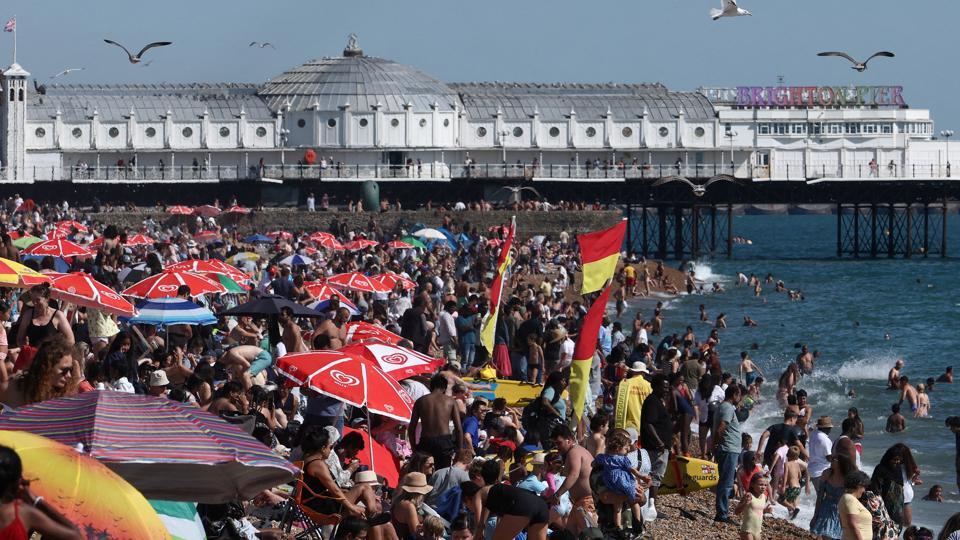
The research, published in the journal Nature Sustainability, reveals that Canada, Russia, Finland, Sweden and Norway will experience the steepest declines in heating demand as temperatures rise. Meanwhile, India, Nigeria, Indonesia, Bangladesh, Pakistan and the Philippines — home to billions of people with limited resources — will bear the brunt of soaring cooling needs.
“Our study shows most of the changes in cooling and heating demand occur before reaching the 1.5°C threshold, which will require significant adaptation measures to be implemented early on,” said Jesus Lizana, lead author and associate professor in engineering science at the University of Oxford. “For example, many homes may need air conditioning to be installed in the next five years, but temperatures will continue to rise long after that if we hit 2.0 of global warming.”
By 2050, nearly 3.8 billion people — almost half the world’s population — will live with extreme heat if global temperatures rise 2°C above pre-industrial levels, a scenario climate scientists view as increasingly likely.
In India alone, cooling degree days are projected to increase 13.4% as warming shifts from 1°C to 2°C above pre-industrial levels. Cooling degree days measure the difference between mean temperature and the base cooling temperature of 18.3°C, serving as a proxy for air conditioning needs.
The economic implications are profound: Wealthier northern nations will save on energy bills while developing countries face massive infrastructure costs for cooling systems, electricity grid expansion and the energy expenses of running air conditioners in regions where many lack reliable power.
Radhika Khosla, associate professor at the Smith School of Enterprise and the Environment and leader of the Oxford Martin Future of Cooling Programme, called the findings a “wake-up call.”
“Overshooting 1.5°C of warming will have an unprecedented impact on everything from education and health to migration and farming,” Khosla said. “Net zero sustainable development remains the only established path to reversing this trend for ever hotter days.”
The Central African Republic, Nigeria, South Sudan, Laos and Brazil are experiencing the most significant increases in dangerously hot temperatures, the study found.
Countries with colder climates will see much larger relative changes in uncomfortably hot days, more than doubling in some cases. Compared with the 2006-2016 period, when global mean temperature increase reached 1°C over pre-industrial levels, warming to 2°C would lead to a 100% increase in hot days in Austria and Canada, 150% in the UK, Sweden and Finland, 200% in Norway, and 230% in Ireland.
The warming rate is not linear. Cooling needs are changing faster this decade as the world approaches 1.5°C of global temperature rise, with increases from 1°C to 1.5°C surpassing those expected between 1.5°C and 2°C, according to the study.
The study employed the HadAM4 climate model developed by the UK’s Met Office and includes an open-source dataset with 30 global maps at approximately 60-km resolution.
In a moderate emissions scenario, the population living in extreme heat regions — defined as areas with more than 3,000 cooling degree days — is projected to increase from 23% (1.54 billion) in 2010 to 34% (2.8 billion) by 2030 and 41% (3.79 billion) by 2050.