The newly formed Congress governments in Madhya Pradesh, Rajasthan and Chhattisgarh may not have adequate fiscal space or funds left to implement other poll promises in the current financial year after announcing farm loan waivers, according to officials in the three states. The outgoing Bharatiya Janata Party (BJP) governments in the three states have spent up to 70% of the funds allocated in the last budget in the first seven months of this financial year, which will end on March 31.
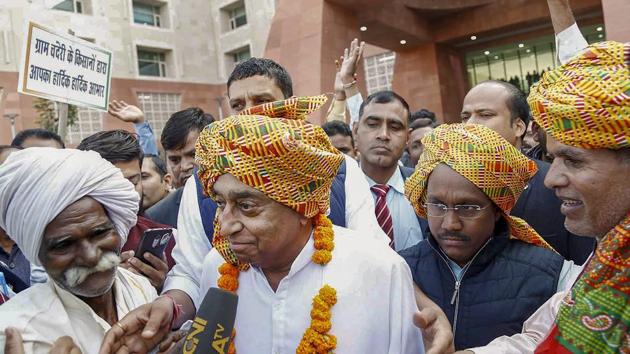
Madhya and Chhattisgarh announced the waiver on Monday last. Rajasthan followed suit two days in line with Congress chief Rahul Gandhi’s poll promise of waiving farm loans of up to Rs two lakh within 10 days of forming the governments in three states.
Madhya Pradesh and Rajasthan waived all short-term crop loans while the Chhattisgarh government will pay for loans farmers have taken from the state’s Gramin Bank. The waivers will cost between Rs 35,000 to Rs 38,000 crore in Madhya Pradesh, Rs 18,000 crore in Rajasthan and Rs 6,100 crore in Chhattisgarh.
Officials said market borrowing was among the options the governments were exploring. “We are working out the modalities,” said a Madhya Pradesh finance department official.
Officials cited the limited fiscal space and said it will be difficult to implement other major poll promises in the current financial year. Budgets in the three states will be presented in February-March next year, months before the national polls due in April-May 2019.
The other promises include unemployment allowances of Rs 10,000 and Rs 3,500 each to a member of a family in Madhya Pradesh and Rajasthan. The Congress has also pledged a stipend of an unspecified amount in Chhattisgarh.
{{/usCountry}}The other promises include unemployment allowances of Rs 10,000 and Rs 3,500 each to a member of a family in Madhya Pradesh and Rajasthan. The Congress has also pledged a stipend of an unspecified amount in Chhattisgarh.
{{/usCountry}}It has also promised power bills’ waiver for the poor and reduction in electricity tariffs by half for others. The other pledges range from free education and medicines to increasing minimum support price for farm produce in the three states.
In Chhattisgarh, the party has also promised liquor prohibition that, too, will lead to revenue losses.
Officials said the outgoing BJP governments have spent between 50% to 70% of funds allocated in the last budget.
Madhya Pradesh chief minister Kamal Nath and his Rajasthan counterpart, Ashok Gehlot, have blamed the previous BJP governments for emptying the coffers and have said that they will look for new avenues to generate revenue.
The BJP has maintained there was enough money if the new governments wanted to implement their poll promises.
In Madhya Pradesh, the farm loan waiver burden would be about one-fifth of the total expenditure of Rs 1,86,683 crore for 2018-19, of which around Rs 1,25,000 crore has been spent till October end.
Officials pointed out the previous government has availed 90% of the borrowing capacity of Rs 60,000 crore to fund sops before the polls.
Madhya Pradesh’s principal secretary (agriculture), Rajesh Rajora, said most money provided for different schemes in the budget has been spent. “We are looking at different options to fund the farm loan waiver,” he said
In Rajasthan, the farm loan waiver burden would be around one-sixth of the total budget of Rs 1,07,865 crore, of which about Rs 77,000 crore has been spent.
University of Rajasthan’s economics professor, V V Singh, said around 25% of the budget will be spent on meeting these poll promises.
He added any additional spending will result in an increase in the fiscal deficit, which is 3.01% of the Gross State Domestic Product (GSDP).
Gehlot on Tuesday insisted his government has a borrowing capacity of Rs 36,000 crore as per the present budget. T
he state has already taken over Rs 25,000 crore loan. Gehlot admitted to the fiscal constraints.
The state’s outstanding liabilities are 27.57% of its GSDP, which is above the 25% limit the Fiscal Responsibility and Budget Management Act has set.
Rajasthan finance commission’s former chairperson, Jyoti Kiran Shukla, called the implications of the waiver announcements on the state budget huge. Shukla said the state has to determine what revenue base it will generate to meet these expenditures.
In Chhattisgarh, the farm loan waiver and increasing the minimum support price of paddy and maize to Rs 2,500 per quintal would take away one-tenth of the state’s budget of Rs 83,179 crore.
A Chhattisgarh finance department officer hoped they would be able to implement the promises without breaching the fiscal deficit target.
“Some promises may find reflection in the next budget. The political leadership will take the decision.”
He added implementing prohibition in the current financial year will be impossible as it needs a new legal framework like in Gujarat and Bihar.
Economists have spoken against the farm loan waivers saying they will increase non-performing banking assets. State Bank of India’s group chief economic advisor Soumya Kanti Ghosh estimates the collective burden will range from Rs Rs 60,000 crore to Rs 70,000 if the election-bound states, Andhra Pradesh, Odisha and Haryana, in 2019 decide to waive farm loans.
(With inputs from bureaus in Jaipur, Bhopal and Raipur)