E-Paper



Agencies may refuse to hand over body of those involved in militancy: Supreme Court
“After a body has been buried, it is considered to be in the custody of the law. Therefore, disinterment is not a matter of right. The disturbance or removal of an interred body is subject to the control and direction of the court. The law does not favour disinterment, based on the public policy that the sanctity of the grave should be maintained. Once buried, a body should not be disturbed,” noted the bench.

 Prefer HTon Google


Security forces may decline to hand over the body of a person involved in militancy to maintain public order, the Supreme Court held on Monday, refusing to order the exhuming of the body of one of four people killed in Hyderpora in Jammu & Kashmir (J&K)’s Budgam district in November last year.
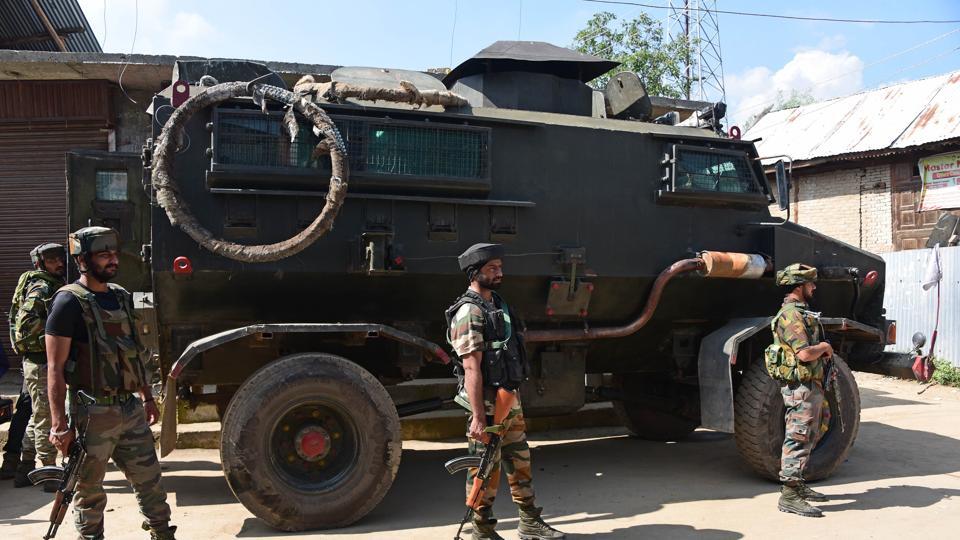
The bench of justices Surya Kant and JB Pardiwala noted that the deceased, Amir Latief Magrey, was given a decent burial and that there is nothing on record to indicate that the body was dealt with in any manner insulting or hurting the religious feelings of his family members.
“After a body has been buried, it is considered to be in the custody of the law. Therefore, disinterment is not a matter of right. The disturbance or removal of an interred body is subject to the control and direction of the court. The law does not favour disinterment, based on the public policy that the sanctity of the grave should be maintained. Once buried, a body should not be disturbed,” noted the bench.
Rejecting the petition by Magrey’s father to order exhumation of his body and hand it over to the family for burial, the bench said that the court of law should not decide the rights of the parties considering their sentiments but in accordance with law, more particularly, keeping in mind the doctrine of Rule of Law.
It pointed out that family members of the deceased also have a right to perform the last rites in accordance with the religious traditions and the authorities should usually hand over the body to the next of kin.
“It is of course true that for any compelling reasons or circumstances or issues relating to public order etc, more particularly in cases of encounter with the militants, the agency concerned may decline to part with the body. These are all very sensitive matters involving security of nation and as far as possible, the court should not interfere unless substantial and grave injustice has been done,” it underscored.
It added that the religious rights of every person and every religion are subject to the public order and its maintenance is paramount in the larger interest of the society. “Both these fundamental rights have been expressly made ‘subject to public order, morality and health’. The exercise of these fundamental rights is not absolute but must yield or give way to maintenance of public order, morality and health,” emphasised the court.
In its judgment, the top court, however, upheld the J&K high court order of letting the family offer prayers at Magrey’s grave in Kupwara and ₹5 lakh compensation due to the peculiar facts of the case.
The four were killed near Srinagar on November 15, 2021. Police said all of them were terrorists and buried their bodies in Kupwara, over 80 km away, even as the families of the four dismissed the claims. After a public outcry, the J&K administration buckled under pressure and exhumed the bodies of two of the four, Altaf Ahmad Bhat and Mudasir Gul, and handed them over to their families.
Magrey’s family moved the high court in December seeking his body for burial. While the single-judge bench of the high court directed the J&K administration to transport Magrey’s body to his native village in Jammu’s Gool Ramban, a division bench in July refused to allow the exhumation. At this, Magrey’s family moved the Supreme Court saying that exhumation was necessary for the religious last rites that the State could not usurp. The UT administration opposed the plea arguing Magrey was a terrorist and the digital evidence submitted to the high court showed all Islamic last rites were performed while burying his body.