E-Paper



AIMIM, Cong leaders approach top court challenging Waqf bill
The petitions argue that the amendments dilute protections under Articles 25 and 26 for the Muslim community while retaining them for other religious groups

 Prefer HTon Google


New Delhi: All India Majlis-e-Ittehadul Muslimeen (AIMIM) chief Asaduddin Owaisi and Congress parliamentarian Mohammad Jawed on Friday moved the Supreme Court to assail the constitutional validity of the amendments to the Waqf Act, contending that the changes amount to hostile discrimination against Muslims and infringe upon their fundamental rights.
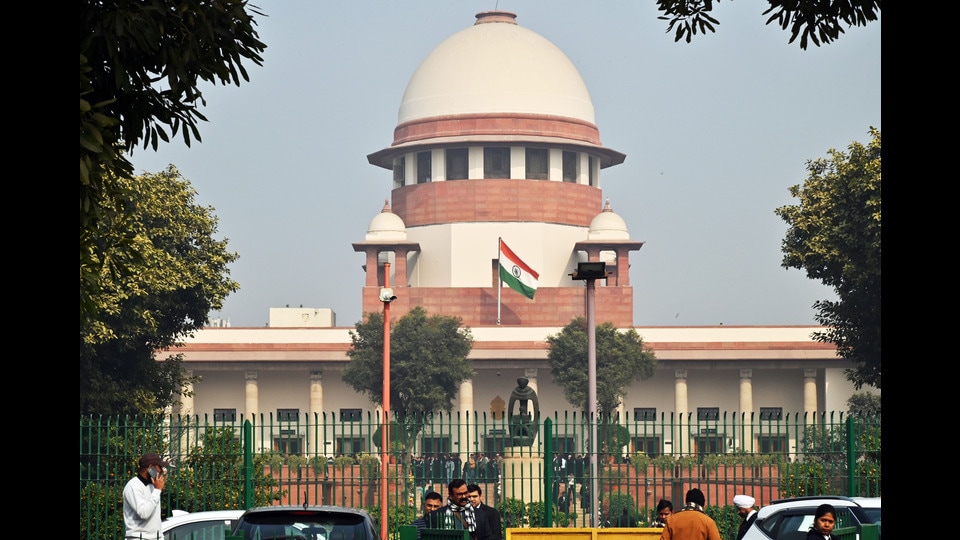
Owaisi, who represents Hyderabad in the Lok Sabha, and Jawed, the Congress whip in the Lower House and a member of the joint parliamentary committee on the bill, separately filed petitions under Article 32 of the Constitution, urging the Supreme Court to strike down the Waqf (Amendment) Bill, 2025.
The petitions argue that the amendments dilute protections under Articles 25 and 26 (right to practice, profess and propagate religion) for the Muslim community while retaining them for other religious groups, thereby violating a string of other fundamental rights pertaining to equality, dignity and minority rights.
The contentious Waqf (Amendment) Bill, which brings in sweeping changes in the regulation and management of Islamic charitable endowments, was passed in the Rajya Sabha in the early hours of Friday, after a marathon debate and a face-off between the government and the Opposition. 128 lawmakers voted in favour of the bill and 95 against it when the final tally was announced at 2.35am on Friday.
To be sure, although cleared by both Houses of Parliament, the new law is yet to receive Presidential assent and come into force. In several previous cases, the top court has declined to entertain challenges to legislative provisions that had not yet been notified as law, holding that such petitions were premature. In August 2014, the top court refused to admit petitions challenging the constitutional amendment bill aimed at creating a National Judicial Appointments Commission (NJAC), saying the bill had not yet received presidential assent. In May 2024, the Supreme Court refused to admit a plea challenging the enactment of three new criminal laws, noting that the laws were yet to come into force.
According to Owaisi’s plea, the amendments represent a significant regression in the progressive development of waqf law, reversing advances made through the 1995 act and subsequent amendments, especially the 2013 reform allowing non-Muslims to create waqfs. The petition notes that the new provisions impose arbitrary restrictions, such as requiring the waqif (the person creating the waqf) to demonstrate that they have practised Islam for at least five years, which undermines constitutional guarantees of religious freedom and equality, and discriminates against recent converts to Islam.
Jawed’s petition echoes these concerns, pointing out that Hindu and Sikh religious trusts are permitted to function with greater autonomy, while the Waqf Amendment Act disproportionately increases state interference in waqf administration. He contends that such selective treatment amounts to manifest arbitrariness and violates the fundamental right to equality under Article 14.
The petitioners have also raised concerns over the deletion of Section 104 of the Waqf Act, 1995 -- thereby barring non-Muslims from creating waqfs -- and the derecognition of waqf by user, a principle historically acknowledged under Islamic law.
Another provision under challenge is Section 3(ix)(b) of the Amendment Act, which disallows recognition of waqf property if it was not expressly dedicated in writing -- an approach that, the petitions argue, disregards centuries of oral waqf dedications and undermines the protection of religious places used continuously for worship.
They also opposed the amendment mandating the inclusion of non-Muslim members in the Central Waqf Council and State Waqf Boards, arguing this infringes the autonomy of the Muslim community in managing its religious and charitable properties, contrary to the precedent in Commissioner, Hindu Religious Endowments Vs Lakshmindra Thirtha Swamiar of Sri Shirur Mutt (1954), where the Supreme Court held that while regulation is permissible, administration must remain with the denomination.
Further, Owaisi and Jawed challenged Sections 3D and 3E of the amended law. Section 3D nullifies waqf declarations over properties classified as protected monuments under the Ancient Monuments and Archaeological Sites and Remains Act, 1958. This could affect centuries-old mosques and dargahs and stoke communal tensions, the petitioners contend. Section 3E, meanwhile, bars members of Scheduled Tribes from dedicating waqf property, which the petitions claim is unconstitutional, particularly since tribal status is not lost upon conversion to Islam.