
 E-Paper



Air panel bans coal as a fuel in NCR from 2023
The phasing-out process will begin in October this year, the CAQM said on Wednesday, adding that the ban, however, does not cover thermal power plants.

 Prefer HTon Google


New Delhi: The use of coal as fuel for industrial, domestic and other purposes will be banned across Delhi-NCR from January 1 next year, the Commission for Air Quality Management in the National Capital Region and Adjoining Areas (CAQM) said on Wednesday — a move that came after the panel sought suggestions on a permanent solution to the bad air crisis in the region.
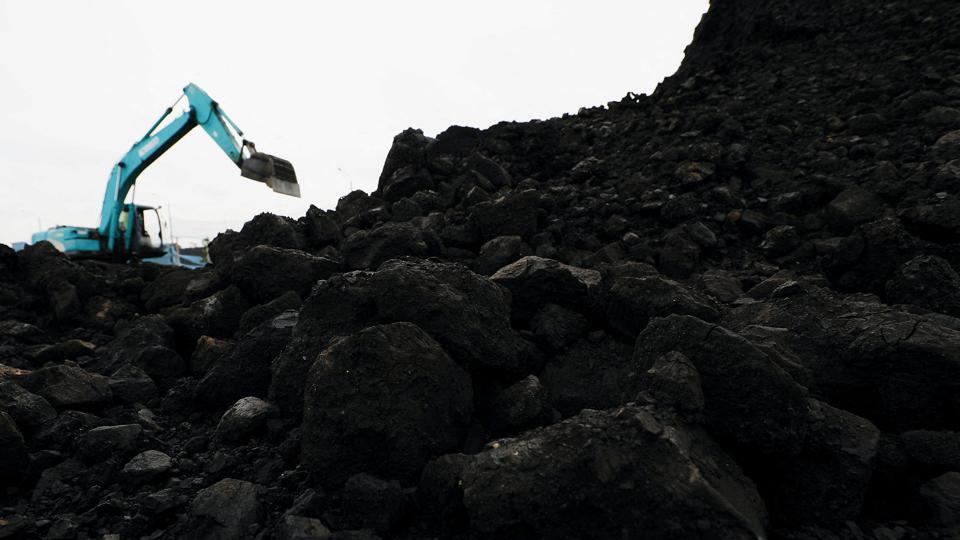
The commission said the phasing-out process will begin from October this year. To be sure, this ban does not cover thermal power plants.
“Emissions from heavily polluting fuels like coal for various industrial, domestic and miscellaneous purposes contribute significantly to the degradation of air quality in the NCR and adjoining areas and accordingly a consistent need has been felt to switch over to lesser polluting and cleaner fuel in the NCR,” a statement released by the commission said.
In a statement issued on Wednesday, CAQM said the ban on the use of coal as fuel will come into effect from October 1 in regions where infrastructure and supply for piped natural gas (PNG) are already available. For regions where such PNG supply is still not available, the ban will come into effect from January 1, 2023. The CAQM held a meeting in this regard on June 3.
Several suggestions earlier received by CAQM were related to the banning of coal. The body constituted an expert group to examine and deliberate upon all such suggestions. In its report, the expert group strongly recommended phasing out heavily polluting fossil fuels such as coal, and mandating cleaner fuels to the extent possible.
The pollution monitoring body said in its statement: “Shifting of industries to PNG/cleaner fuels has been a high priority area for the commission and to this effect, considering the need to optimally balance the imperatives of sustainability of operations as also the emissions from use of various types and categories of fuels that have a direct bearing on the air quality… statutory directions have already been issued for permissible fuels for industrial applications in the NCR.”
While farm fires and emissions from firecrackers result in heavy concentrations of PM2.5 ultra-fine particles in the Capital’s air every year, particularly in the winter months, pollution caused by vehicles and coal also heavily contribute to the bad air crisis.
The Union government issued an ordinance in 2020 to replace the Supreme Court-appointed environment pollution control authority with CAQM, with sweeping powers spanning five north Indian states to monitor and act against sources of air pollution. The ordinance was issued by the Centre as per its commitment to the apex court.
A study conducted by the Centre for Science and Environment (CSE) titled ‘Assessment of Industrial Air Pollution in Delhi-NCR’ in 2020, which was also quoted by CAQM, showed that seven major industrial districts in the National Capital Region – Alwar, Bhiwadi, Ghaziabad, Gurugram, Faridabad, Panipat and Sonipat – had an estimated coal usage of up to 1.4 million tonne by industries. The majority of these were small and medium-scale industries.
“We need to understand that if we want to clean the air in Delhi, we will have to work towards cleaning the air in NCR because we will not be able to get any results in isolation. Our study highlighted that pollution from these small and medium scale industries is a significant contributor to pollution in the region,” said Nivit Kumar Yadav, programme director (industrial pollution), CSE, who also headed the 2020 study.
Sunil Dahiya, an analyst with the Centre for Research on Energy and Clean Air (CREA), said that while this move to phase out coal as a fuel in small and medium industries and domestic use was a welcome step, the commission should also focus on large thermal power plants.
“This is definitely a welcome move but why is CAQM silent on the bigger coal consumers, which are power plants? They were directed to retrofit technology to control pollution and have missed multiple deadlines over the last few years. Now, the new deadline is 2022, December, and apart from two power plants, most are too far away from achieving even this deadline. The commission should also take cognisance on these big players,” said Dahiya.


