The Lancet assessment of April 15 tells us that Covid-19 is almost certainly airborne: “an individual could potentially be infected when they inhale aerosols produced when an infected person exhales, speaks, shouts, sings, sneezes, or coughs,” it said. It reminds me of indoor air pollution. The virus barely gives us time to react, while air pollution can take months, even years. This section seemed to gesture to our pre-pandemic pollution thinking. “Reducing airborne transmission of virus requires measures to avoid inhalation of infectious aerosols…air filtration…use of masks whenever indoors, attention to mask quality and fit.”
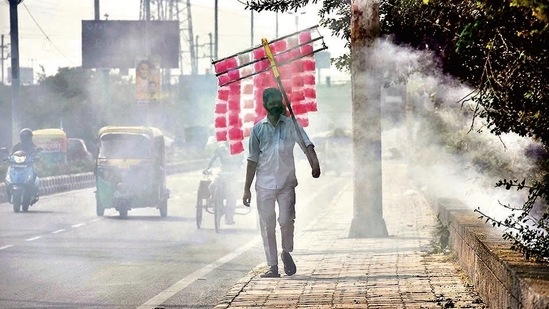
Covid is the new air pollution in disguise. It is a murderous contaminant. A few lessons are in order for the months after this is over. First, urban Indians should also worry about indoor air pollution. The grey smog outside is only half the story. Second, if Covid claimed over 150,000 lives in a year, air pollution, per estimates, could have claimed almost 120,000. Third, the quality of housing is vital. Those in one-roomed, poorly ventilated shanties cannot isolate. But, pre-Covid too, the kitchen was the most polluted spot in most homes. In all scenarios, the poor in one roomed homes are most vulnerable. We shouldn’t abandon our cooking styles, but let’s redesign housing for safer air. The new study is not just about Covid. It must reform our thinking around indoor air pollution in post-pandemic times.
(The writer is the founder and director of the Chintan Environmental Research and Action Group)
{{/usCountry}}(The writer is the founder and director of the Chintan Environmental Research and Action Group)
{{/usCountry}}