
 E-Paper



All seats in Punjab, 59 in UP go to polls today
The incumbent Congress has come under a severe attack from political opponents over various issues, including the drug menace and corruption.

 Prefer HTon Google


People in 117 assembly constituencies of Punjab will vote to elect legislators on Sunday, along with 59 constituencies in Uttar Pradesh – the third phase of voting in the seven-phase elections in the state.
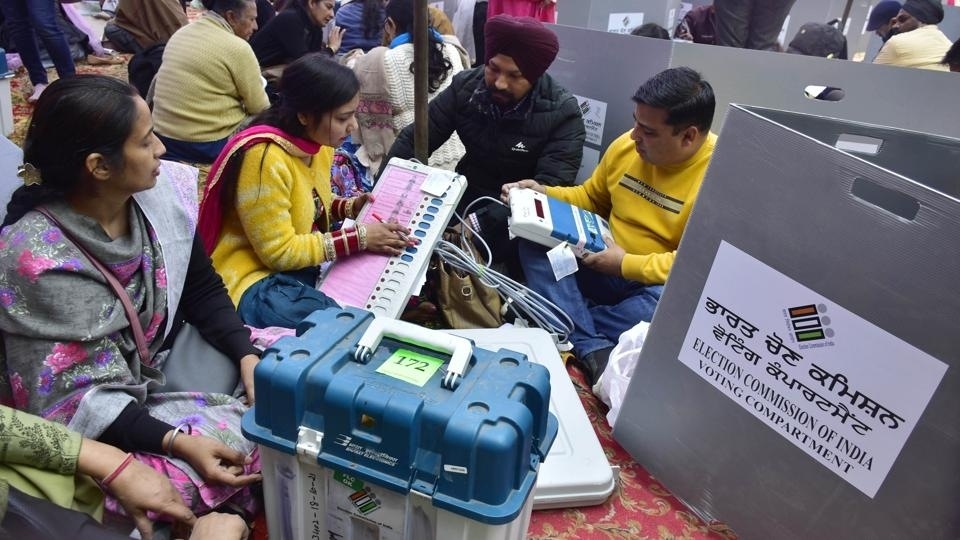
Punjab, currently governed by the Congress, is headed for a multi-cornered contest between the grand old party; the Aam Aadmi Party; the Shiromani Akali Dal-Bahujan Samaj Party alliance; and the Bharatiya Janata Party, Punjab Lok Congress and Shiromani Akali Dal (Sanyukt) combine.
The Sanyukt Samaj Morcha, a political outfit fronted by various farmer bodies that led the year-long protests against the central government’s now-repealed farm laws, is also in the fray.
The over 20 million voters will not only decide the fate of 1,304 candidates, including 93 women, but the outcome will also shape the political fortunes of several national- and state-level leaders. Prominent faces include former chief ministers Captain Amarinder Singh and Parkash Singh Badal, the Congress’s state unit in-charge Navjot Singh Sidhu, chief minister Charanjit Singh Channi, SAD president Sukhbir Singh Badal and the AAP’s chief ministerial face Bhagwant Mann.
The incumbent Congress has come under a severe attack from political opponents over various issues, including the drug menace and corruption.
But the party is banking on decisions such as reduction in electricity tariff and fuel prices – decisions taken during the 111-day tenure of Channi, who was appointed the CM after months of infighting between Amarinder Singh and Sidhu for the party’s control.
While Amarinder, an old Gandhi family loyalist, resigned from the post and the party’s membership, Sidhu, considered close to Congress leaders Rahul Gandhi and Priyanka Gandhi Vadra, was appointed the state unit chief in September last year.
Channi’s term, however, has not been without controversy. The first Dalit CM of the state came under fire after his nephew, Bhupinder Singh alias Honey, was arrested by the Enforcement Directorate (ED) in a money laundering case in connection with sand mining.
While Channi said he did not have “objections with the law doing its work”, the opposition used the arrest to sharpen its attack.
“People take 4-5 years to do corrupt activities. However, he (Channi) managed to do this in just 111 days. It’s unfortunate, and people are watching. People want an honest government in Punjab,” Kejriwal said after ED’s action.
The AAP, which has emerged as a major contender in these elections, is eyeing to wrest power while projecting the Delhi model of governance.
The stakes are also high for the Shiromani Akali Dal, which is contesting the polls in alliance with the Bahujan Samaj Party (BSP) after breaking ties with the BJP in 2020 over the farm laws.
The BJP, which was a junior partner in its alliance with the SAD in the state, is fighting the elections as a major partner after entering an alliance with the Amarinder Singh-led Punjab Lok Congress and Sukhdev Singh Dhindsa-led SAD (Sanyukt). The three-party combine has urged people to vote for a “double-engine government”, a reference to the BJP’s governments both at the Centre and in states, and promised a “nawan” (new) Punjab.
In the 2017 assembly polls, the Congress ended the SAD-BJP combine’s 10-year reign by winning 77 seats. The Arvind Kejriwal-led AAP managed to get 20 seats, while the SAD-BJP won 18. The Lok Insaaf Party won the remaining two seats.
Experts have said that state elections were being held in the absence of any distinctive ideology. “In Punjab polling is taking place in the absence of any distinctive ideology. Every political party has a different a story to tell,” Pramod Kumar, director, Institute of Development and Communication (IDC), said.
“This election is different from the previous ones, as there are many claimants staking claim over the state’s government,” another analyst said, adding that the results will surprise everyone.
All major political parties have promised a host of freebies.
While the AAP has promised ₹1,000 for all women, the Congress has also promised ₹1,100 per month for needy women. The SAD-BSP alliance has promised ₹2,000 per month to all women heads of blue card holder families (BPL beneficiaries).
The Congress and the SAD-BSP alliance have promised 100,000 government jobs.
The SAD-BSP promised 75% reservation for the state youth in public and private sectors. The BJP-led alliance has made a similar promise, but only in the government sector.
The AAP has promised up to 300 units of free power while the SAD-BSP promised 400 units of free electricity.
Chief Electoral officer (CEO) Punjab S Karuna Raju on Saturday announced that all arrangements are in place to ensure free, fair and peaceful polling. “Polling staff has reached all the polling stations and 700 companies of central armed paramilitary forces and the same numbers of state police force have been deployed across the state,” he told reporters.
The state witnessed poll-related drama even a day ahead of the voting, with separate police cases for violating model code of conduct being filed against AAP convener Arvind Kejriwal, over a video making “false and frivolous allegations against other parties”, SAD president Sukhbir Singh Badal, for “seeking votes on Facebook”, and CM Channi, for campaigning for a party candidate after the silence period began on Friday.
The Sanyukt Samaj Morcha, comprising various Punjab farmer bodies, which led the stir against the three controversial farm laws, is contesting the polls in alliance with Haryana Bharatiya Kisan Union (Chaduni) leader Gurnam Singh Chaduni-led Sanyukt Sangharsh Party.
In Uttar Pradesh, the third phase is seemingly the most interesting phase of the seven-phase polls. A total of 627 candidates are in the fray in this phase, in which over 20 million people are eligible to vote.
Districts where polling will be held are Hathras, Firozabad, Etah, Kasganj, Mainpuri, Farrukhabad, Kannauj, Etawah, Auraiya, Kanpur Dehat, Kanpur Nagar, Jalaun, Jhansi, Lalitpur, Hamirpur and Mahoba.
The Karhal assembly seat, from where Samajwadi Party chief and former chief minister Akhilesh Yadav is contesting, will also go to the polls in the third phase on Sunday. The BJP has fielded Union minister SP Singh Baghel from the seat.
Polling on Sunday will also seal the fate of the Samajwadi Party chief’s uncle Shivpal Singh Yadav, who is contesting from his traditional Jaswantnagar seat.
In the 2017 elections, the BJP won 49 of the 59 seats while the SP settled for nine. The Congress got one seat, while the Bahujan Samaj Party (BSP) drew a blank.
The elections, poll analysts believe, will shape the political direction of the nation in the run-up to the 2024 Lok Sabha elections, with over a dozen states set to go to the polls before then.
The polls have also drawn attention for the modality of the campaign — they are being held in the shadow of the pandemic and there has been curtailment of large-scale public rallies-based outreach due to the Omicron surge.
Polling in Punjab will be held from 8 am to 6 pm. In Uttar Pradesh, the polling will take place between 7 am and 6 pm, according to the election authorities. The counting will take place on March 10.
(With agency inputs)


