The Shri Ram Janmabhoomi Teerth Kshetra Trust has overhauled its leadership, appointing a retired Air Marshal as its first chief executive officer (CEO) and bringing in three new trustees as it seeks to strengthen its administration amid allegations of irregularities in donation collections at the Ram Temple.
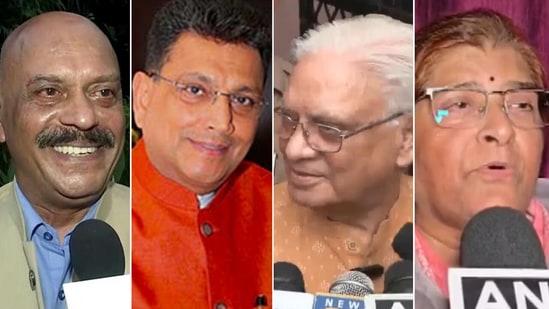
In two meetings held on Wednesday, the trust appointed retired Air Marshal Jeetendra Mishra as CEO for a three-year term, as reported by HT earlier. It also elevated incumbent treasurer Govind Dev Giri to the post of full-time general secretary and appointed Delhi-based businessman Mahesh Bhagchandka as the new treasurer.
The restructuring comes weeks after former general secretary Champat Rai and trustee Anil Mishra resigned amid the controversy surrounding the alleged diversion of temple donations. The trust had subsequently moved to introduce a professional management structure for the temple’s security, logistics, finances and day-to-day operations.
Jeetendra Mishra: IAF, Operation Sindoor veteran
Deep Dive
Who are the new trustees appointed in the Ram Temple Trust?
What prompted the Ram Temple Trust's leadership restructuring?
How will Air Marshal Jeetendra Mishra's experience benefit the Ram Temple Trust?
Mishra, the trust’s first CEO, is a former fighter combat leader and experimental test pilot who retired on April 30 as Air Officer Commanding-in-Chief of the Western Air Command.
{{/usCountry}}Mishra, the trust’s first CEO, is a former fighter combat leader and experimental test pilot who retired on April 30 as Air Officer Commanding-in-Chief of the Western Air Command.
{{/usCountry}}He was also among the senior planners of Operation Sindoor and received a medal for distinguished service of exceptional order for his role during the four-day military confrontation with Pakistan last year.
A native of Bhopatpura village in Uttar Pradesh’s Deoria district, Mishra will oversee the trust’s daily functioning in his new role.
His appointment marks a significant shift in the trust’s functioning, moving some of the operational responsibilities away from a purely trustee-led system towards professional management. His responsibilities are expected to include security, logistics, crowd management and oversight of the trust’s multi-crore finances.
Mahesh Bhagchandka: Delhi-based businessman
Mahesh Bhagchandka, founder-chairman of the M2K Group conglomerate, has been appointed treasurer, replacing Giri, who had held the position since the trust was formed.
The Delhi-based businessman also heads the Ashok Singhal Foundation and is related to former Vishwa Hindu Parishad president Ashok Singhal.
Upon learning of Bhagchandka’s appointment, VHP international president Alok Kumar welcomed the move, describing him as a “frontline soldier” of the Ram Janmabhoomi movement.
Bhagchandka will now be responsible for the financial affairs of the trust, which oversees the construction and management of the Ram Temple and handles large-scale donations.
Madan Mohan Pandey: Lawyer who fought Ram Janmabhoomi case
The trust has also inducted former Uttar Pradesh additional advocate general Madan Mohan Pandey as a new member.
The 74-year-old Ayodhya-based lawyer represented Ram Lalla Virajman and late Mahant Ramchandra Paramhans Das in the Ram Janmabhoomi title dispute.
Pandey was involved in the legal battle from the early 1990s until the Supreme Court delivered its final verdict in 2019.
Nirmala Yadav: First woman trustee
Nirmala Yadav, a former principal of PG College in Shikohabad and a long-time Rashtriya Swayamsewak Sangh (RSS) worker, is the third new member of the trust.
Her appointment triggered celebrations in Firozabad and at her maternal home in Awagarh, Etah.
Yadav is currently vice-president of the Rashtriya Shaikshik Mahasangh. She is also the first woman member of the body responsible for overseeing and managing the Ram Temple.
Why did the Ram Temple Trust restructure?
The leadership overhaul comes against the backdrop of allegations that temple donations were siphoned off.
The controversy erupted on June 7, when Samajwadi Party leader Tej Narayan ‘Pawan’ Pandey alleged that between ₹5 crore and ₹7.5 crore in temple offerings had been diverted. The Uttar Pradesh government constituted the first special investigation team (SIT) on June 13.
An FIR was registered on June 25 against eight named accused and other unidentified people under provisions of the Bharatiya Nyaya Sanhita dealing with offences including criminal breach of trust, cheating, theft and criminal conspiracy, as well as provisions of the Prevention of Corruption Act.
All eight named accused – Anukalp Mishra, Lavkush Mishra, Ram Shankar Yadav alias Tinnu, Manish Yadav, Subhash Srivastava, Avinash Shukla, Rama Shankar Mishra and Karunesh Pandey – were arrested the following day. Nearly ₹80 lakh was recovered from their homes, according to the investigation.
SIT flags ‘gross lapses’ but clears top leadership
A second SIT was constituted in July after the Supreme Court directed an investigation led by an IPS officer.
The first SIT's final report, submitted on August 17, flagged “gross lapses” in the trust’s functioning. It also raised questions over the role of the State Bank of India and criticised the absence of professional financial management within the trust.
However, the report found no evidence of financial impropriety at the leadership level.