Four major anti-cancer drugs have been added to the National List of Essential Medicines (NLEM) updated on Tuesday, the government announced, a step that will make the products cheaper for Indian citizens.
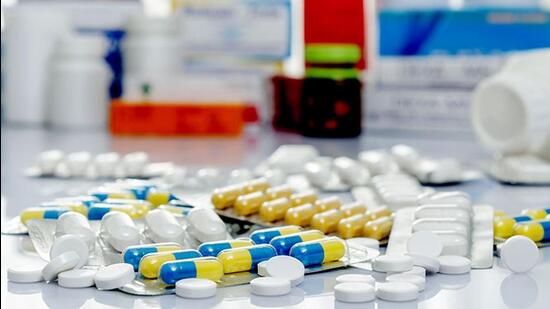
The Union health ministry released the NLEM 2022 list with 34 additions, including the cancer drugs Bendamustine Hydrochloride, HCI Trihydrate, Lenalidomide and Leuprolide Acetate, taking the number of medicines on the list to 384 across 27 categories.
“Union health ministry is taking various steps under the vision of Prime Minister Narendra Modi ji towards Sabko Dawai, Sasti Dawai (affordable medicines for all). In this direction, the National List of Essential Medicines plays an important role in ensuring the accessibility of affordable quality medicines at all levels of healthcare,” said Union health minister Mansukh Mandaviya during the announcement.
“This will give a boost to cost-effective, quality medicines and contribute towards a reduction in out-of-pocket expenditure on healthcare for the citizens,” he added.
Nicotine replacement therapy has also been included in the updated list as has been the anti-parasitic drug Ivermectin, which widely prescribed by doctors for treatment of Covid-19 even though it was eventually proved to make no difference.
{{/usCountry}}Nicotine replacement therapy has also been included in the updated list as has been the anti-parasitic drug Ivermectin, which widely prescribed by doctors for treatment of Covid-19 even though it was eventually proved to make no difference.
{{/usCountry}}Among the medicines that have been dropped are antacid ranitidine and anti-hypertension dugs Atenolol and Methyldopa.
These drugs have been dropped based on parameters of cost-effectiveness, emerging new evidence pointing towards the side-effects, and availability of better alternatives in the market, said a health ministry official familiar with the matter.
“The primary purpose of the national list of essential medicine is to promote rational use of medicines and when we say rational use, it means that we have to see the cost of the medicine, the safety of the medicine and efficacy of the medicine. So, rational use of medicine is dependent on three parameters of costs, safety, and efficacy,” said Rajesh Bhushan, Union health secretary.
The independent Standing National Committee on Medicines was constituted by Union health ministry in 2018. The committee, after detailed consultation with experts and stakeholders, revised the NLEM, 2015, and submitted its report on NLEM, 2022, to the ministry of health and family welfare.
The criteria used for inclusion of drugs include usefulness in battling diseases that are a public health problem in India; license or approval by the drugs controller general of India; proven efficacy and safety profile based on scientific evidence; cost effectiveness; and alignment with the current treatment guidelines recommended under National Health Programmes of India.
Experts say that the list is a result of extensive consultation.
“The pharmaceutical industry in India is a strategic sector recognised around the world for providing affordable and high-quality medicines. This list strives to strike a balance between patient centricity, public health concerns, future policy direction and thrust, going forward. Antimicrobial resistance is a critical issue and the NLEM 2022 has attempted to address it,” said Sudarshan Jain, secretary general of the Indian Pharmaceutical Alliance.
But a second expert said it has taken the government unusually long to revise the list.
“The release of NLEM 2022 comes after a long gap of 7 years while it is recommended for an NLEM to be revised more frequently, every 2-3 years, to be responsive to changing health needs, epidemiological trends, scientific advancements and knowledge. It is a mystery why the MOHFW has taken a year to put out the new NLEM after the Expert Committee had submitted its report,” said Malini Aisola, co-convenor, All India Drug Action Network (AIDAN).