
Sign in

Army opposes home ministry’s move, doesn’t want Assam Rifles-ITBP merger

The Indian Army says it is instead ready to consider merging 46 battalions of Assam Rifles with the regular army for deployment in the eastern Ladakh sector.

Updated on: May 5, 2018, 15:06:13 IST
New Delhi, Hindustan Times | By
Share
Share via
  • facebook
  • twitter
  • linkedin
  • whatsapp
Copy link
  • copy link

The Indian Army has opposed the home ministry’s proposal to create a 29 battalion Indo-Myanmar Border force by merging four battalions of the Indo-Tibetan Border Police (ITBP) with 25 battalions of Assam Rifles (AR), saying that it is instead ready to consider merging 46 battalions of AR with the regular army for deployment in the eastern Ladakh sector.
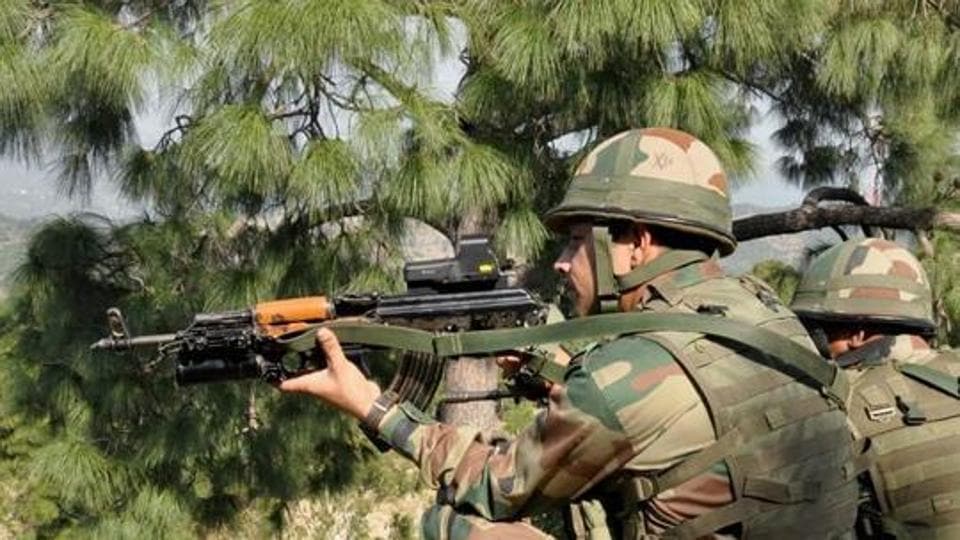
The army has recommended that the 58 battalion ITBP should be deployed on India’s north-east borders instead of its current deployment on the Line of Actual Control. (PTI file photo)

It has recommended that the 58 battalion ITBP should be deployed on India’s north-east borders instead of its current deployment on the Line of Actual Control (LAC).

Senior home ministry and Army officials told HT that it has now boiled down to whether AR should operate under the ministry of home affairs and be regarded as a paramilitary force or under the ministry of defence as part of the regular army.

As things stand, AR is under the home ministry but its battalions are commanded by Army officers on deputation. The force is headed by a Lieutenant General. The Assam Rifles was deployed with the Army in the 1962 India-China border war and in Operation Pawan in Sri Lanka. The force was raised in 1835 and has been involved in counter-insurgency duties and border management in the north-east since then.

Countering the merger proposal of home ministry, the Army brass has made it clear that it would rather have all AR battalions deployed with the army in the Eastern Ladakh sector to man the LAC with China than have army officers serve under paramilitary commanders. “The decision that needs to be taken is whether AR continues to function with the home ministry or is transferred to the defence ministry,” said a senior North Block official.

The army brass has conveyed to the home ministry that while it is ready to deploy AR in Ladakh, ITBP should be removed from this sector and be redeployed on the India-Myanmar border.

This will remove inter-force friction on the China border as ITBP does not come under operational control of the Army. Given the sensitivity of the China border, any miscommunication of rivalry between the local army commander and the ITBP commander could create a situation with the People’s Liberation Army (PLA).

While there is a consensus within the government that AR battalions need to be rotated from north-east to nip vested interests developed over decades, the Cabinet will have to take a call on its future role — as a paramilitary force or an army regiment.

  • Shishir Gupta
    ABOUT THE AUTHOR
    Shishir Gupta

    Shishir Gupta is Executive Editor at Hindustan Times and one of India's top journalists covering national security, strategic affairs, foreign policy and geopolitics. Over the past three decades, he has extensively reported on India's military, diplomatic and security landscape, covering every major conflict and national security challenge, from the 1999 Kargil War and the 2020 East Ladakh standoff to Operation Sindoor in 2025. He has also covered major terror attacks, including the IC-814 hijacking, the 26/11 Mumbai attacks and the 2025 Pahalgam terror strike, along with numerous Pakistan-backed terrorist incidents in the Kashmir Valley and across India. He has reported on national and state elections for more than three decades. A recognised authority on strategic affairs, Gupta has covered India's nuclear programme since the Pokhran-II (Shakti series) tests in May 1998 and has written extensively on global nuclear issues, Indian diplomacy and the country's expanding global outreach. He has also reported widely on international conflicts and terrorism, with a special focus on the Indian subcontinent. Gupta has interviewed Prime Minister Narendra Modi more than four times, including Modi's first interview with the print media after becoming Prime Minister in May 2014. His other interviews include three with the Dalai Lama, as well as conversations with Benjamin Netanyahu, Amit Shah, Yogi Adityanath, S. Jaishankar, Nirmala Sitharaman and Piyush Goyal. He is the author of Indian Mujahideen: The Enemy Within (Hachette, 2011) and Himalayan Face-off: Chinese Assertion and Indian Riposte (Hachette, 2014). He was awarded the Chevening-Wolfson Joint Scholarship at Wolfson College, University of Cambridge, UK, in 1998 and participated in the International Visitor Leadership Program (IVLP) of the US State Department in 2006. He received the Ben Gurion Prize from Israel in 2011 and the K. Subrahmanyam Prize for Strategic Studies in 2015 from the Manohar Parrikar Institute for Defence Studies and Analyses (MP-IDSA). Since 2024, he has hosted Point Blank, Hindustan Times' weekly YouTube show on global geopolitics.Read More

Get the latest India News, breaking headlines and real-time updates from across the country. Stay informed about politics, government policies, crime, weather and major national developments.