Supreme Court judge Sanjiv Khanna is set to take oath as the 51st Chief Justice of India next month.
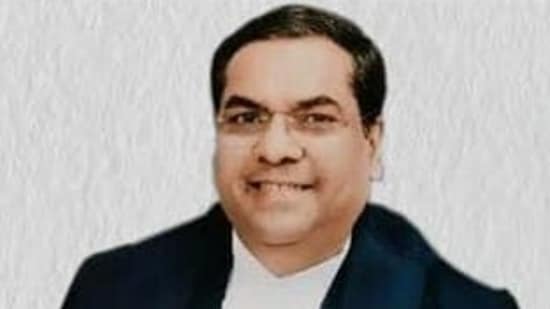
The Central government on Thursday notified his appointment as the next Chief Justice of India, effective from November 11. His appointment follows the retirement of the current CJI DY Chandrachud on November 10.
"In exercise of the power conferred by the Constitution of India, President, after consultation with Chief Justice of India, is pleased to appoint Justice Sanjiv Khanna, Judge of the Supreme Court of India as Chief Justice of India with effect from November 11, 2024," Union law minister Arjun Ram Meghwal shared in a post on X.
Chief Justice Chandrachud officially recommended Justice Sanjiv Khanna as his successor earlier this, signalling an important transition in the Indian judiciary.
Born on May 14, 1960, Justice Khanna began his as an advocate with the Bar Council of Delhi in 1983. He practised at the district courts at the Tis Hazari complex and later at the High Court of Delhi and tribunals, before being appointed as an additional judge of the Delhi High Court in 2005 and as a permanent judge in 2006.
He was elevated as a Judge of the Supreme Court in 2019, even before becoming a Chief Justice of any High Court.
Also Read | Justice with empathy, fairness, compassion will define judiciary: Justice Khanna
Justice Sanjiv Khanna's cases
{{/usCountry}}He was elevated as a Judge of the Supreme Court in 2019, even before becoming a Chief Justice of any High Court.
Also Read | Justice with empathy, fairness, compassion will define judiciary: Justice Khanna
Justice Sanjiv Khanna's cases
{{/usCountry}}
In his stint at the Supreme Court, Justi ce Sanjiv Khanna has been part of several landmark judgements.
As part of the five-judge bench, Justice Khanna upheld the abrogation of Article 370, determining that, though a unique aspect of India’s federal structure, this article did not imply sovereignty for Jammu and Kashmir.
Justice Khanna also joined a five-judge bench that earlier this year declared the electoral bond Scheme unconstitutional, siding with the view that anonymous donations through electoral bonds violate the public’s right to information, a core element of informed voting.
Notably, he granted interim bail to former Delhi chief minister Arvind Kejriwal, allowing him to campaign during the Lok Sabha elections, underscoring the significance of democratic participation.
In another critical ruling involving Delhi’s former deputy CM Manish Sisodia, he emphasised that delays in cases could be a valid ground for bail under the Prevention of Money Laundering Act (PMLA).
Justice Khanna currently presides over a bench reviewing various PMLA provisions, an indication of his ongoing influence on matters of significant public interest.