A wild elephant entered Kamini Rabha’s compound at Jharapata village in Kamrup (Rural) district of Assam about two weeks ago. But, instead of raising a hue and cry and calling fellow villagers to chase the pachyderm away, she let it feast on a banana tree.
“It may be eating the banana tree, but at least it didn’t damage the rest of the fruits and vegetables cultivated with so much effort,” said the 45-year-old woman. Kamini’s thoughts are shared by residents of several villages in the area where the wild elephant menace is a huge problem.
Throughout the year, the area, which is close to the Meghalaya border and is part of the Rabha Hasong Autonomous Council, witnesses herds of wild elephants from the nearby Loharghat Reserve Forest and the neighbouring hills. The elephants come to the villages in search of food.
The pachyderms damage not just crops, but houses and sometimes attack people as well in Assam and several other states such as Jharkhand, West Bengal, Odisha and Uttarakhand. Between 2014 and 2018, the state governments paid compensation of ₹226 crore for loss of human lives and crops because of the rampage by wild elephants, according to the data submitted in Parliament in February 2019.
Human-elephant conflict caused by habitat loss due to encroachment of forests has claimed lives of 761 people between 2010 and March 2019 and also resulted in the death of 249 pachyderms in the same period in Assam.
{{/usCountry}}Human-elephant conflict caused by habitat loss due to encroachment of forests has claimed lives of 761 people between 2010 and March 2019 and also resulted in the death of 249 pachyderms in the same period in Assam.
{{/usCountry}}Of this, 54 died after getting hit by trains, 53 died in accidents, 20 were killed by poachers, 92 died due to electrocution and 30 as a result of poisoning. Over 2000 houses were damaged by elephants last year and crops damaged in 755 hectares.
In a bid to save their crops and property, the residents of Jharapata village keep watch during nights and try and chase the animals away.
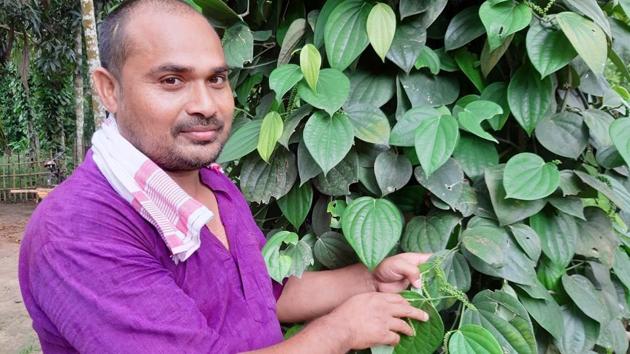
In order to help villagers whose crops were getting damaged, Diya Foundation, a local NGO, stepped in and encouraged cultivation of pepper—a crop which doesn’t take much area and fetches a good price.
“We started in 2016 with 10 villages. Cultivating pepper, which is a climber and planted around areca nut trees, has led to nearly 30% to 40% increase in income of around 200 farmers,” said Martin Rabha of Diya Foundation.
“Although, we were not aware of it initially, we started realizing that elephants didn’t target pepper trees. This helped farmers protect their crops and also reduced the visits by the pachyderms-- at least in those places where pepper was planted,” he added.
Like Kamini Rabha, who has 175 pepper plants, other villagers have also taken up cultivating the fiery spice both to supplement their incomes and to protect a portion of their crops from elephants.
Rabin Rabha, a famer in Hanapara village, who started with 11 pepper plants in 2015, now has 350 plants. He also has a nursery which houses 7,000 pepper saplings.
“Earlier I used to earn around ₹40,000 every year from selling farm produce. Last year, I earned ₹1.6 lakh by selling pepper, areca nuts and pepper saplings,” said the 52 year old.
Encouraged by the results, villagers have also planted lemon trees—which the pachyderms avoid due to thorns. Some are also thinking of planting trees just to feed the hungry elephants—an idea floated by Diya Foundation but scoffed at by villagers initially.
“We never planted trees specifically for elephants to feed on. But recently villagers held a meeting to start planting banana and other trees in our villages so that the elephants eat them and stay away from other crops,” said Matin Rabha, a resident of Jharapata.
Experts feel that the idea of cultivating pepper is a good one, but planting banana and other trees to feed elephants may not have the desired effect.
“Elephants avoid spicy food like chilly, pepper etc. Hence cultivating pepper is a very good idea as it helps to increase income and also keeps the wild elephants away. Villagers in some other areas of Assam have also planted lemon trees to protect crops,” said Rathin Barman, joint director of Wildlife Trust of India.
“But planting banana trees as fodder for elephants might not be a good alternative as the pachyderms will get attracted to them and might even damage other crops in the area,” he added.