India has operationalised 70,000 health and wellness centres (HWCs), under Narendra Modi government’s flagship Ayushman Bharat-Pradhan Mantri Jan Arogya Yojna (AB-PMJAY), where at least 400 million individuals have been provided care in past three years, according to the health ministry.
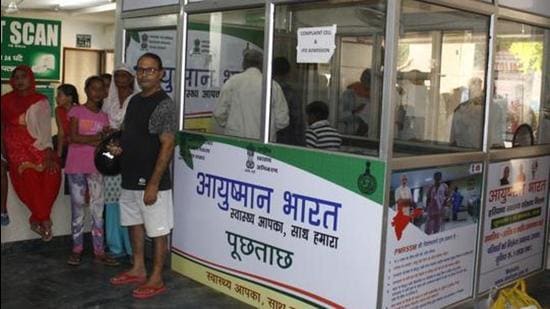
“The feat of scaling up at this pace despite the Covid pandemic was enabled by a high degree of coordination between the Centre and States/Union Territories, foresight in planning, flexibility in adaptation, standardisation of processes, and regular interactions at all levels which enabled supportive monitoring and prompt redressal of issues. This is testimony to the process of effective decentralization and cooperative federalism,” said the health ministry in a statement issued on Sunday.
The health and wellness centres form the primary pillar of Ayushman Bharat as it aims to provide universal and comprehensive primary healthcare through 150,000 centres that will be set up by transforming some of the existing sub health centres and primary health centres by 2022.
Also Read | Over 70,000 health, wellness centres set up under Ayushman Bharat: Ministry
Since the first health and wellness centre was launched in 2018, about 415 million individuals have accessed care at these centres, of which about 54% are women.
{{/usCountry}}Since the first health and wellness centre was launched in 2018, about 415 million individuals have accessed care at these centres, of which about 54% are women.
{{/usCountry}}As part of the government’s strategy to promote preventive healthcare, these health and wellness centres have also been screening individuals above the age of 30 for non-communicable diseases such as diabetes, hypertension, and breast, cervix, oral cancers, etc.
So far, 90 million screenings have been conducted for hypertension, 74 million screenings for diabetes, 47 million for oral cancer, 24 million for breast cancer, and 17 million screenings for cervical cancer in women.
About 75% of the total non-communicable diseases screenings were conducted during the pandemic period, from February 1, 2020 onwards.
“These population-level screenings can be of immense help in detecting signs of cancer early, leading to better treatment outcome in most cases,” said Dr PK Julka, former head of radiation oncology department, New Delhi’s All India Institute of Medical Sciences.
The government is also incrementally adding other primary healthcare services for mental health, ear nose throat, ophthalmology, oral health, geriatric and palliative health care, and trauma care etc., along with expanding essential medicines and diagnostics list under the scheme at these health and wellness centres.
In 2019, the Centre announced that the ministry of Ayush (Ayurveda, Yoga and Naturopathy, Unani, Siddha and Homoeopathy) will now be getting to run 10% of these centres exclusively through the alternative systems of medicine, and will be called Ayush Health and Wellness Centres (AHWCs).
Teleconsultations by medical teams, another component of health and wellness centres, also picked up significantly during the pandemic, with at least 945,000 teleconsultations having been provided through these centres so far.
As part of the government’s focus on holistic health, these centres also conduct various activities promoting wellness and healthy lifestyle. So far, these centres have conducted nearly 6.5 million wellness sessions.
“Depending on the local context, States are undertaking various wellness activities including Yoga, local sports, Zumba (in NE States), etc. These centres also follow a calendar of 39 health promotion days spread over a year,” the statement read.