E-Paper



Auli wedding: Over 321 quintals of waste collected, ₹8 lakh spent on cleaning the venue
The high-profile wedding of the sons of Gupta brothers was from June 18 to June 22 at Auli, with high court directing the state pollution control board to monitor the wedding.

 Prefer HTon Google


The high profile wedding of the sons of South Africa-based Gupta brothers in Auli in Chamoli district left behind 321 quintals of waste which have been collected by Joshimath municipality, a senior official from local civic body said.
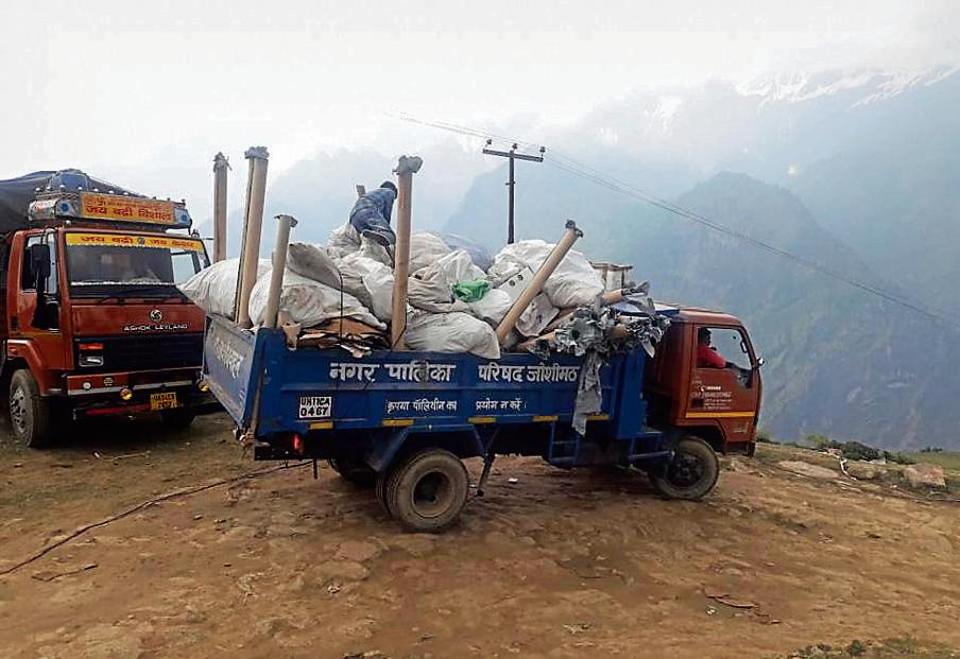
SP Nautiyal, executive officer, Joshimath municipality in Chamoli, said they have almost collected all the waste material left after the wedding.
“Overall we have collected over 321 quintals of the waste. Some of it was transported to a dumping site, while most of the other waste material was ferried to our waste compactor site,” he said.
Nautiyal said so far over ₹8 lakh has been spent on waste collection and cleaning the marriage site. “There are some minor things that remain which will be completed by Sunday evening,” he said.
Nautiyal said that after segregating different kinds of waste materials and compacting them, they would be sold to different dealers. “Joshimath municipality has been compacting waste materials and selling them to different dealers who reuse them. Prior to Auli wedding, we have already sold compacted waste materials worth over ₹35 lakh,” he said.
The high-profile wedding of the sons of Gupta brothers was from June 18 to June 22 at Auli, with high court directing the state pollution control board to monitor the wedding. The board accordingly sent a two-member team to Auli to ensure the court directions regarding minimising the impact of the wedding on the local environment are adhered to.
Swati Bhadauria, district magistrate Chamoli, said that all possible details related to the wedding have been documented by a team of 13 officials from the forest department, revenue department, state pollution control board and other officials from the district administration.
“I have been informed by the officials concerned that waste collection and cleaning of the wedding site at Auli will be completed by Sunday evening. Within a day or so, I will send some officials to inspect the site,”she said.
Bhadauria said the wedding was monitored, documented and videographed in an exhaustive way. “We took corrective measures wherever possible. But those measures won’t be made public as we have to submit a report to the HC before July 8,” she said.
Now, all eyes are on the assessment report of the member secretary of the State Pollution Control Board on the environmental impact due to the wedding to be submitted to the court before July 8. It will have all the details regarding the kind of waste material and other pollutants that were generated and how they were dealt with.
The state pollution control board, on directions of the HC, had come with an action plan to minimise the environmental impact and ways to deal with waste generated. For checking pollution due to solid and plastic waste, the plan had suggested segregation of solid waste at source and making compost from biodegradable waste at the site in consultation with the nearby urban local body. The plan stated that other waste materials such as plastic, metal parts, glass pieces/bottles and waste papers be collected, compacted and handed over to the pollution control board authorised plastic recyclers.
For dealing with water pollution, the plan had suggested several measures for sewage /liquid waste treatment including setting up sufficient number of temporary septic tanks or bio-digesters, ensuring sewage doesn’t get channelized to river or natural drains and after the wedding, all waste collected in the septic tanks be transported to nearby common sewerage treatment plant of Jal Sansthan at Devprayag and empty septic tanks be filled with soil.