E-Paper



Bangladesh: Indian students protest as medical board fails to register them
Hundreds of Indian students at a university in Chittagong have been staging protests because they face an uncertain future as they have not been registered by the Bangladesh Medical and Dental Council.


Some 400 Indian students at a university in Chittagong have been staging protests for the past three days as they face an uncertain future since they have not been registered by the Bangladesh Medical and Dental Council (BMDC).
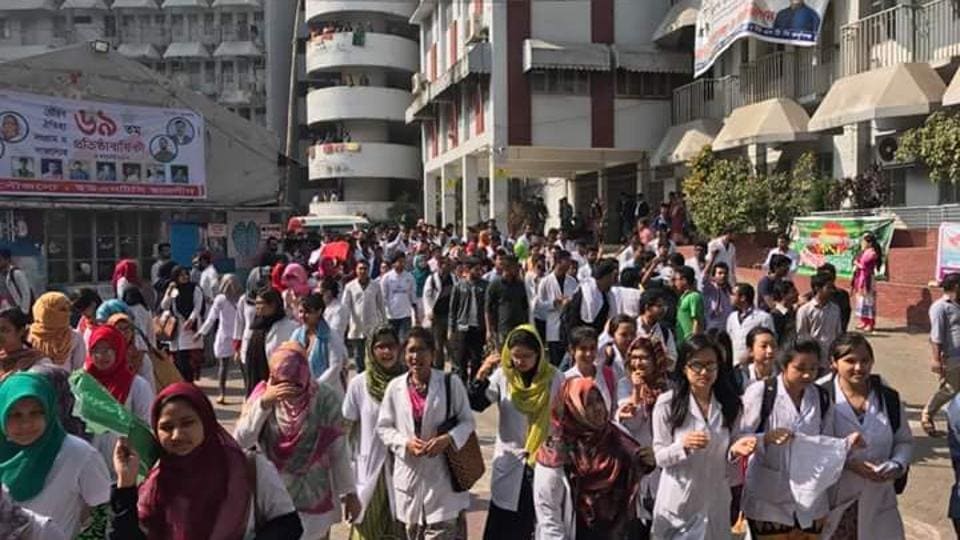
The Indian students drawn from across the country are part of the last three batches, comprising a total of about 1,000 students, at the Institute of Applied Health Sciences of the University of Science and Technology who have not been registered by the BMDC.
Students from Nepal, Sri Lanka and Bangladesh are also part of the affected batches. Some Indian students said the situation is particularly difficult for candidates who have to sit for their final MBBS examination from January 23.
“Even if we appear in the exam and pass it, it will mean nothing without registration from BMDC. We won’t be able to sit for the Foreign Medical Graduates Examination of the Medical Council of India,” a student, who did not want to be named, told Hindustan Times on phone.
“This means that after five years of hard work and toil, everything will be in vain and we won’t be able to practice medicine anywhere,” the student said.
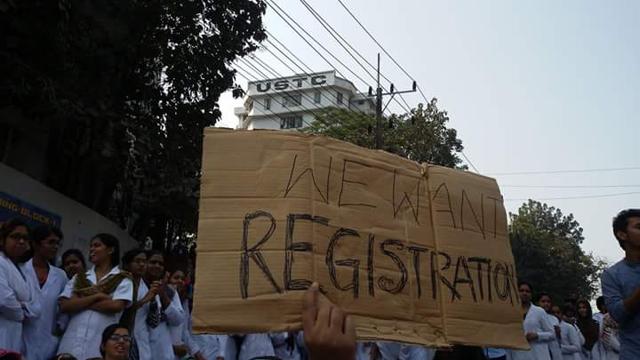
The students said they had tried to contact the human resource development and external affairs ministries by email but had not received any response so far.
Pravat Chandra Barua, vice chancellor of the University of Science and Technology, said the university had taken up the issue with the BMDC and the health ministry in Dhaka so that the students could be registered as soon as possible.
“It all now depends on the decision-makers,” said Barua. “All our previous batches were registered and passed out and went on to successful careers. The problem is only with the 28th, 29th and 30th batches.”
Badrul Amin, the registrar of the university, said the total number of students affected was about 1,000, including a little more than 400 Indians.
The officials said the problem had arisen because the BMDC had decided to register only a fixed number of students from every institution after a larger number had already been admitted. They said the registration was done after the admission.
Some Indians opt to study medicine in countries such as Bangladesh and the former Soviet republics after failing to clear the tough medical entrance test. Others choose foreign institutes because they are cheaper.