The India Meteorological Department (IMD) on Monday forecast below normal rainfall across the country in September, which would mean this monsoon season will certainly end on a deficit, and revealed that the preceding month had been the warmest August since 1901.
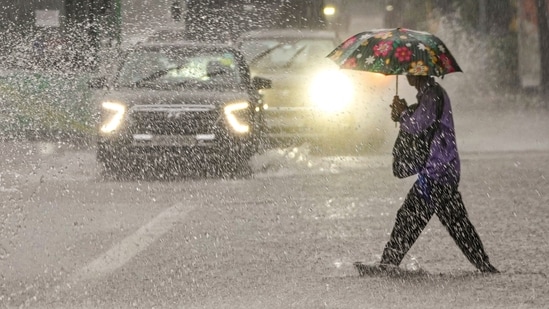
The deficient and uneven rainfall, which is expected be less than 91% of the long period average (LPA) this month, is likely to weigh on the kharif crop, with experts seeing lower yields, quality and output.
The overall monsoon deficit stood at 14% on August 31, with this expected to increase through September.
In September, which is the last monsoon month left, the country typically records 167.9mm of rainfall, based on the 1971-2020 LPA.
“During September, many parts of the country are likely to receive below-normal rainfall. However, some areas of northwest, northeast, east, and east-central India and isolated areas of Southeast Peninsular India are likely to receive normal to above-normal rainfall,” the forecast said.
IMD presented data, which shows this as the warmest August on record—since 1901, in terms of mean temperature across the country, which was 28.01°C in August, 0.67°C above the LPA.
IMD director general M Mohapatra said while there was significant rainfall across the Indo-Gangetic plain region, where temperatures accordingly remained in check, other parts of the country broadly saw below normal rains and thus, higher temperatures too.
{{/usCountry}}IMD director general M Mohapatra said while there was significant rainfall across the Indo-Gangetic plain region, where temperatures accordingly remained in check, other parts of the country broadly saw below normal rains and thus, higher temperatures too.
{{/usCountry}}“We had moderate to strong El Niño conditions prevailing through August, and while four low-pressure systems also developed, the activity was mainly confined across the Indo-Gangetic Plain region. This also included two depressions developing,” Mohapatra said, adding rainfall eluded much of the western coast, all the way from Punjab.
The weather department said El Niño was continuing to strengthen, and above-normal maximum and minimum temperatures are likely to persist in most parts of the country in September. “El Niño should continue to strengthen till about November and December. El Niño conditions will also prevail during the early winter next year,” Mohapatra said.
Further, September should start on a weak note. While significant rainfall may occur in the Himalayan foothills, parts of east Central India and most parts of East India, it should remain below normal in other parts of the country till around September 9, the short-term forecast also stated.
“The forecast means that this year’s rainfall is likely to be below 90% of the LPA. But for agriculture, the total quantum of rainfall is less important than its temporal and spatial distribution. The prospects for a good kharif harvest have already been stunted, and the uneven rainfall pattern is likely to affect yields, quality and the size of the 2026-27 crop,” said agri-commodity expert G Chandrashekhar.
He said the crop output is likely to fall well below the agriculture ministry’s target and also below last year’s production. India set a foodgrain production target of 373.93 million tonnes for the 2026-27 crop year (Jul-Jun), slightly lower than the record 376.56 million tonnes achieved in 2025-26.
“By the end of September, the country is likely to continue to face an uneven rainfall distribution, which will affect kharif crop sowing, yields and output. Acreage under several key crops, including pulses, coarse grains, oilseeds, maize, rice and cotton, is also likely to be lower,” Chandrashekhar said.