
 E-Paper



Bengaluru’s bold new blueprint for metropolitan governance
The city promises to unify its fragmented civic agencies in a radical, first-of-its-kind governance overhaul in India. But can it deliver?

 Prefer HTon Google


In May, Bengaluru launched a bold experiment in urban governance by creating the Greater Bengaluru Authority (GBA) — a powerful new body to consolidate the city’s fragmented civic framework into a cohesive system. It marks a first-of-its-kind attempt in the country to fundamentally re-engineer metropolitan governance, moving beyond traditional models that have long struggled with fragmented responsibilities and poor coordination.
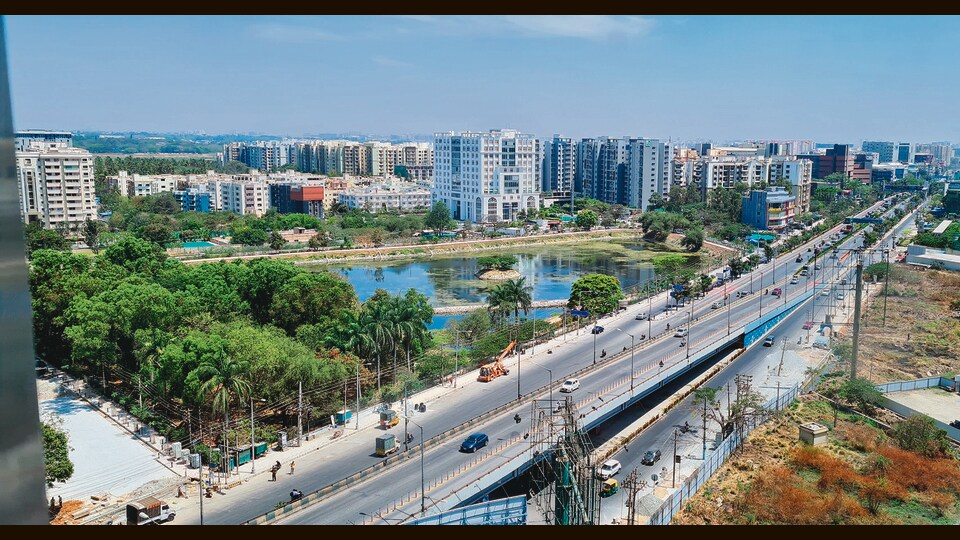
The GBA was established through the Greater Bengaluru Governance Bill, 2024, passed by the Karnataka assembly in March, and came into effect from May 15. As part of this sweeping overhaul, the existing civic body, the Bruhat Bengaluru Mahanagara Palike (BBMP), is to be replaced by smaller municipal corporations. Each will have its own elected council but will function under the overarching GBA—a chief minister-led authority, with the minister for Bengaluru development as deputy chairperson — tasked with coordinating and overseeing major development projects across the Greater Bengaluru area.
Key parastatal agencies—including the Bangalore Development Authority (BDA), the Bangalore Water Supply and Sewerage Board (BWSSB), the Bangalore Metropolitan Transport Corporation (BMTC), the Bengaluru Solid Waste Management Corporation, and the Bengaluru Metro Rail Corporation Limited—will now operate under the GBA’s strategic command.
Experts say the GBA’s structure places significant control in the hands of the state government. It includes elected representatives, key state ministers handling home, transport, urban development, and energy portfolios, as well as the mayors of the new municipal corporations.
While the GBA promises decentralisation through smaller municipal corporations, experts warn it could also lead to excessive centralisation. With the chief minister at the helm and municipal commissioners reporting to the GBA’s chief commissioner, the principal executive officer of the body, the model risks sidelining elected mayors and undermining the spirit of decentralisation enshrined in the 74th constitutional amendment, they add.
“Conceptually, the idea of an integrated metropolitan body like the GBA is good—it draws from models like the Greater London Authority,” said Srikanth Viswanathan, CEO, Janaagraha Centre for Citizenship and Democracy. “India’s Constitution doesn’t offer a model for governing large cities, so this is important. But the Greater Bengaluru Governance Act, 2024, is poorly drafted. It lacks a clear delineation of roles among the state government, the GBA, and the proposed smaller municipal corporations. Critical aspects, such as staffing, financial allocation, and resource sharing, remain inadequately defined.”
Delhi-based architect and urban designer Dikshu Kukreja calls the GBA a “timely and much-needed intervention” for a city plagued by fragmented, piecemeal planning and disjointed execution. “Bengaluru’s core challenges—traffic congestion, water management, and unplanned growth—have persisted because no single agency had the power to align land use, infrastructure, and mobility,” he said.
But even Kukreja strikes a note of caution. “Centralisation always carries the risk of political overreach,” he warned. “If not carefully balanced, it could marginalise local governance structures and weaken civic participation. The key is not to reject centralisation, but to design it in a way that supports a long-term vision while staying responsive to local needs.”
A history of urban governance in India
Bengaluru’s new approach responds to India’s decades-old problem of fragmented city governance.
Urban governance has deep historical roots—from ancient cities like Pataliputra and Taxila, where municipal administrators managed sanitation and markets, to medieval cities like Delhi and Agra overseen by Kotwals. These systems were highly centralised, with minimal public participation.
British colonial rule reshaped urban governance. In rapidly growing port cities like Mumbai, Kolkata, and Chennai, the British introduced municipal corporations to manage sanitation, street lighting, and tax collection. The first such body was set up in Madras (now Chennai) in 1688, followed by Bombay (Mumbai) and Calcutta (Kolkata), but these corporations remained tightly controlled by British officials with limited participation of local elites.
Post-Independence, cities struggled to cope with rapid migration and industrialisation. Urban governance remained under state governments, leading to inconsistent models across the country. Most elected municipal corporations stayed financially dependent on state and central grants.
By the 1960s and 1980s, states increasingly turned to parastatal agencies like the Delhi Development Authority (DDA) and the Mumbai Metropolitan Region Development Authority (MMRDA) to manage urban growth, often sidelining municipal bodies.
The 74th Constitutional Amendment Act of 1992 aimed to correct this by strengthening urban local bodies, mandating regular elections, decentralising 18 civic functions, and empowering municipalities. Yet, three decades later, most remain financially weak and dependent on state governments. In cities like Delhi, governance is split among the MCD, NDMC, DDA, and central agencies, resulting in persistent overlaps and turf wars.
The problem of fragmentation
Indian cities have long experimented with metropolitan planning bodies like Chennai’s CMDA, Hyderabad’s HMDA, and Kolkata’s KMDA. But unlike the GBA, these agencies lack formal legal authority over civic service providers, which perpetuates fragmentation.
In Chennai, the Greater Chennai Corporation (GCC) covers 426 sq km, while the CMDA plans for 5,904 sq km, often clashing with utilities like the water board. In Hyderabad, the GHMC governs 650 sq km, but the HMDA’s wider 7,257 sq km jurisdiction leads to frequent turf disputes. In Kolkata, the KMC manages core services within 206 sq km, while the KMDA plans for 1,888 sq km but has limited control over transport and waste, creating a persistent coordination gap.
“A unified authority with real power has been a demand since the 1990s,” said AK Jain, former commissioner (Planning) at the DDA. “In Delhi, we often struggled to coordinate with the MCD. Local councillors opposed many of our plans, especially when it came to removing unauthorised structures. A body like the GBA could solve these coordination problems—but only if it also changes standard operating procedures like licensing and land use approvals. Otherwise, nothing will change on the ground.”
Milind Mhaske, CEO, the Praja Foundation, is more sceptical. He believes the GBA’s current model would only weaken local democracy. “The Greater Bengaluru Authority puts the city entirely under the control of the state government, destroying the third tier of governance,” he added.
Mhaske argues the solution was not more centralisation. Instead, the existing municipal corporation and parastatals should have been better aligned by making the latter directly accountable to the mayor. “Mumbai has shown that this can work. The Brihanmumbai Electricity Supply and Transport (BEST) operates under the BMC. Urban local bodies can function effectively only when they have financial autonomy.”
Viswanathan agrees. “Municipal councils should have complete authority and autonomy over powers devolved to them under the 74th Constitutional Amendment, including local infrastructure and services.”
Rizwan Arshad, Congress MLA and chairperson of the drafting committee of the Greater Bengaluru Governance Bill, says the legislation introduces a new 360-degree model of urban governance. “Even as cities grow rapidly and face new urban challenges, India has largely relied on municipal corporations as the sole system of city governance. But cities are dynamic, and we needed a governance system that is futuristic,” said Arshad. “The 74th Constitutional Amendment did not provide flexibility to address the governance needs of large, fast-growing metropolitan cities. But we needed to build a new innovative and cohesive system without disturbing the powers given to municipal corporations.”
Arshad emphasises that the new city corporations will retain key functions such as tax collection and control over building by-laws. “The mayors, municipal commissioners, and councils of the new corporations will continue to exercise the powers devolved to them under the 74th amendment,” he said.
On why Bengaluru is adopting a multi-corporation system that failed in Delhi, Arshad said: “Delhi’s model collapsed because the North, South, and East Delhi municipal corporations were financially imbalanced. The South Corporation was significantly wealthier, while the others struggled. In Bengaluru, we will ensure that all new corporations will have similar geographical areas, comparable population densities, and balanced revenue bases.”
“And crucially, if any corporation faces a revenue deficit, the state government will step in to cover the shortfall. Unlike Delhi’s, Bengaluru’s corporations will not be left to fend for themselves. The chief minister chairing the GBA will further strengthen coordination and efficiency,” Arshad added.
The path forward
Naresh Narasimhan, a Bengaluru-based architect and urban designer, believes Indian cities urgently need governance structures that are integrated, long-term, and people-centric. “The GBA’s integrated structure could offer a template—but only if it evolves beyond bureaucratic centralisation,” he said. “We don’t just need fewer agencies—we need smarter, more responsive ones. What matters is having a shared long-term vision insulated from political churn, integration across planning and service delivery, and deep, consistent citizen participation.”
Narasimhan points to Singapore’s urban planning model—anchored by a strategic Concept Plan and a statutory Master Plan—as a system worth adapting, not imitating.
“Bengaluru needs its own version, tied closely to development controls, mobility plans, and demographic change. A city’s future cannot be tied to five-year political cycles—it must be shaped by fifty-year commitments,” he said. “If the GBA can stay focused on long-term, inclusive, people-first planning, it has the potential not just to reshape Bengaluru—but to set a new benchmark for urban governance across India’s rapidly growing metros.”
But could Bengaluru’s GBA-like model work in Delhi?
“Delhi’s urban management is deeply hampered by overlapping jurisdictions and institutional silos,” said Kukreja. “Agencies like the DDA, MCDs, DJB, and transport bodies often operate in isolation with misaligned mandates, making comprehensive planning nearly impossible. A unified metropolitan governance model like the GBA could bring much-needed synergy, aligning departments and ensuring that urban solutions actually meet the city’s evolving needs.”


