
 E-Paper



Beyond the News: Will Punjab get a fractured mandate it doesn’t deserve?
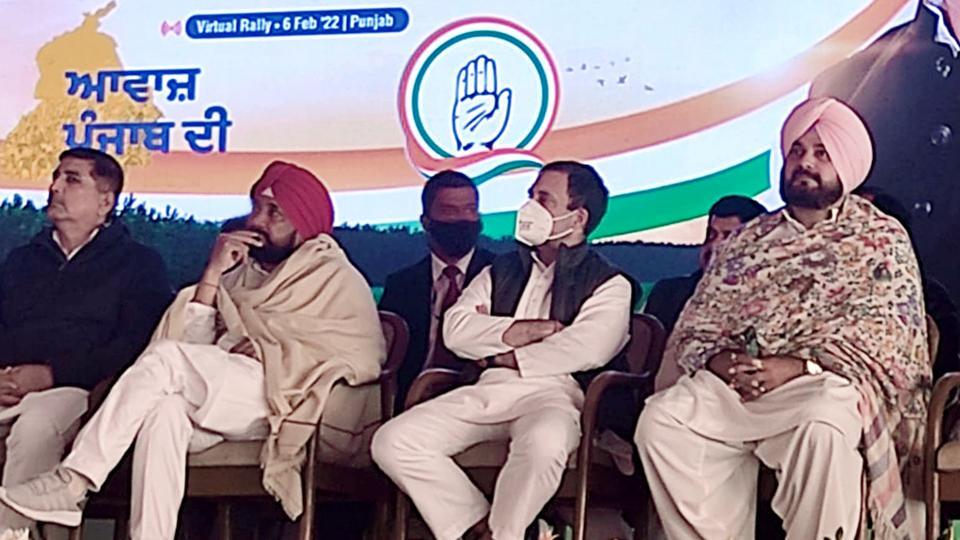
The Congress’s understated chief ministerial face might have upstaged Sidhu in their intraparty tussle for prominence. But he has his task cut out as the party’s sole pan-Punjab canvasser

 Prefer HTon Google


In Punjab, the voices ahead of the February 20 elections are a cacophony, not a chorus the border state has historically recited or scripted. If at all, a pleasanter note in the poll-time melee akin to the relatively smaller Goa is for the Aam Aadmi Party (AAP).
The state known for bipolar fights between the Congress and the Shiromani Akali Dal looks a psephologist’s nightmare! On the face of it, the question isn’t as to who’d form the government, or get a majority. The rush apparently is for the single-largest party status.
Catch all the latest updates related to assembly elections here
As the voting date is a week away, this real-time poll bulletin could change. A prognosis that wouldn’t perhaps alter is about defeats and victories with small margins. That’s essentially because the voter is spoiled for choices across the Doab (23), Majha (25) and Malwa (69) regions that together account for the 117-member assembly. Besides the Congress, SAD-Bahujan Samaj Party and AAP, there’s the BJP-Punjab Lok Congress and a farmers’ formation in the arena.
In 2017, the Congress, then led by Captain Amarinder Singh, had romped home with flying colours in all three regions, especially in Majha, where it won all except two of the 25 seats. The SAD and the Bharatiya Janata Party got one seat each: Majitha (Amritsar) and Sujanpur (Pathankot). The honours then were shared by Navjot Singh Sidhu, who campaigned in concert with the Captain, winning for himself the Amritsar (East) constituency.
Sidhu’s dilemma
The Captain now is a BJP ally and Sidhu a pale version of his charismatic self. The latter’s presence in the ongoing campaign is going to be restricted, given the tough challenge he faces from the SAD’s Bikram Majithia, who has shifted base from his Majitha pocket borough to fight him in Amritsar.
The former cricketer continues to draw crowds; rendered doubtful by his excitable ways is his ability to make the electorate stay or sway. His impetuous personal conduct belying the wisdom he spews, there are serious questions about his leadership acumen, making the lesser orator, Charanjit Singh Channi, shine in contrast.
The Congress’s understated chief ministerial face might have upstaged Sidhu in their intraparty tussle for prominence. But he has his task cut out as the party’s sole pan-Punjab canvasser. The incumbent party’s eclectic 2017 appeal isn’t in evidence in Majha and has waned considerably in Doab where the expected Dalit polarization appears truncated by the BSP’s SAD-aided countervailing thrust.
Channi’s uphill climb
What makes the climb steeper for Channi in Malwa is the grant of furlough to the imprisoned Dera Sachcha Sauda chief, Gurmeet Ram Rahim, whose band of obedient supporters could alter the outcome in close fights across the electorally crucial region stretching from Patiala to Fazilka and Ferozepur.
Its common talk in the countryside that the Dera, probed for sacrilege cases (which damaged the SAD in the previous polls) would work against the Congress and help the BJP, whose government in Haryana has set its chief free for 21 days ahead of the Punjab elections.
Much in the manner of the farmers’ alliance (the Sanyukt Samaj Morcha), the Dera might cut into the potential AAP support base of marginal farmers and other weaker social groups. But the strength of Arvind Kejriwal’s party is its eik mouqa (one chance) appeal in an ambience where people feel let down, even betrayed, by mainline contestants.
Kejriwal indeed has acquired greater acceptability after projecting Bhagwant Mann, the MP from Sangrur, as his chief ministerial candidate. He is to Mann what Anna Hazare was to him in the 2011-12 India Against Corruption movement that catapulted him to fame and political power.
At the core of his poll promises is the Delhi model of relief (freebies) and development. Not just that, many candidates the party has fielded are from the technocrat, civil servant and social activist stock that imparted lustre to its maiden 2014 bid for power.
The distinctiveness is smudged somewhat by turncoats from other parties, raising fears of it offering in new hamper the political culture it otherwise promises to replace. At the same time, imports from rival outfits lend the party the air of an entity in demand.
Signs of SAD revival, AAP’s eik mouqa appeal
Be it as it may, the buzz across Punjab is about AAP’s “silent support” driven by voluble young voters seeking to influence families. There were animated discussions at a wedding reception in Amritsar the other day on Sidhu’s fate in Amritsar East and “bookies wagering on 70 seats for AAP.”
That these assertions aren’t universally applicable became evident in Majha’s Panthic belt where the SAD is in a revival mode. In Tarn Taran, for instance, the party sits pretty in all four assembly segments. Its rival there is AAP, not the Congress, which made a clean sweep five years ago.
“Here its 110 percent AAP,” declared Ramanpal Arora, promptly interrupted by his brother, Dharamveer, who put ₹50,000 on a SAD win in Tarn Taran city. The key difference between them was that the Akali-backer supported the candidate and the AAP camp follower the party and Bhagwant Mann.
Nearly 90km towards Ferozepur, the story was no different. In the four seats the Congress holds there, it is in a contest on only two, the fight for the remaining being between the AAP and SAD.
If the contest pans out the way it’s foreseen, the Congress could face serious debilitation, hamstrung as it is by a host of factors: constituency-wise rebellions, anti-incumbency and reverse (non-scheduled caste) polarization. The infirmities were discernible as one drove from Nawanshahr, Phagwara and Kartarpur (in Doab) to Amritsar, Tarn Taran, Khadoor Sahab (Majha) and Ferozepur (Malwa).
Mayawati and BJP’s kingmaker hopes
The rally BSP chief Mayawati addressed with the SAD’s Sukhbir Badal in Nawanshahr on February 8 was impressive and responsive. The constituency with a huge scheduled caste population has identified with the BSP since the days of Kanshi Ram, who drew talent from a nearby village, Musapur, for his Backward and Minorities Communities Employee’s Federation (BAMCEF) and DS-4 (Dalit Shoshit Samaj Sangharsh Samiti) that were precursors to the 1983-84 born BSP.
“We’ve workers, the Akalis have transport,” chuckled Makhan Lal Chauhan, a BSP veteran. Recognizing Channi’s SC connect, he said his party aimed to win maximum seats out of the 20 that came in its share: “In a fractured mandate, we’d decide who’d rule.”
That may well prove to be a pipe dream. But the BJP’s Dera gamble points in the same direction. In a split verdict, it could be a player in tandem with the Captain, who hopes to sound the board in Patiala with the Punjab Lok Congress’s hockey and ball symbol. His prospects have brightened with possible transfer of the Dera and the BJP’s core vote.
The nagging question therefore is: will the border state get a wobbly coalition it does not deserve? If one goes by a voice vote, the AAP seems the only party capable of a clear win.


