
 E-Paper



Bill to replace CrPC: Panel may propose no handcuffs in financial crimes
The panel — headed by Bharatiya Janata Party member Brij Lal — is also likely to recommend that the government amend a controversial clause related to the powers of detention by police

 Prefer HTon Google


The parliamentary standing committee on home affairs is likely to suggest that economic offenders not be handcuffed while being taken into custody as part of its recommendations into the Bharatiya Nagrik Suraksha Sanhita that seeks to replace the British-era Code of Criminal Procedure (CrPC), people aware of developments said on Tuesday.
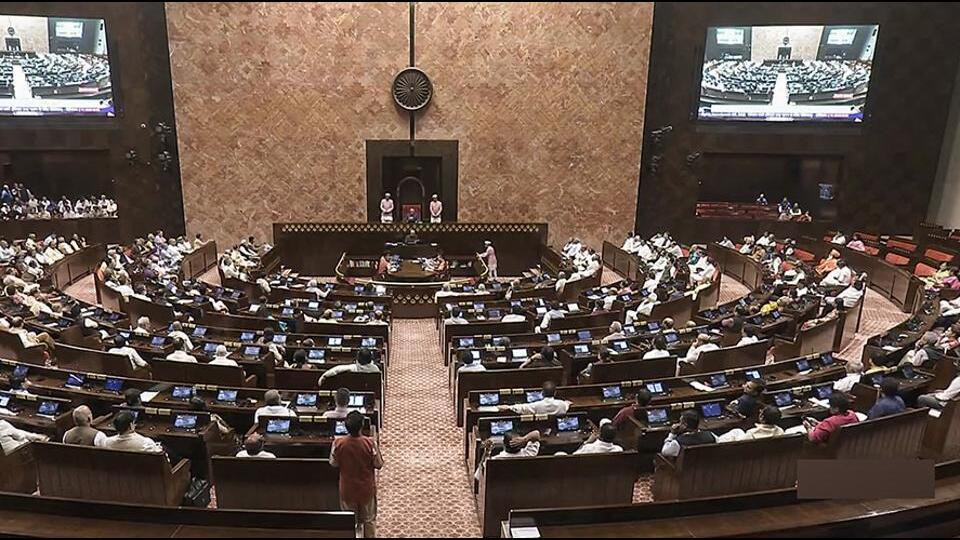
The panel — headed by Bharatiya Janata Party member Brij Lal — is also likely to recommend that the government amend a controversial clause related to the powers of detention by police, and establish a clear framework, said the people cited above.
The BNSS was part of three bills – the Bharatiya Nyaya Sanhita, 2023 and Bharatiya Sakshya Bill, 2023 being the other two – introduced by Union home minister Amit Shah on the final day of the monsoon session in the Lok Sabha. Together, they seek to replace British-era IPC, Code of Criminal Procedure (CrPC), and the Indian Evidence Act respectively in an overhaul that the government says will transform India’s criminal justice system.
The draft codes were prepared after a panel of experts, also known as Committee for Reforms in Criminal Laws, appointed by the home ministry, worked on the changes in the criminal laws starting 2020 and gave detailed recommendations to the government. The home ministry also consulted states and other experts regarding the changes.
In its deliberations, the panel -- which looked at all 3 bills -- came around to the view that there is a wide range of economic offences and handcuffing all the accused may not be suitable, said the people cited above. The police’s powers while arresting a person have been defined in Clause 43 (3) of the new code.
Against this backdrop, the committee is likely to reject the idea of lumping economic crimes with other categories of offences -- such as organised crime, terrorism, drugs or arms peddling, and heinous crimes such as murder, rape and sexual abuse of children, or those against the State, said the people quoted above. The BNSS recommends that handcuffs be used in all these cases.
The panel’s discussions focussed on the diverse range of offences under economic crimes -- from petty to serious -- and hence felt that blanket use handcuffs was not suitable, the people added. Its draft report, therefore, might ask for Clause 43(3) to be amended to remove economic offences from its ambit
During meetings to review the draft legislation, it was submitted before the panel that handcuffing will compromise the right to life of individuals. It was also suggested that the use of handcuffs while effecting the arrest of a person who has committed an economic offence is “overboard” and “will lead to misuse”, said the people cited above.
The committee also examined another provision -- Clause 172 (2) -- related to detention by police. This provision said that a police officer may detain or remove any person resisting, refusing, ignoring or disregarding to conform to any direction given by him. It also mentioned about releasing the person when the need for detention is not there anymore.
But the panel was of the view that the timelimit for releasing the detainee was not specified, and hence, is likely to recommend amending the clause suitably to remove any ambiguity, said the people quoted above.
Another controversial clause -- 187 (2) -- also came up for discussion.
Under the current CrPC, police custody can be sought and granted only during the first 15 days of detention for a maximum of 15 days. The clause stipulated a total of 15 days for police custody, but allowed the authorities to use this in whole or in parts at any time during the initial 40 days ( for offences carrying up to 10 year punishment) or in the first 60 days (for offences carrying punishment beyond 10 years).
Several experts had expressed concerns that this clause could be misused and make bail a near-impossibility during this period. The committee felt that the window of 40 days and 60 days should be seen only as an exception, said the people cited above, adding that the draft report will likely ask for greater clarity in the provision.
On another clause -- 175 (3) of BNSS, which allows a judicial magistrate to order a probe against anyone based on an application filed by a police officer -- the committee is set to ask for greater safeguards (such as an affidavit before a judicial magistrate and an enquiry if necessary -- to prevent misuse, said people aware of developments.


