
 E-Paper



Biometrics, chocolate wrapper: How Pahalgam attackers' link to Pak was uncovered
“For the first time, we have government-issued Pakistani documents that prove the nationality of the Pahalgam attackers beyond doubt,” a senior official said.

 Prefer HTon Google


Security agencies have confirmed that the three terrorists killed during Operation Mahadev on July 28 were Pakistani nationals, citing biometric evidence and documents issued by the Government of Pakistan, reports news agency PTI.
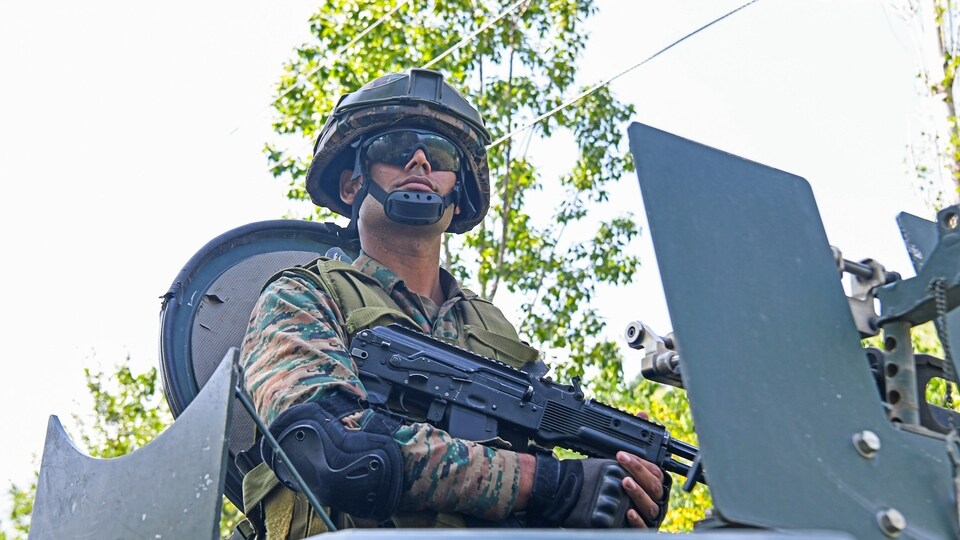
The slain men, identified as senior Lashkar-e-Taiba (LeT) operatives, were eliminated during ‘Operation Mahadev’ on the outskirts of Srinagar. They had been hiding in the Dachigam-Harwan forest belt since the April 22 terror attack in Pahalgam’s Baisaran meadow that left 26 people dead.
Officials told PTI said the evidence collected, including biometric data from Pakistan’s National Database and Registration Authority (NADRA), laminated voter slips, digital satellite phone data, and GPS logs, conclusively established their Pakistani identity. They confirmed that no local individual was among the attackers.
“For the first time, we have government-issued Pakistani documents that prove the nationality of the Pahalgam attackers beyond doubt,” a senior official said.
The three terrorists were identified as:
- Suleman Shah alias Faizal Jatt – A-category terrorist, lead shooter, and mastermind;
- Abu Hamza alias Afghan – A-grade commander and second gunman;
- Yasir alias Jibran – A-grade commander and third shooter.
Pakistani-issued documents, including two laminated voter slips from the Election Commission of Pakistan, were recovered from the bodies of Shah and Hamza. These slips correspond to voter rolls from Lahore (NA-125) and Gujranwala (NA-79), respectively.
Investigators also recovered a micro-SD card from a damaged satellite phone, containing NADRA-linked Smart-ID data—fingerprints, facial scans, and family trees—verifying the men’s citizenship and addresses in Changa Manga (Kasur district) and Koiyan village near Rawalakot in Pakistan-occupied Kashmir (PoK).
Additional items recovered included Pakistani-manufactured goods, such as wrappers of 'CandyLand' and 'ChocoMax' chocolates made in Karachi. Lot numbers on the wrappers matched a consignment sent to Muzaffarabad, PoK, in May 2024.
Ballistic analysis confirmed a match between the 7.62x39 mm cartridge casings found at the Baisaran attack site and the three AK-103 rifles recovered from the July 28 encounter. DNA analysis of blood on a torn shirt found in Pahalgam also matched the mitochondrial profiles of the three slain men.
According to officials, the terrorists had infiltrated into India through the Gurez sector of north Kashmir in May 2022, with intelligence intercepts recording their radio check-in from the Pakistani side.
On April 21, the trio took shelter in a seasonal hut near Hill Park, 2 km from Baisaran. Two detained locals—Parvaiz and Bashir Ahmad Jothar—told investigators they had provided food and overnight shelter to the attackers before they proceeded to carry out the massacre the following day.
GPS coordinates retrieved from a Garmin device carried by Shah matched eyewitness reports of firing positions during the attack. After the assault, the terrorists fled towards the Dachigam forest, where they remained hidden until the encounter.
Officials also said a Huawei satellite phone (IMEI 86761204-XXXXXX) used by the attackers was actively pinging the Inmarsat-4 F1 satellite nightly between April 22 and July 25. Triangulation of its signal narrowed their hideout to a four-square-kilometre area within Harwan forest.
Sketches of three suspects—Hashim Musa, Ali Bhai alias “Talha”, and local resident Adil Hussain Thoker—were initially released by Jammu and Kashmir Police on April 24. However, post-encounter verification revealed those images were based on unrelated photographs from a separate shootout in December 2024.
Officials added that command-and-control links traced back to Pakistan further reinforced the country’s involvement. LeT’s south Kashmir operations chief, Sajid Saifullah Jatt of Changa Manga, Lahore, was identified as the overall handler. His voice samples matched intercepted communications retrieved from the satellite phone.
Following the July 28 encounter, Rizwan Anees, LeT’s Rawalakot chief, reportedly visited the families of the slain terrorists and organised Ghaibana Namaz-e-Janaza (funeral prayers in absentia) on July 29. Footage of this gathering has been added to India’s official dossier on the case, officials said.


