BJP lawmaker draws flak for ‘Father and chader’ comments
The Congress has asked the BJP to clarify if it agrees with party MLA Rameshwar Sharma’s opinions that threaten to create divisions within people on the basis of their religious beliefs
Rameshwar Sharma, a ruling Bharatiya Janata Party (BJP) lawmaker in Madhya Pradesh, has drawn flak for his alleged comments against Muslims and Christians. In his address at a Dusshera function in Bhopal, he referred to a title of a Christian priest and ceremonial cloth offered at Muslim shrines and urged Hindus to stay away from “Father and chader”.
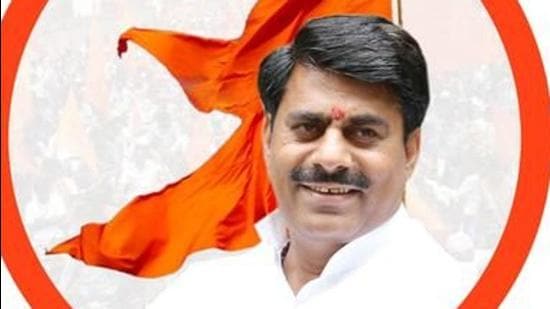
BJP MLA Rameshwar Sharma’s comments were played down by a party leader, who called it Sharma’s personal views. (Photo Courtesy- Twitter)
{{^htLoading}} {{/htLoading}}
“Hindus should stay away from Father and chader. Otherwise, it will spoil you. Keep away from peer baba (Muslim holy man). The peer baba is an obstacle in your visiting lord Hanuman temple. Tell the followers of peer baba that they believe in those who are buried in the ground, but we worship who runs the universe-- Bajrangbali.” Sharma asked Hindus to take care of culture, stop saying good morning, and chant shlokas to thank dharti mata (motherland) daily instead.
Opposition Congress leader Ajay Yadav said Sharma insulted the minority communities. “BJP senior leaders should clarify. Do they believe the same? If they do not, they should take action against Sharma because he is trying to create a rift among people of different communities.”
{{^htLoading}} {{/htLoading}}
{{^usCountry}}
Sharma was unavailable for comments.
{{/usCountry}}
{{#usCountry}}
Sharma was unavailable for comments.
{{/usCountry}}
BJP leader Rajneesh Agrawal called Sharma comments a personal opinion. “...he was just warning people against conversion. He did not insult any community.”
I have spent over a decade chronicling Madhya Pradesh’s political and social landscape, covering politics, investigative journalism, crime, human interest, and government policy, blending sharp insight with ground‑level depth. I have closely tracked three assembly elections, three Lok Sabha elections, leadership transitions in MP while exposing governance lapses, tender irregularities, and flawed policy rollouts. My reports have revealed gaps in the Cheetah project, irregularities in medical education, rigging in recruitment exams, and loopholes in policy implementation. In crime reporting, I have moved beyond FIRs to map systemic patterns — from organised crime networks and gender‑based violence to custodial accountability — balancing urgency with sensitivity. My journalism is defined by a commitment to human interest. I have profiled the marginalised Bancchda community, documented atrocities against tribal groups, and highlighted efforts to preserve their culture through heritage liquor and revival of spiritual practices. I have reported on farmers struggling with failed MSP promises, giving voice to those often reduced to statistics in policy files. Passionate about field reporting, I have reported on rampant sand mining in Chambal and Narmada, pharmaceutical companies supplying medicines under altered names, the dire condition of schools and colleges, the plight of commercial sex workers, and skewed sex ratios in specific districts. Beyond deadlines, and as HT’s state correspondent and assistant editor in Madhya Pradesh, I engage with ministers, farmers, students, and activists, believing the best policy stories begin with a single human voice. A postgraduate in Journalism and Mass Communication, I also hold a diploma in sports journalism.
Get the latest India News, breaking headlines, and real-time updates from across the nation. Stay informed on politics, government policies, crime, weather, and CEC Gyanesh Kumar row Live.
Get the latest India News, breaking headlines, and real-time updates from across the nation. Stay informed on politics, government policies, crime, weather, and CEC Gyanesh Kumar row Live.