
 E-Paper



Bombay HC asks centre to clarify if Covid-19 can be transmitted by inadvertent touch
The case relates to a petition alleging Air India’s Vande Bharat flights were putting people to risk by not leaving the middle seats empty.


A division bench of the Bombay High Court on Thursday sought to know from a government expert committee if Covid-19 could be transmitted through an inadvertent touch or is transmitted through droplets, while hearing a petition alleging violation of government mandated social distancing norms on flights operated by Air India to bring stranded Indians back under the Vande Bharat mission.
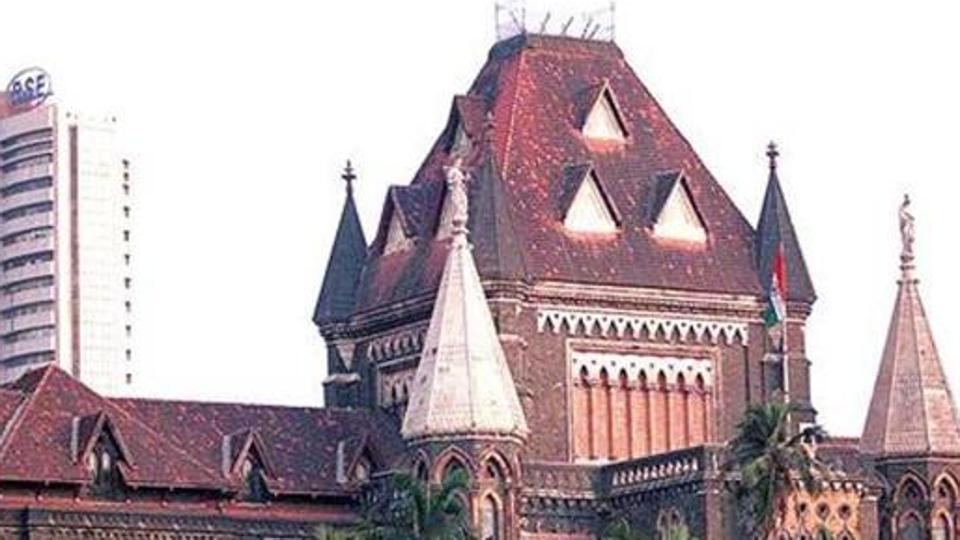
The division bench of justices SJ Kathawalla and SP Tavade asked the expert committee, headed by the Secretary, Ministry of Civil Aviation for the clarification after taking note of the minutes of a meeting held by the expert committee on May 26 to review and further strengthen the public health related protocols of air travel.
The minutes of the meeting which was present before the court read, “The physical distance between two persons helps in minimising the transmission through an inadvertent touch. It was also suggested that if the person sitting adjacent to another person is provided with a protective suit (like a gown covering the upper part of the body and gloves), this can also be very good means of preventing the spread of virus either by droplets or by touch.”
The committee’s note further listed the benefits of protective gowns in minimising the risk of transmission through an inadvertent touch while in the aircraft or while boarding or alighting.
The HT Guide to Coronavirus COVID-19
The bench was hearing a petition filed by Air India pilot Deven Kanani who had complained that the national carrier had violated social distancing norms while repatriating stranded Indians on special Vande Bharat flights.
In the last hearing, the court had asked the centre for data of international evacuees who were Coved-19 negative before boarding the flights but turned positive after alighting from the flight in India.
The centre in its response submitted that only 227 passengers, out of the 58,867 flown in from abroad through the Vande Bharat special flights to 17 cities, tested positive for the virus, which is just .38 per cent. However, the data did not provide details of Covid positive passengers found at Delhi, Mumbai and Hyderabad airports, despite 18,896 passengers having landed in 162 flights at these airports.
The centre on its part submitted that the 227 passengers, who were Covid negative before boarding the flights, had tested positive during institutional quarantine and hence there was no proof to corroborate if they had contracted the infection on the flight.
The petitioner’s advocates Abhilash and Jyoti Panickar informed the court that the data provided by the centre proved that the petitioner’s apprehensions, on the possibility of the virus spreading on Vande Bharat flights due to non-maintenance of social distancing norms, were right.
Panickar claimed that the lives of passengers had been put to risk by Air India by not keeping a seat vacant between two passengers. He said that the national average of Covid -19 infection was 0.16 per cent compared to 0.56 per cent among people who had travelled by Air India to 14 cities and had tested positive for the virus.
On its part, Air India, through senior advocate Darius Khambatta, and advocates Dr Abhinav Chandrachud, Arsh Misra and Kavita Anchan informed the bench that the air quality within the aircrafts was similar to that in operation theatres as the air was filtered through Hepa Filters and hence the apprehensions of the petitioner were unfounded.
The union of India through solicitor general Tushar Mehta and additional solicitor general Anil Singh submitted that the number of Covid positive passengers came to light after they were tested while in mandatory institutional quarantine, hence it was difficult to ascertain whether the virus was contracted on flight.
They further reiterated the expert committee recommendation that if proper precautions were taken and the passenger on the middle seat was provided with personal protective equipment (PPE) like face shield and wrap around gown, it would negate the chances of the spread of the virus even through an inadvertent touch.
The matter has been posted for further hearing on June 5.


