...
...
Next Story

Cabinet approves National Health Policy

The policy addresses issues concerning universal healthcare coverage, reducing maternal and infant mortality rate as well as making drugs and diagnostics available free.

Updated on: Mar 16, 2017, 10:38:20 IST
Hindustan Times, New Delhi | By , New Delhi
Prefer HTon Google
Advertisement

After much delay, the National Health Policy 2015, on the lines of Obamacare, was approved by the Cabinet on Wednesday, assuring affordable health services to all.
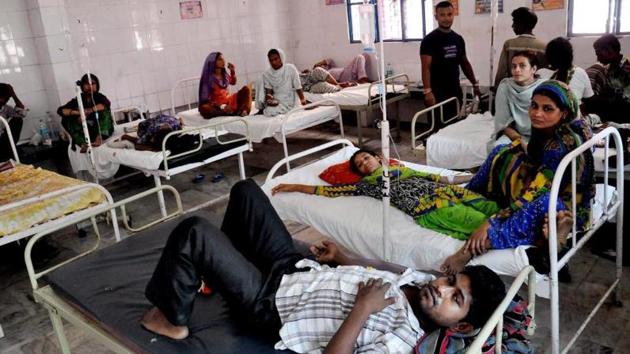
The policy addresses issues concerning universal healthcare coverage, reducing maternal and infant mortality rate as well as making drugs and diagnostics available free. (PTI FILE PHOTO)

The decision on the policy that had been in cold storage for about two years, was deferred twice in the past two months by the Cabinet.

The policy addresses issues concerning universal healthcare coverage, reducing maternal and infant mortality rate as well as making drugs and diagnostics available free, at least in the public healthcare system of the country.

It also suggests that the Centre must amend laws to align them with the current healthcare scenario.

“The green signal to the policy is a positive step, and we are hopeful that it will help improve the healthcare system significantly,” a senior health ministry official said.

Highlights of National Health Policy 2015

*Increase in public health spend: The draft policy proposes an increase in public health expenditure from the current 1% of GDP to 2.5%.

*National Health Rights Act: Akin to the right to education, the policy aims to assure health services to all.

*Non communicable diseases: With non-communicable diseases (NCDs) and associated deaths rising, there is a special focus on tackling them.

*Health Research: The department of health research finds prominence in the policy as a boost for health research.

 
ABOUT THE AUTHOR
Rhythma Kaul

Rhythma Kaul is the national health editor of the Hindustan Times. She has been reporting on public health, medicine, and medical research, with a particular focus on how government decisions and health system reforms shape people’s lives. Rhythma has over 25 years of journalistic experience. She joined Hindustan Times in 2008, and has since covered everything from pandemics and infectious diseases to cutting‑edge medical research and climate‑related health challenges. Her stories routinely track the work of the Ministry of Health and Family Welfare, department of pharmaceuticals, and key national health programmes, making complex medical science and policy accessible to a wide audience. One of her prominent news breaks has been the 2012 Baby Falak case: A two-year-old brutally battered baby girl was admitted to AIIMS-Delhi with severe head injuries, multiple fractures, human bite marks, and burns. The police investigation revealed this to be a case of multi-state human-trafficking racket. She was profiled by The Wall Street Journal for breaking this story. Rhythma holds a Master’s degree from Jawaharlal Nehru University, Delhi. Prior to Hindustan Times, she worked with the India Today Group. Rhythma can be contacted at rhythma.kaul@hindustantimes.com. Her X handle is @RamblingBrook.

Get the latest India News, breaking headlines and real-time updates from across the country. Stay informed about politics, government policies, crime, weather and major national developments.
SHARE THIS ARTICLE ON
Hindustantimes wants to start sending you push notifications. Click allow to subscribe