E-Paper



Canada-based group in Delhi to keep track of commitments made at G20 Summit
The G20 Research Group (along with the G7 and Brics) has been keeping a record of commitments made by leaders of the grouping and their fulfilment since 2008

 Prefer HTon Google


A Canada-based research group, which specialises in tracking multilateral summits such as G7, G20 and Brics (Brazil-Russia-India-China-South Africa), has sent a battery of researchers to New Delhi to keep a track of commitments made by leaders of the G20 countries.
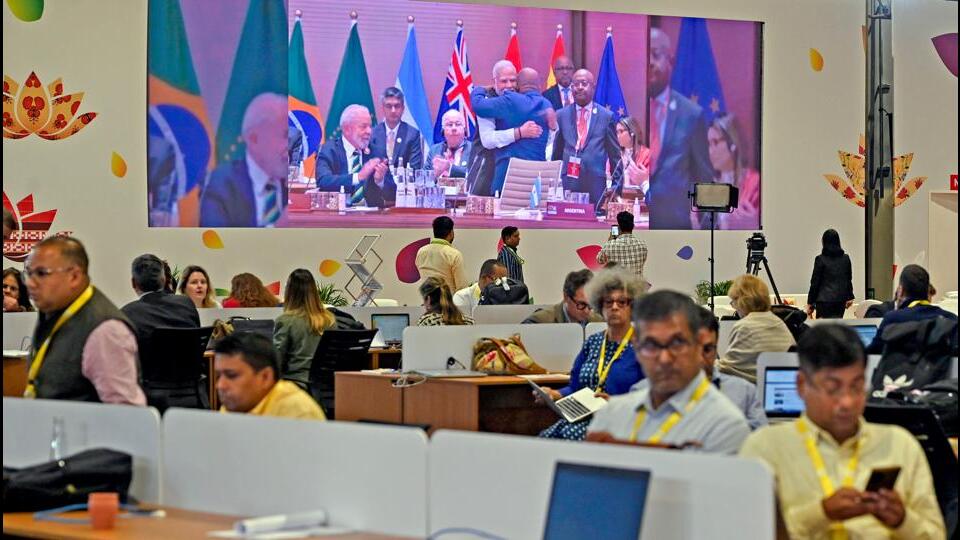
The group aims to bring out a report card next year on how the member countries deliver on a broad range of issues, including growth, climate, sustainable development, gender and financial inclusion, representatives of the group said on the opening day of the summit.
The G20 Research Group (along with the G7 and Brics research groups) functions under the Global Governance Programme at the University of Toronto and has been keeping a record of commitments made by leaders of the grouping and their fulfilment since 2008.
According to data gathered by the group, only 54% of the more than 3,000 commitments collectively made by G20 members during the last 15 years have been fulfilled.
“My job is to build tools powered by artificial intelligence to predict how well the G20 members are likely to follow through on their commitments,” said the group’s senior researcher Jessica Rapson, who holds a master’s degree in statistical science and machine learning from Oxford University. Predictive AI opens new avenues to scale up the G20’s effectiveness to drive progress on critical global issues, she said.
India’s G20 presidency focusses on the theme of ‘One Earth, One Family and One Future’ to address shared challenges. The key focus areas include ensuring growth, addressing the climate crisis, reversing the setbacks on sustainable development goals, pushing digital public infrastructure, reforming multilateral institutions and promoting women-led development.
Also Read:G20 Summit: Modi calls for showing new direction to world, ending trust deficit
In an article on Strengthening the G20 System, as part of a 172-page special publication by the G20 Research Group on the New Delhi summit, Rapson writes that by integrating predictive AI into the G20 operations, the members can identify high-risk commitments, make more informed decisions and allocate resources strategically to those areas where compliance needs to increase the most.
She is among the research group’s 15 specialists attending the two-day summit.
“Predictive AI models can analyse the characteristics of commitments and detect patterns associated with low compliance. For instance, commitments that mention specific dates or monetary values have been shown to be less likely to be met. By recognising such characteristics early, G20 can prioritise these commitments for targeted support and diplomatic efforts,” she writes.
Born in the wake of the 2008 global financial crisis, the mandate of the G20 leaders’ summit has expanded from coordinating macroeconomic policy and ensuring growth to a wide domain.
Earlier this month, the research group published the final compliance report on the G20 summit held in Bali, Indonesia last year. According to the report, the European Union had the highest compliance rate, with their leaders’ priority commitments at 97%, followed by Australia and Germany (93%), and Canada, Korea and the United Kingdom at 90%. India and Argentina met 87% of the key commitments made by their leaders in Bali in 2022.
In an article on Transcending Divisions to Reach Critical Consensus in the publication, the research group’s director John Kirton, who is also in India, writes that the New Delhi summit is the most important one ever held by G20 leaders with the world facing an unprecedented combination of interconnected crises.