E-Paper



‘Can’t lecture judiciary’: Supreme Court raps Centre over Abu Salem stand
A bench, headed by justice Sanjay Kishan Kaul, added that it does not reflect well on the central government when the officers at the highest level are not able to take a stand and make superfluous statements instead, trying to tell the judges how they should decide cases.

 Prefer HTon Google


It is not for the Union home secretary to lecture the judiciary on what it should do and should not do, the Supreme Court said on Thursday, as it took strong exceptions to a few points made by home secretary Ajay Kumar Bhalla in an affidavit that was filed by him over limiting gangster Abu Salem’s jail term to 25 years, as per the diplomatic assurance given by India to Portugal in 2002.
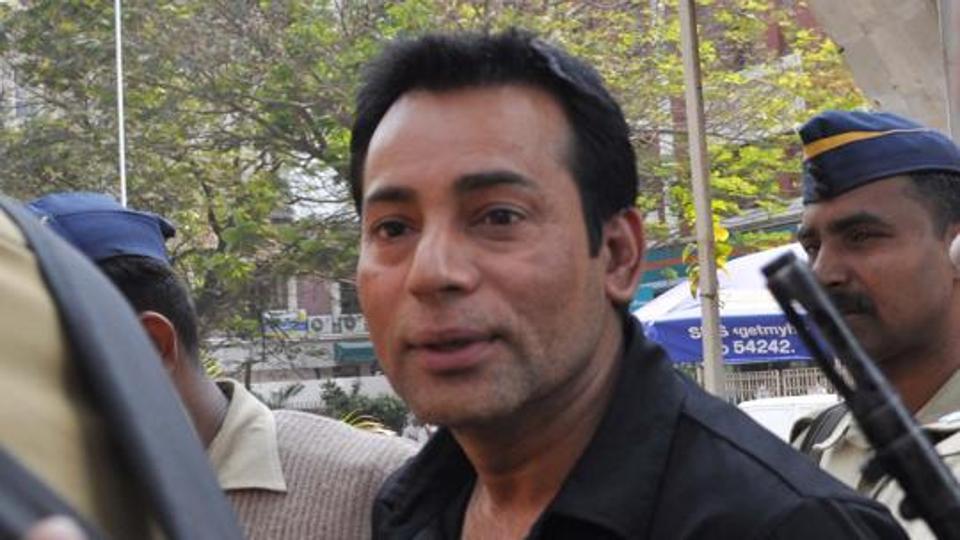
A bench, headed by justice Sanjay Kishan Kaul, added that it does not reflect well on the central government when the officers at the highest level are not able to take a stand and make superfluous statements instead, trying to tell the judges how they should decide cases.
“He (Bhalla) should not be reminding us what we should do. We will do what we have to do. He himself took two opportunities to file an affidavit. We don’t take too kindly to this... There are many sentences in this affidavit we don’t appreciate. There are superfluous submissions and look like an attempt to lecture the judiciary on what it should do,” remarked an anguished bench, which also included justices MM Sundresh.
The bench was referring to parts of Bhalla’s affidavit filed on Monday in response to a court query whether the 1993 serial bomb blast case convict Abu Salem will be released after serving 25 years in prison, as promised in 2002 by then deputy prime minister and home minister LK Advani to the courts in Portugal. Salem was extradited to India in November 2005. He is currently serving life terms in two separate cases relating to the 1993 Mumbai serial bomb blasts and the murder of Mumbai businessman Pradeep Jain in 1995.
Submitting a five-page personal affidavit, Bhalla responded by saying that Salem is entitled to being released in November 2030 after serving 25 years in prison, and that the Indian government is bound by its executive assurance that he would neither be sent to the gallows nor imprisoned beyond 25 years after his extradition to India from Portugal.
However, in certain parts of his reply, Bhalla termed Salem’s plea “pre-mature” and “based on hypothetical surmises” that can never be raised in his appeal against conviction and life term in the Mumbai serial bomb blast case, adding the top court should rather decide Salem’s appeal merit. He also included a caveat that the period of 25 years will be abided by the government “at an appropriate time subject to the remedies which may be available”.
Irked by the top MHA officer’s contentions, the bench on Thursday commenced the hearing by questioning additional solicitor general (ASG) KM Nataraj how Bhalla can ask the court to ignore everything else and decide the case on merit.
“We are sorry! The home secretary is nobody to tell us what we should decide first and how we should decide...What’s this? Who is he to tell us what we should do? If he wants to invite our comments, we will say it in our order. Is this how the senior most official in the home ministry should file an affidavit?” the bench asked Nataraj, who was appearing for the Centre and the Central Bureau of Investigation in the matter.
The court added that the home secretary was asked to take a categorical stand since a reluctance in honouring a diplomatic assurance may hamper extradition of other fugitives being pursued by the Indian government from other countries. “After taking a stand, it is not for him to tell us what we should do. It is then for us to proceed with the matter as the law permits,” it said.
At this point, the ASG argued that relationships between countries change and therefore, a convict should not be allowed to pursue his case on the basis of diplomatic assurances between countries. He also tried to justify the rider that the period of 25 years is subject to remedies available under the law.
Refusing to accept this argument, the bench retorted: “Are you saying you don’t want to stand by your international assurances or that your assurances can change from time to time depending on the situation? It is unfortunate that the government cannot take a stand before the court. As a country, you must be unequivocal… This is the highest level of the government. We are sorry that they aren’t capable of taking a stand before the court which they are duty bound to take. It doesn’t reflect well at all.”
The court also rejected Bhalla’s submission that Salem should not be allowed to raise the plea regarding the diplomatic assurance at this stage since he was yet to serve 25 years behind bars. “This is completely wrong. Whatever he (Salem) has to say, this is the stage. If he accepts his punishment, how can the home secretary tell us that we must still decide this appeal? What you are effectively telling us is that we should postpone the hearing until he completes 25 years. We cannot accept that,” said the bench.
“You say that the commitment would be abided with at an appropriate time. We asked you, you had to answer. There was no requirement for your home secretary to lecture us… The right is available today. How can he say that there is no question of the convict arguing based upon the assurance given?”it asked the ASG.
Later, in its order, the court recorded: “The affidavit (by Bhalla) states that it is legally untenable to club the assurance with the merits of the case and he should argue the appeal on merits. Thereafter, it is said that the court may decide the appeal on merits. As to what this court has to do or not to do, it is for the court to take a call on. We do not appreciate the tenor of the affidavit.”
The order added that if a convict accepts his guilt, it cannot be said that the court must hear the appeal on merits. “We have to take a call on the effect of assurance and we cannot postpone the hearing on that basis nor is it permissible for the government to say that it is not open for him to raise this issue. As an appellant, he is certainly entitled to raise this issue. It is neither premature nor based on hypothetical surmises,” stated the bench.
At this point, advocates Rishi Malhotra and S Hari Haran, appearing for Salem, submitted that their client’s sentence should be guided by the solemn assurance given by the Indian government to Portugal.
The court adjourned the case to May 5 to consider this plea and hear the case further on the aspect of computation of Salem’s custody period. CBI, the prosecuting agency in the case, has argued that Salem is not entitled for a set off from the date of the order of his extradition in March 2003 but that his period of custody should be counted from the date he was handed over to the Indian authorities in 2005.
Salem, a member of the Dawood Ibrahim’s cartel who was considered as one of the key conspirators in the serial blast cases, was extradited from Portugal on November 11, 2005, after a prolonged legal battle and following Advani’s assurance to the Portuguese courts during the first NDA regime when India wanted to extradite Salem to make him stand trial in eight criminal cases.
After his extradition, in February 2015, a special Terrorist and Disruptive Activities (Prevention) (TADA) court awarded Salem life imprisonment for murdering Mumbai-based builder Jain in 1995, along with his driver Mehndi Hassan. The TADA court rejected Salem’s argument that he cannot be given a jail term exceeding 25 years in view of the extradition treaty. The trial court held that it has to apply the law, while the government can exercise its power in the matter of “execution of the sentence awarded by this court”.
In June 2017, Salem was again convicted and awarded a life sentence for his role in the 1993 serial blasts case. He was found guilty of transporting weapons from Gujarat to Mumbai for use in the serial bombings, which left 257 dead and more than 700 people seriously injured.
Salem has argued before the top court that handing out an imprisonment beyond 25 years to him was in breach of the assurance given by the then deputy Prime Minister on behalf of the Centre.
The top court was hearing a challenge by Salem to two life sentences he had been handed when, on February 2, it asked the Centre and the prosecuting agencies to come clear on the applicability of the solemn sovereign assurance.
After the CBI chose to make the fine point that the assurance was on execution and imprisonment beyond 25 years, not whether an Indian court would sentence Salem to a period exceeding 25 years, the court asked the Union home secretary to file his personal affidavit to state clearly whether the assurance given by Advani on behalf of the government is to be abided or not.