E-Paper



‘Can’t open floodgates’: SC junks plea for delimitation in AP, Telangana
The SC bench firmly rejected allegations of discrimination vis-à-vis the separate delimitation conducted for the Union Territory of Jammu and Kashmir.


The Supreme Court on Friday dismissed a plea seeking a fresh delimitation exercise in Andhra Pradesh and Telangana, ruling that there exists a constitutional bar against taking up such a demand before the first census conducted after 2026, while also cautioning that entertaining such public interest petitions could “open the floodgates” for similar pleas from other states.
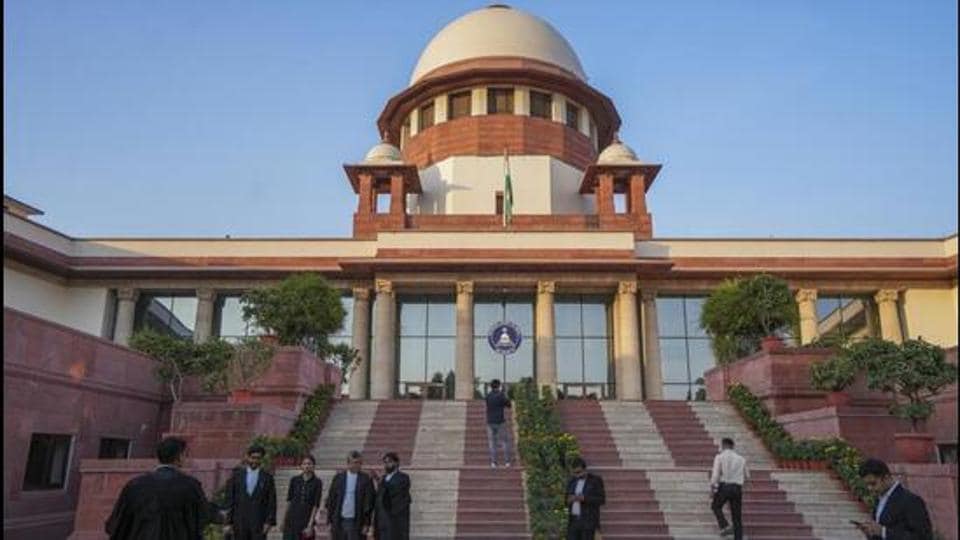
A bench of Justices Surya Kant and N Kotiswar Singh delivered the judgment, firmly rejecting allegations of discrimination vis-à-vis the separate delimitation conducted for the Union Territory of Jammu and Kashmir, which was reconstituted in 2019 following the abrogation of Article 370.
“On a plain and harmonious reading... Section 26 of the AP Reorganisation Act (on increase in assembly seats) is subject to Article 170 of the Constitution,” said Justice Surya Kant while reading the operative portion of the verdict.
“We have held that this (granting the plea) will open floodgates for all states to approach seeking parity. We hold that the constitutional mandate under Article 170(3) serves as a bar. Demand for the delimitation is contrary to the same and thus fails,” he added. Article 170(3), inserted by the 84th Constitutional Amendment Act, 2001, freezes the allocation of seats in state assemblies until data from the census conducted after 2026 is available.
Dismissing the writ petition filed under Article 32, the court held that the exclusion of Andhra Pradesh and Telangana from the 2020 delimitation notification issued for Jammu & Kashmir was not arbitrary or violative of Article 14. It clarified that delimitation provisions applicable to J&K, a Union Territory, were distinct from those governing states under Chapter III of Part VI of the Constitution, dealing with the structure, composition, functioning, and powers of state legislatures.
“J&K having been reconstituted is not governed by Chapter III of Part VI of the Constitution,” Justice Kant observed. He further noted that while “legitimate expectation” is a well-settled principle of law, it “does not lead to any legal right” and cannot override the express provisions of the Constitution. “The expectation under the AP Reorganisation Act cannot be seen in isolation, as it is subject to Article 170,” he said.
The writ petition, filed by K Purushottam Reddy in 2022, had sought directions to the Union of India to initiate the process of increasing the number of assembly seats in Andhra Pradesh and Telangana under Section 26 of the Andhra Pradesh Reorganisation Act, 2014. The petitioner argued that since the government had carried out a similar exercise in Jammu and Kashmir, post its reorganisation into a Union Territory, the exclusion of AP and Telangana amounted to “unreasonable classification” and was therefore unconstitutional.
It was contended that delimiting constituencies exclusively for J&K, while declining to operationalise Section 26 for AP and Telangana, violated the equality clause under Article 14 of the Constitution.
However, the Supreme Court dismissed this argument, holding that the two exercises were constitutionally distinct and based on separate legal frameworks. It underscored that while Section 26 of the AP Reorganisation Act contemplated an increase in the number of assembly seats in both Andhra Pradesh and Telangana, Article 170(3) of the Constitution clearly bars any delimitation exercise until after the first census post-2026.
“Thus, any expectation for an earlier delimitation, even if indicated in the Reorganisation Act, cannot override the Constitution itself,” the court held.
The bench justified the separate delimitation in Jammu and Kashmir on the ground that it had undergone a fundamental constitutional reorganisation in 2019. Following the abrogation of Article 370, the former state was restructured into a Union Territory under the Jammu and Kashmir Reorganisation Act, 2019, which empowered the Centre to initiate a fresh delimitation exercise through a Delimitation Commission.
The petition before the court had attempted to argue that the same yardstick should apply to AP and Telangana. However, the bench held that Union territories are not subject to Article 170, which deals with the composition of state legislative assemblies. Therefore, the delimitation exercise in J&K could not be compared with that in states.
This line of reasoning was consistent with the Supreme Court’s February 2023 judgment, which upheld the validity of the delimitation exercise in Jammu and Kashmir, rejecting the challenge filed by two residents of Srinagar.
In that verdict, a bench of Justices Sanjay Kishan Kaul and AS Oka dismissed the plea questioning the legal basis of setting up the Delimitation Commission for J&K and increasing its assembly seats from 83 to 90. The court had made it clear that the Delimitation Act, 2002, and the 2019 Reorganisation Act provided sufficient legal grounds for the commission’s formation, and the Election Commission’s role did not preclude the constitution of a separate delimitation body for the UT.
The final delimitation order for J&K was notified in May 2022. It increased the number of assembly seats from 83 to 90, allocating 43 seats to Jammu and 47 to Kashmir. This marked a shift in the region’s political balance, with Jammu’s share rising to 47.8%, up from 44.6%, and Kashmir’s falling to 52.2%, down from 55.4%.
The exercise was carried out based on the 2011 Census, and despite opposition from regional parties, the Centre maintained that delimitation was a necessary step before holding fresh elections. The Union government had also argued in court that the Delimitation Commission’s orders, once published in the Gazette, are final and not open to judicial review.