The death penalty can be imposed only in cases where the possibility of a convict’s reformation is completely ruled out, the Supreme Court has held, underlining that the possibility of reform cannot be presumed absent merely because a crime is exceptionally brutal or grotesque.
SC sets strict threshold for imposing death penalty
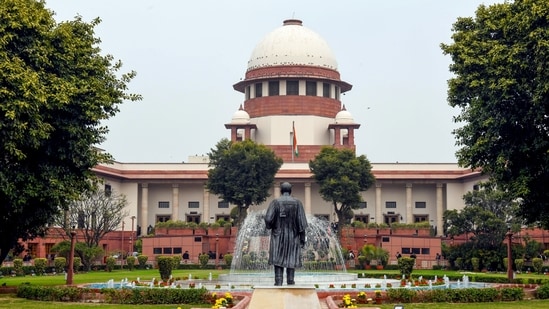
According to a bench of justices Vikram Nath, Sandeep Mehta and Vijay Bishnoi, the prosecution must establish that life imprisonment is unquestionably inadequate as an alternative to capital punishment, and that the death sentence must be reserved for cases where the alternative of imprisonment for life is demonstrably foreclosed.
The ruling highlighted the distinction between the gravity of a crime and the separate question of whether the person who committed it is beyond reform — a distinction the law requires courts to examine before taking away a life.
Also read: Retired civic employee sentenced to life imprisonment for sexually assaulting minor relative
Court commutes death sentence in child rape-murder case
Applying this principle, the bench commuted the death sentence of a man convicted of repeatedly sexually assaulting his six-year-old stepdaughter and murdering her in 2018. The court, however, directed that he remain in prison for the remainder of his natural life, without the possibility of remission, holding that this was an appropriate punishment given the gravity of the crime.
{{/usCountry}}Applying this principle, the bench commuted the death sentence of a man convicted of repeatedly sexually assaulting his six-year-old stepdaughter and murdering her in 2018. The court, however, directed that he remain in prison for the remainder of his natural life, without the possibility of remission, holding that this was an appropriate punishment given the gravity of the crime.
{{/usCountry}}In the present case, it said, the prosecution had failed to establish that the convict was beyond reform, while the material on his background and conduct in custody weighed against such a conclusion.
“The State has not excluded the possibility of the appellant’s reformation,” held the bench, adding that the alternative of imprisonment for the remainder of his natural life was adequate for a crime of such gravity.
The judgment emphasised that the sentencing exercise must consider the circumstances of the offender alongside those of the crime, rather than allow the enormity of the offence to eclipse every mitigating factor. The court said the death penalty was justified only when life imprisonment was “unquestionably foreclosed”.
Also read: Lucknow Pocso court gives man life term for abducting, sexually assaulting, killing 5-year-old boy
Court weighs crime’s brutality against mitigating factors
The bench did not minimise the brutality of the crime. The convict had repeatedly sexually assaulted the child, his stepdaughter, and killed her in April 2018, apparently to prevent her from disclosing the abuse. Her mother was the prosecution’s solitary eyewitness to the events inside the home.
Describing the killing as an instance of “instrumental silencing”, the court said the murder compounded the sexual violation of the child with an assault on the administration of justice. It called this an aggravating circumstance of the highest order, but stressed that even such gravity did not, by itself, establish that the offender was beyond redemption.
The court considered several mitigating circumstances, including the convict’s account of childhood deprivation and adult misfortune, the absence of previous criminal convictions, satisfactory conduct in custody, continuing family ties, his age of about 56 years and the nearly eight years he had spent in prison, including around seven under the shadow of a death sentence.
Also read: Goa govt moves Supreme Court, seeks life imprisonment for Tarun Tejpal in 2013 rape case
Trial court faulted over same-day sentencing
The psychological evaluation did not disclose any condition from which incorrigibility could be inferred. The state, meanwhile, had produced no evidence establishing that the possibility of reform could be ruled out. The court said these circumstances deserved genuine and substantial weight in deciding whether the ultimate punishment was warranted. The judgment also criticised the trial court for convicting and sentencing the accused to death on the same day, without a separate, meaningful hearing on sentence as required by law. The Supreme Court subsequently obtained additional material concerning his social and psychological background and prison conduct to ensure that the sentencing decision rested on a complete record.
At the same time, the bench ruled out ordinary life imprisonment carrying the prospect of remission after 14 years as inadequate for the crime. It invoked the intermediate sentencing option recognised in Union of India Vs V Sriharan (2016), under which a court can direct imprisonment for the convict’s entire natural life without remission.
Also read: Special court sentences 35-year-old man to life imprisonment in minor’s rape case
The death sentences for murder and aggravated penetrative sexual assault were accordingly commuted to imprisonment for the remainder of the convict’s natural life, without remission. The sentences for the other offences were upheld and ordered to run concurrently.
The court described the substituted punishment as one of the utmost severity, second only to death. It would ensure that the convict remained behind bars for the rest of his life, it said, while preserving the possibility of reformation that an irreversible death sentence would extinguish.