The Central Bureau of Investigation (CBI) has filed a case in its probe into the alleged conspiracy behind the framing of former Indian Space Research Organisation (ISRO) scientist Nambi Narayanan in a 1994 espionage case, people familiar with the matter said. The agency has booked some Kerala police officers, they said without naming them.
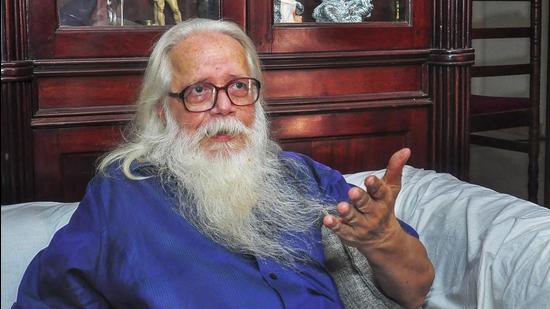
A Supreme Court bench of justices AM Khanwilkar, Dinesh Maheshwari and Krishna Murari called the matter “serious” and ordered the CBI probe on April 15. It accepted the report of a court-appointed panel that looked into the role of the police officers. The court said the CBI will be at liberty to use the contents of the report for the registration of a preliminary inquiry for further investigation.
Also Read | The 1994 espionage case that led to Isro scientist Nambi Narayanan’s arrest
The Kerala police registered two cases in October 1994 after Maldivian national Rasheeda was arrested in Thiruvananthapuram for allegedly obtaining secret drawings of ISRO rocket engines to sell to Pakistan. Narayanan, the then director of the cryogenic project at ISRO, was arrested along with his colleague, D Sasikumaran, and Fousiya Hasan, a Maldivian friend of Rasheeda. Former Supreme Court judge DK Jain inquired into the circumstances that led to the framing of Narayanan, 79, and his arrest. The CBI probed the matter and exonerated Narayanan in 1996.
The Supreme Court called the police action against Narayanan “psycho-pathological treatment”. In September 2018, it said his “liberty and dignity”, basic to his human rights, were jeopardised as he was taken into custody and, eventually, despite all the glory of the past, he was compelled to face “cynical abhorrence”.
{{/usCountry}}The Supreme Court called the police action against Narayanan “psycho-pathological treatment”. In September 2018, it said his “liberty and dignity”, basic to his human rights, were jeopardised as he was taken into custody and, eventually, despite all the glory of the past, he was compelled to face “cynical abhorrence”.
{{/usCountry}}In 2018, the Supreme Court directed the state government to pay him ₹50 lakh compensation for his wrongful incarceration, malicious prosecution, and humiliation for being framed in a false case.