The Ministry of Petroleum and Natural Gas on Tuesday cited NITI Aayog's study on Ethanol and backed the usage of E20 petrol, saying that it not just gives "better acceleration and better ride quality", but also benefits the farmers of the country.
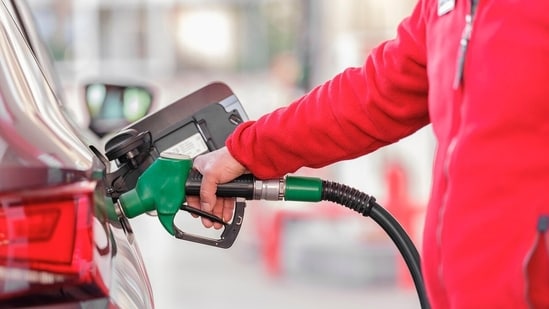
The Centre said that E20 petrol also lowers carbon emissions by approximately 30 per cent as compared to E10 fuel.
The development comes just days after Road transport minister Nitin Gadkari said that there was no merit in arguing that mixing 20 ethanol in petrol (called E20) reduces mileage of vehicles.
"This is not even a discussion. I don't know if I should say this, politically — it appears the petroleum lobby is manipulating it,” he said while responding to a question about social media buzz over E20 petrol's effect on mileage.
ALSO READ | Gadkari throws ‘open challenge’ on claims of lower mileage due to ethanol in petrol, blames ‘lobby’
During an interview at a summit by Business Today, Gadkari said, "You show me one vehicle anywhere in the world which had problems because of E20 petrol!", openly challenging that there is "absolutely no problem with E20".
{{/usCountry}}During an interview at a summit by Business Today, Gadkari said, "You show me one vehicle anywhere in the world which had problems because of E20 petrol!", openly challenging that there is "absolutely no problem with E20".
{{/usCountry}}In its post on X, the Petroleum Ministry cited a study on life cycle emissions of Ethanol done by NITI Aayog, and said that "GHG (Greenhouse gas) emissions in case of use of sugarcane and maize-based Ethanol are less by 65% and 50% respectively, than those of petrol".
Centre lists E20 benefits:
- Better farm income: The central government said that owing to the 'Ethanol Blending' programme, the money which was earlier being spent on crude oil imports was now going to the nation's farmers "who have become 'Urjadaatas' apart from being 'Annadatas'". It added that at 20 per cent blending, it is expected that payment to the farmers this year alone will amount to ₹40,000 crore, noting that foreign exchange savings will be around ₹43,000 crore.
- Lowered carbon emissions: The ministry said that use of E-20 gives "better acceleration, better ride quality and most importantly, lowered carbon emissions by approximately 30% as compared to E10 fuel". It further noted that Ethanol's higher-octane number (~108.5 compared to petrol’s 84.4) makes Ethanol-blended fuels a valuable alternative for higher-octane requirements that are essential for modern high-compression engines. "Additionally, Ethanol’s higher heat of vaporization reduces intake manifold temperatures, increasing air-fuel mixture density and boosting volumetric efficiency," the Petroleum Ministry noted.
- Petrol's Research Octane Number improved: Noting that petrol was previously being sold with Research Octane Number (RON) of 88, the government noted that regular petrol in the country today has a RON of 91 to meet the BS-VI requirements. "However, this has again been improved further to RON 95 with blending of Ethanol 20, resulting in better anti knocking properties and performance," it added.
- Reduced fuel efficiency claims 'misplaced': The Petroleum Ministry also sought to dismiss critiques suggesting that E20 causes a "drastic" reduction in fuel efficiency, and said that they are "misplaced". It said that vehicle mileage is influenced by a range of factors beyond fuel type, including driving habits, maintenance practices, tyre pressure, and even air conditioning load.ALSO READ | Govt reacts to online buzz on ethanol-blended E20 petrol effect on vehicles: ‘No drastic mileage cut’
- Efficiency drop in E10 vehicles marginal: The government said that discussions over E20 petrol have been held with the Society of Indian Automobile Manufacturers (SIAM) as well as prominent manufacturers of vehicles. It noted that the efficiency drop (if any) in E10 vehicles have been marginal. "For some manufacturers, vehicles have been E 20 compatible from as far back as 2009. The question of any drop in fuel efficiency in such vehicles does not arise," it added.
- Back to E-0 petrol means losing success in energy transition: The Petroleum Ministry said that returning to the alternative of E-0 petrol would involve losing hard-fought gains on pollution and the success achieved in energy transition. "The roadmap of the IMC had been in the public domain from 2021 and laid out a calibrated path to reaching E-20. Since then, there has been a period of over 4 years which has allowed vehicle technology to improve, supply chain to be calibrated and an overall eco-system developed," it noted.
- Centre cites Brazil's example: The ministry cited Brazil's usage of E27 and said that the country has been successfully running the fuel for years with zero issues, adding that automakers like Toyota and Honda produce vehicles in Brazil as well. It went on to say that E20's safety standards are "well established through BIS specifications and Automotive Industry Standards".
- Some cases of older vehicles: The Centre said that there are no issues in most parameters, including drivability, startability, metal compatibility and plastic compatibility. However, it noted that only in cases of certain older vehicles, "some rubber parts and gaskets may require replacement earlier than in case non blended fuel was used". The government argued that this replacement is "inexpensive" and can be managed easily during routine servicing of the vehicle.
Fear mongering over E20 'totally baseless'
The government also took note of the concerns raised over the increased price of ethanol-blended petrol.
"Currently, the average procurement cost of Ethanol for Ethanol Supply Year 2024-25, as on 31.07.2025, is Rs.71.32 per litre, inclusive of transportation and GST. For producing E20, OMCs blend 20% of this procured Ethanol with Motor Spirit (MS). Price of C-heavy molasses based Ethanol increased from Rs.46.66 (ESY 2021-22) to Rs.57.97 (ESY 2024-25). Price of Maize-based Ethanol increased from Rs.52.92 to Rs.71.86 over the same period," it noted.
However, the Centre said, that oil companies have not dismissed the ethanol blending mandate despite the increase in ethanol's price. It said that this is "because the programme delivers on energy security, boosts farmers’ incomes and environmental sustainability".
The government slammed the attempts to derail the national programme of Ethanol Blending and said that "this fear mongering is totally baseless and has been clarified by an insurance company whose tweet screenshot was deliberately misinterpreted to create fear and confusion".
This remark was made on the basis of the attempts to foment fear and confusion in the minds of car owners by picking selective information and creating a false narrative that insurance companies will not cover car damages due to the use of E20 fuels.
Additionally, the Petroleum Ministry also took note of apprehensions that India will go beyond E20 very rapidly. Issuing a clarification, it said, "Any move beyond E-20 requires careful calibration, for which extensive consultation are underway. This has involved the same vehicle manufacturers who are already in Brazil as well as other manufacturers, entities involved in supply of feed stocks, R&D agencies, oil companies and Ethanol producers. This process is yet to reach conclusion."