
 E-Paper



Centre constitutes special task force to monitor monkeypox
NITI Aayog member (health) VK Paul will head the task force and its members will include officials from the health ministry and representatives of the country’s major medical and research institutes.

 Prefer HTon Google


New Delhi: The Union health ministry has constituted a special task force to monitor monkeypox cases, assist in the expansion of diagnostic facilities, and explore the possibility of vaccine development or sourcing to control the infection, officials said on Monday.
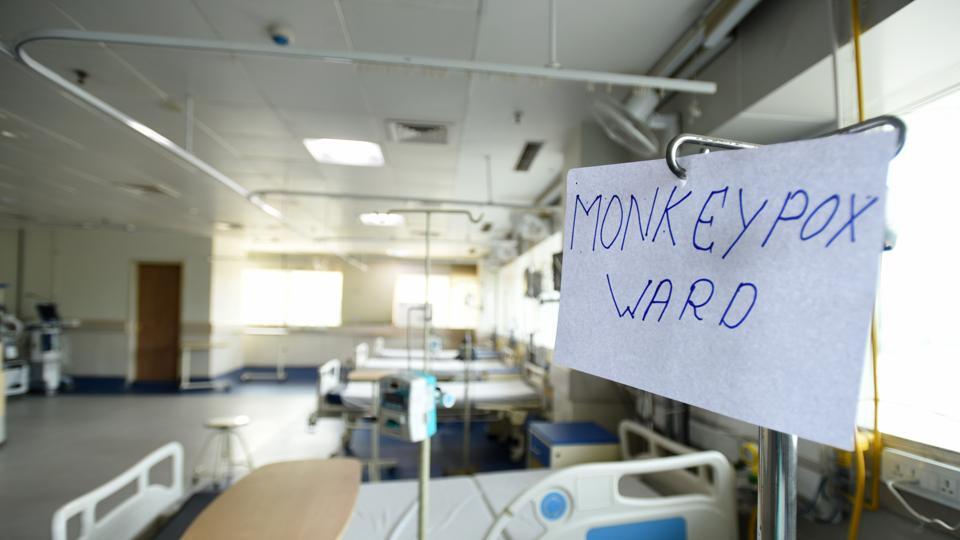
NITI Aayog member (health) VK Paul will head the task force and its members will include officials from the ministry and representatives of the country’s major medical and research institutes.
The officials said the decision to form the centralised task force was taken at a meeting of the ministry’s senior functionaries on July 26.
“The task force has been formed and this will help in the better management of monkeypox infections in the country,” said a health ministry official, requesting anonymity. “The task force will also coordinate cases from states and provide any expertise that the states need.”
Also read: Delhi reports 2nd monkeypox case, African nat'l with no travel history infected
India has so far reported three monkeypox cases from Kerala and one from Delhi. The cases exclude that of a 22-year-old man, who died in Kerala’s Thrissur on Saturday. The man tested positive for monkeypox in the UAE before he returned to the state on July 22.
According to the World Health Organisation (WHO), monkeypox is a viral zoonosis (a virus transmitted to humans from animals) with symptoms similar to those seen in the past in smallpox patients, although it is clinically less severe. The UN body has declared monkeypox a “public health emergency of international concern”. Over 20,000 monkeypox cases have been reported from 75 countries globally.
Also read: Kerala health officials baffled as man suspected to have contracted monkeypox
Monkeypox, usually a self-limited disease, manifests itself with fever, rash and swollen lymph nodes and may lead to a range of medical complications. The symptoms last for two to four weeks.
Earlier, the Centre issued the ‘Guidelines on Management of Monkeypox Disease’, which said that human-to-human transmission occurs primarily through large respiratory droplets generally requiring prolonged close contact. The disease can be transmitted through direct contact with body fluids or lesions, and indirect contact with lesion material such as through contaminated clothing or linen of an infected person. The guidelines also stated that animal-to-human transmission may occur by bite or scratch of infected animals or through bush meat preparation.


