
 E-Paper



DGCA cuts SpiceJet ops over safety issues
India’s aviation regulator Directorate General of Civil Aviation (DGCA) on Wednesday said it is restricting to half, SpiceJet’s summer schedule for eight weeks, on the basis of the findings of its “spot checks, inspections”, and the airline’s response to a notice from it.

 Prefer HTon Google


India’s aviation regulator Directorate General of Civil Aviation (DGCA) on Wednesday said it is restricting to half, SpiceJet’s summer schedule for eight weeks, on the basis of the findings of its “spot checks, inspections”, and the airline’s response to a notice from it.
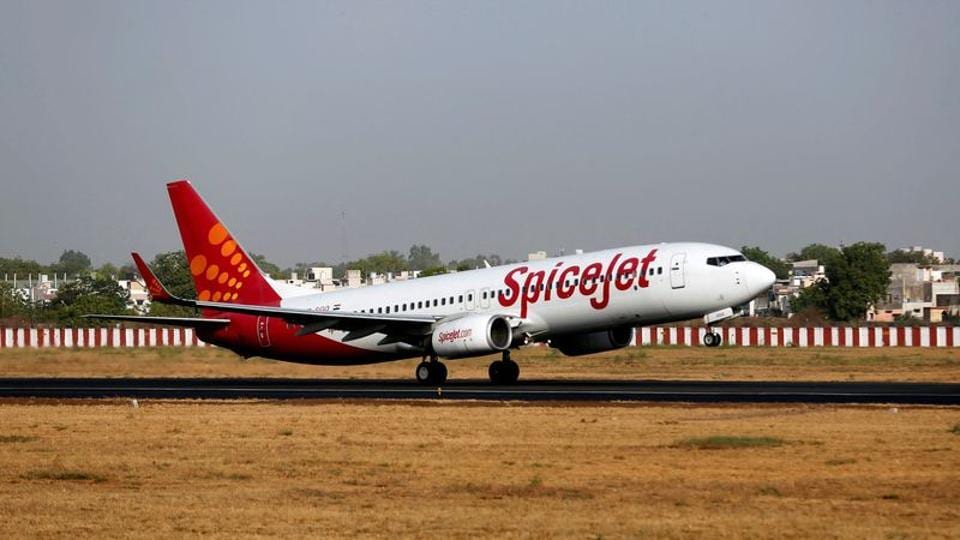
The move comes a week after DGCA issued a warning notice to SpiceJet, saying the budget carrier had failed to establish its services were safe, efficient and reliable after at least nine SpiceJet flights between May 1 and July 6 witnessed “incidents” as DGCA and the airline term them — these range from cracked windscreens to malfunctioning instruments.
The airline submitted its response to DGCA on July 25.
“In view of findings of various spot checks, inspections and the reply to the show cause notice submitted by M/s SpiceJet, for continued sustenance of safe and reliable air transport service, the number of departures of M/s SpiceJet are hereby restricted to 50% of the number of departures approved under Summer Schedule 2022 for a period 8 weeks from the date of issue of this order...’ DGCA’s order read.
It also said the airline will be subject to “enhanced surveillance”.
The move means SpiceJet will be allowed to fly a little over 2,000 flights from the approved number of 4,192. But the airline was already operating at around 50% of its approved schedule, which means flyers are unlikely to face cancellations.
According to DGCA data, the airline filed 4,192 departures (flights) per week in the summer schedule. “It was, however, operating only 50% (2,096) weekly flights (around 300 daily flights); the restriction will not have an impact on the airline operations or have any discomfort for the passengers,” an airline official said on condition of anonymity.
The regulator’s order comes just two days after VK Singh, the minister of state for civil aviation told Parliament that 53 checks on 48 aircraft over five days did not find any major violation of safety guidelines, but that the regulator asked the airline to use 10 of the aircraft only after “confirming” that “all reported defects/malfunctions are rectified.” SpiceJet, which has come in for criticism over the incidents, touted the minister’s reply as an endorsement of its safety record.
The instances reported in the last couple of months include diversions to different cities, air turn-backs and one case where a SpiceJet flight had to land in Karachi as a precaution. On July 6, pilots of a SpiceJet freighter plane to Chongking returned to Kolkata after the weather radar was found malfunctioning. The same day, the airline’s Delhi-Dubai flight was diverted to Karachi due to a malfunctioning fuel indicator and its Kandla-Mumbai flight made a priority landing in Maharashtra’s capital after cracks developed on its windshield mid-air. On July 2, a SpiceJet flight heading to Jabalpur returned to Delhi after the crew members observed smoke in the cabin at around 5,000 feet altitude.
SpiceJet spokesperson confirmed that the airline had received DGCA’s order. He said, “… we will act as per directions of the regulator. Due to the current lean travel season, SpiceJet like other airlines had already rescheduled its flight operations. Hence, there will be absolutely no impact on our flight operations.”
Although the summer schedule is for the period from March 27 to October 29, passenger traffic drops off sharply starting July.
“We want to reassure our passengers and travel partners that our flights will operate as per schedule in the coming days and weeks,” the spokesperson added, clarifying that there will be no flights cancelled as a consequence of this order.
During this period, DGCA clarified, any increase in the number of departures beyond 50% of the number of departures approved under Summer Schedule 2022, will be subject to the airline satisfying the regulator that it has sufficient technical support and financial resources to safely and efficiently undertake such enhanced capacity.
After reviewing the airline’s reply, DGCA stated that it has observed SpiceJet taking measures for arresting the trend of incidents, but that the “airline needs to sustain these efforts for safe and reliable air transport service.”
In its July 6 notice, DGCA pointed to the poor internal safety oversight and inadequate maintenance actions at the airline.
A financial assessment of the airline carried out by DGCA in September, 2021 revealed that SpiceJet is operating on ‘cash & carry’ and approved vendors are not being paid on regular basis leading to the shortage of spares and frequent invoking of minimum equipment list (MELs).
An MEL is a list of certified equipment issued by DGCA before flying. A certified aircraft maintenance engineer (AME), however, is allowed to release an aircraft for flying if certain listed equipment is not available.
Aviation expert Vipul Saxena said SpiceJet seems to have gotten off lightly, given that its operations are already at a low level compared to the schedule. “DGCA should have at least suspended SpiceJet’s air operator certificate (AOC) for minimum three months or until the airline gives its financial sustainability report. Such a suggestion should have been put forward by the financial audit committee in September 2021 itself.”


