
 E-Paper



No attempt to blame on anyone in Air India crash probe: Centre tells SC
The SC said that the object of such inquiries was to ascertain the cause of the tragedy and prevent its recurrence — not to fix responsibility or assign fault.

 Prefer HTon Google


New Delhi: The Centre on Thursday told the Supreme Court (SC) that there was “no attempt to apportion blame on anyone” in the ongoing investigation by the Aircraft Accident Investigation Board (AAIB) into the Air India Boeing 787 Dreamliner crash on June 12, which killed over 250 people.
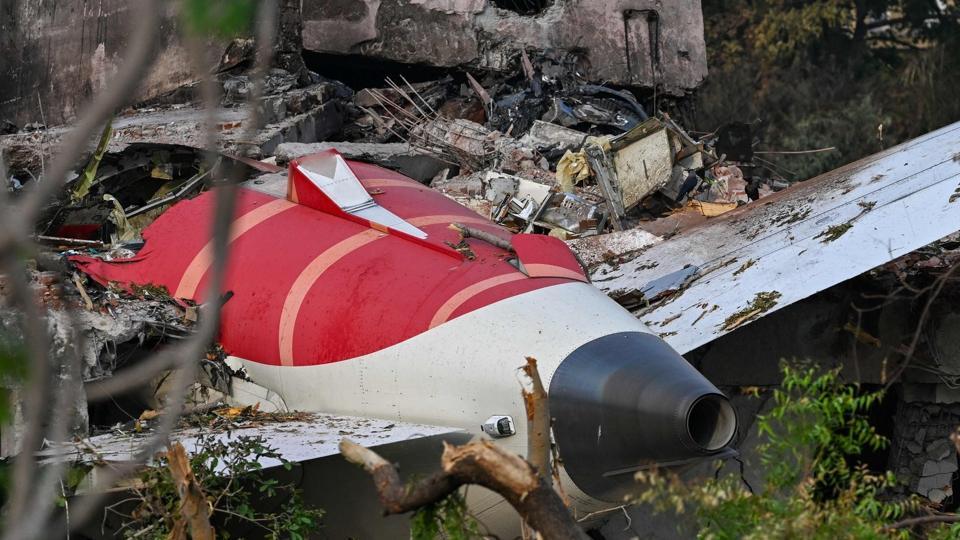
A bench of justices Surya Kant and Joymalya Bagchi also clarified that the object of such inquiries was to ascertain the cause of the tragedy and prevent its recurrence — not to fix responsibility or assign fault.
Appearing for the Centre, solicitor general Tushar Mehta said the investigation was being conducted in accordance with international civil aviation norms and that there existed a “clear regime” under the International Civil Aviation Organisation (ICAO) conventions.
“There is an international convention, a regime in place, and mandatory steps to be followed in cases of air crash investigations,” Mehta said.
“Suppose some foreigners were also victims. Those countries send their representatives for the investigation. There is no blame attributed to anyone. Since there was some misconception after the preliminary report, the ministry of civil aviation issued a press note clarifying that no one has been blamed,” he added.
Also Read: SC says pilots not to blame in Air India crash, agrees to consider fresh probe
The bench, while issuing notice on a petition filed by the father of Captain Sumeet Sabharwal – one of the pilots who died in the crash – underlined that the AAIB’s inquiry is not for “apportioning blame” but for identifying causes and issuing recommendations to ensure such incidents do not recur.
“The purpose of the AAIB inquiry is not to apportion blame. Its object is to clarify the cause and give recommendations so that the same does not happen again,” said the bench, granting the Centre time to file its detailed response.
Senior advocate Gopal Sankaranarayanan, appearing for the father of the deceased pilot and the Federation of Indian Pilots, however, contended that the investigation so far had not adhered to ICAO-mandated standards. “The regime that Mr. Mehta refers to has not been properly followed. That is the problem,” Sankaranarayanan said.
Advocate Prashant Bhushan, who appeared for another petitioner — NGO Safety Matters Foundation — contended that a court of inquiry, and not merely an AAIB probe, was required for an accident of such magnitude.
Bhushan submitted that several “systemic failures” in Boeing 787 aircraft had been reported since the crash and that continuing to operate the model without a comprehensive inquiry posed a risk to all passengers. “Everybody flying in these aircraft is at risk. The pilots’ association has said they need to be grounded immediately,” he said.
Mehta urged the court to allow the investigation to proceed unhindered, cautioning that “any interference might be counter-productive to the focused investigation that is ongoing.” He also urged restraint against creating unnecessary public alarm. “Let’s not unnecessarily create panic,” he said.
The bench responded that it did not wish to “pre-judge anything” and would examine the issue on the basis of the Centre’s forthcoming response. “It should not look like a fight between the airlines,” the court remarked before adjourning the matter.
The plea by Captain Sabharwal’s father and the Federation of Indian Pilots has sought a court-monitored investigation into the June 12 crash, arguing that the preliminary AAIB findings suggesting possible “human error” were defective and ignored evidence of a potential electrical or systems failure. The petition maintains that to infer pilot error without ruling out mechanical or software malfunction unfairly maligns the deceased cockpit crew and undermines public trust in the investigation.
The June 12 crash of Air India Flight AI-171, a Boeing 787 Dreamliner, killed over 250 people, including all 12 crew members and 19 people on the ground.
The AAIB led the inquiry into the tragedy, with participation from the US National Transportation Safety Board (NTSB), the UK Air Accidents Investigation Branch (AAIB), and Boeing representatives.
Also Read: Allegations of human error ‘deeply insensitive’: Pilots’ body after Air India crash report
On July 12, the preliminary report revealed that both engine fuel control switches moved from RUN to CUTOFF seconds after takeoff, resulting in a loss of thrust. The cockpit voice recorder captured one pilot questioning the fuel cutoff, with the other denying responsibility. The Ram Air Turbine (RAT), a backup power system, deployed automatically, and although one engine began to recover after the switches were returned to RUN, the aircraft could not regain altitude. A Mayday call was recorded moments before the crash.
Since then, a report from The Wall Street Journal alleged that the captain of the flight, Sumeet Sabharwal, might have switched off the power, even as the AAIB dismissed the charges and called the reporting “irresponsible.”
The petitioners have, however, flagged global reports of electrical anomalies in Boeing 787 aircraft and demanded an independent, expert-led inquiry to ensure accountability and aviation safety.
On November 7, the same bench had observed that the pilots “cannot be held responsible” for the tragedy and that no government report had suggested so. “This is an extremely unfortunate accident. But you should not carry the burden that your son is being blamed,” justice Surya Kant had told the petitioner. The bench had also emphasised that “whatever could be the reason for the tragedy, it is not the pilots.”
While hearing the Safety Matters Foundation’s plea in September, the bench had described as “unfortunate” the selective public disclosure of portions of the preliminary report that appeared to suggest pilot error, observing that families should not have to bear additional stigma after suffering loss.
The September petition sought an impartial and expert-led investigation and pointed to the presence of DGCA representatives on the AAIB panel as a potential conflict of interest. The court had then stressed that aviation accident inquiries must be “free, fair, impartial, and expeditious,” and that incomplete or selective disclosures risk distortion and reputational damage.



