
 E-Paper



Centre's 'White Paper on Economy' lists corruption cases during UPA govt. Check their status
The ‘White Paper’ said when the Modi government assumed office in 2014, the economy was in a "fragile state"; and there was widespread corruption.

 Prefer HTon Google


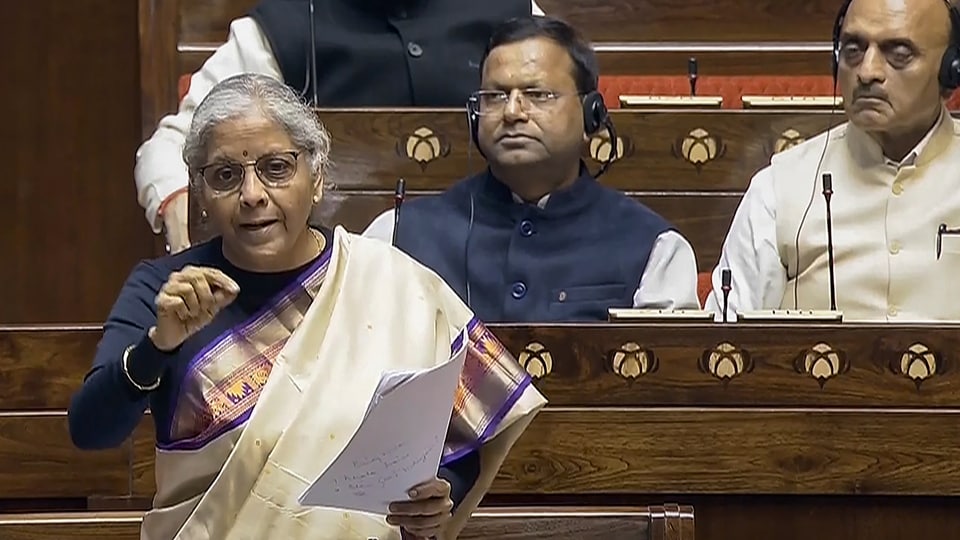
Union finance minister Nirmala Sitharaman on Thursday tabled the White Paper, shedding light on the extent of corruption that plagued the Indian economy during the UPA government's tenure. According to the 59-page document, corruption was pervasive across government activities, including procurement, allocation of natural resources, and regulatory approvals. It alleged that even procurements crucial for national security were tainted by corruption.
The white paper provided an overview of the current status of several high-profile corruption cases, and the government's efforts to address past wrongdoings. (Also Read: UPA inherited healthy economy, made it non-performing: Govt's ‘white paper’)
Coal Block allocation
The scandal, which involved irregularities in the allocation of coal blocks to private companies, resulted in an estimated loss of ₹1.86 lakh crore to the exchequer. The Supreme Court had cancelled 204 such allocations.
Currently, final reports have been filed in courts for 47 cases, with 10 cases under investigation and 14 cases resulting in convictions.
Commonwealth Games
The scandal involved various instances of corruption, mismanagement, and nepotism in the planning, construction, and execution of infrastructure projects related to the Games. It was alleged that government officials and contractors involved in the preparation for the Games engaged in corrupt practices, including inflated contracts, kickbacks, and embezzlement of funds. Some of the key areas where corruption was alleged include the construction of stadiums, infrastructure development, procurement of equipment and services, and contracts for various projects related to the Games.
Charge-sheets have been filed in eight cases, which are currently under trial in Delhi courts.
Amrit Kaal, Kartavya Kaal: Centre's white paper on economy in 10 points
2G Telecom
The 2G spectrum scam unfolded in 2008 which involved irregularities and corruption in the allocation of 2G (second-generation) telecom spectrum licenses by the government. The scandal erupted when it was revealed that the licenses for spectrum allocation were sold at prices far below their market value through a process that was allegedly rigged and manipulated. This resulted in significant revenue losses for the Indian government, estimated to be around ₹1.76 lakh crore (approximately $39 billion) according to the Comptroller and Auditor General of India (CAG).
The corruption cases are currently in the appellate court, according to the white paper.
Saradha Chit Fund: A ponzi scheme that collapsed in 2013, leaving millions of investors in financial distress. It involved the collapse of the Saradha Group, a conglomerate of companies primarily involved in operating collective investment schemes, including chit funds.
A chit fund is a type of savings scheme where a group of individuals comes together to pool their money into a fund, which is then managed by a chit fund company. The collected funds are distributed among the participants through periodic auctions or drawings, with one member receiving the total amount collected minus the company's commission.
The white paper doesn't provide the status of the cases.
INX Media Case
The case came to light in 2017 when the Central Bureau of Investigation (CBI) filed a First Information Report (FIR) against INX Media, alleging that it had received irregularities in foreign direct investment (FDI) approval from the Foreign Investment Promotion Board (FIPB) during the tenure of the Finance Minister P. Chidambaram. It was alleged that INX Media had received excess FDI beyond what was approved, and that there were irregularities in the process.
The investigation subsequently widened to include allegations of money laundering. It was alleged that kickbacks were paid to certain individuals in exchange for favourable treatment regarding the FDI approval.
The case is under trial.
Aircel-Maxis
The case emerged in 2011 when the Central Bureau of Investigation (CBI), India's premier investigative agency, initiated an inquiry into the Aircel-Maxis deal. It was alleged that the approval for the investment in Aircel by Maxis Communications Berhad, a Malaysian company, exceeded the prescribed limit and required clearance from the Foreign Investment Promotion Board (FIPB). One of the key figures implicated in the case is former Union Minister P. Chidambaram and his son Karti Chidambaram. It was alleged that Karti Chidambaram received kickbacks for facilitating the approval process for the Aircel-Maxis deal during his father's tenure as Finance Minister.
The case is under trial.
Antrix-Devas Deal
The deal involved the leasing of S-band spectrum by Antrix to Devas Multimedia for the development of satellite-based multimedia services. S-band spectrum is a valuable frequency range used for satellite communications. However, the deal came under scrutiny when it was alleged that there were irregularities in the allocation of scarce S-band spectrum and that Devas Multimedia had received preferential treatment in securing the rights to use the spectrum.
It was alleged that the agreement caused a huge loss to the Indian government in terms of potential revenue and that there were conflicts of interest involved in the deal. In 2011, the then Prime Minister of IndiaManmohan Singh ordered the cancellation of the agreement following recommendations by a high-level committee. The cancellation of the deal led to legal battles between Antrix and Devas Multimedia, with the latter seeking compensation for the termination of the contract.
Charge-sheet for the criminal offense has been filed.
Land for Jobs
In this case, individuals or groups are accused of obtaining pecuniary advantages, such as land or property, in exchange for arranging or securing jobs within the Group 'D' category of the Indian Railways. Group 'D' jobs typically include positions such as trackman, porter, helper, and other manual labor roles within the railway system.
Investigation is underway.
Allotment/Release of Prime Land:
These are multiple cases relating to release of prime land from acquisition in connivance with the private builders and allotment of industrial land to close associates.
After investigation, charge-sheets have been filed in trial courts.
Adarsh Housing Society Scam
The scandal came to light in 2010 when it was revealed that the Adarsh Housing Society, originally intended to provide housing for war widows and veterans of the Kargil War, had been allegedly usurped by politicians, bureaucrats, and military officers for personal gain.
Currently at the trial stage.
Augusta Westland helicopter scam
In 2010, the Indian government signed a contract with AugustaWestland, a subsidiary of Italian defense giant Leonardo S.p.A., to purchase 12 AW101 helicopters for the purpose of transporting VVIPs (Very Very Important Persons) such as the Prime Minister and the President of India.
However, allegations surfaced in 2012 that there were irregularities and kickbacks involved in the procurement process. It was alleged that middlemen had been used to facilitate the deal, and that bribes had been paid to Indian officials to secure the contract. In 2014, the Indian government cancelled the contract with Augusta Westland and initiated legal proceedings to recover the payments made to the company.
The white paper doesn't provide the status of the case.


