
 E-Paper



C’garh police recovered 21.5% of automatic weapons looted since 2001: Data
A total 516 automatic weapons were looted from the security forces between the years 2001 and 2024 in the Maoist-infested Bastar division


Raipur: The Chhattisgarh police have recovered only 21.5% of the automatic weapons looted by the Maoists since 2001 in the Bastar region, according to weapon recovery data from districts in the region, implying the challenge to the security forces in South Bastar.
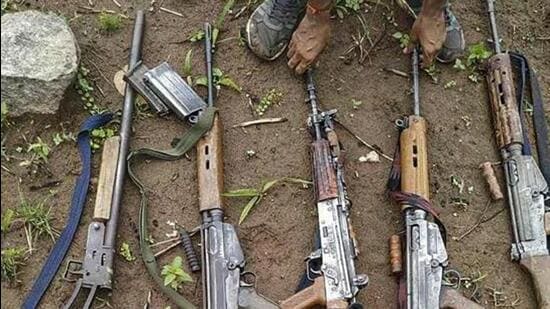
According to the data, of the total 516 automatic weapons looted from the security forces between the years 2001 and 2024 in the Maoist-infested Bastar division, the security forces managed to recover only 111 automatic weapons, which is around 21.5% of the total looted automatic weapons.
Officials said recovery of automatic weapons in the past six months of 2024 has been the highest in the last 20 years.
According to the officials privy to the development, most of these automatic weapons are with Battalion 1 and the Central Regional Company (CRC) of the Maoists, which generally move together and are localised near the Bijapur-Sukma border. All major attacks on security forces in South Bastar were allegedly planned and executed by Battalion number 1, which has around 170 armed cadres, officials said.
Since 2001, at least 184 AK-47s have been looted from the security forces, and only 23 were recovered by the security forces, the data stated. Similarly, the 159 self-loading rifles known as SLR were looted from the forces in the same timeframe, and police have recovered only 40 of them from Maoists. Of the total 168 INSAS rifles looted by Maoists, the security forces could only recover 37 between the years 2001 and 2024, the official data showed.
The forces were, however, also to recover close to 80% of the looted pistols—9 mm and 4 mm. The number of looted pistols was eight and six, respectively. The data showed that the security forces also recovered four light machine guns, 17 BGL launchers, and a total of 1,947 locally made weapons in a little over the last two decades.
The largest number of weapons looted in Bastar was on March 15, 2007, when Maoists looted 145 weapons, including 125 automatic rifles, after allegedly killing 55 police personnel at Rani Bodali in Bijapur. The lowest number of weapons looted in a year in the last two decades was three in 2001.
According to the data, in the last 10 years, most weapons were looted in 2017 during the Burkapal attack in Sukma, in which 25 security personnel were killed. In total, 35 weapons were looted by Maoists, of which 21 were AK-47 rifles. In 2020, the Maoists in two operations looted 32 weapons.
Senior police officials of Chhattisgarh believe that the presence of more than 400 automatic weapons looted from security forces by Maoists poses a challenge to wipe out Maoism from the state by 2026, as declared by home minister Amit Shah on August 24, 2024.
“There is a grave challenge in front of security forces in Bastar, with most of the automatic weapons being with battalion 1 and CRC (central regional company) of Maoists, which generally move together and are localised near the Bijapur-Sukma border and pose a great threat to security forces. Most of the big incidents and losses to security forces have been done by them,” said a senior police officer posted in the region.
He said the recovery and loot ratio of automatic weapons is an important parameter to monitor and gauge the success of anti-Maoist operations.
“This ratio has become positive (automatic weapons recovered more than automatic weapons lost) for the first time this year and shows dominance of the security forces in Bastar in the past 6 months,” the officer said.
The officer expressed concerns over the surrenders by left-wing extremists and said there has been hardly any Maoist surrender with automatic weapons.
Surrender with automatic weapons should be encouraged, and a higher monetary incentive or job incentive should be given to Maoists surrendering with automatic weapons, the officer added.
Another senior security official posted in Bastar for a long time said the Maoists are lacking ammunition for these automatic weapons, which helps security forces.
“There is no authentic confirmed information regarding in-house manufacturing of bullets of automatic weapons by Maoists yet. Hence, a shortage of ammunition is one of the main reasons that Maoists have to make a strategic retreat while in direct combat with security forces in the jungle,” the officer said.
The officer further claimed that earlier they were pilferage or leakage from weapon factories, but it has decreased tremendously in the last few years due to the active role of the Intelligence Bureau, the National Investigation Agency, and other intelligence agencies.
Experts believe that the recent recovery of automatic weapons is a positive sign for security forces.
“The recovery of automatic weapons increases with the increase in casualties among the senior Maoist cadres. The percentage of recovery of automatic weapons in the last six months is encouraging and also a positive sign for security forces,” said RK Vij, former special director general of police.
Inspector General of Police (IPS) (Bastar Range) Sundarraj P said that in the recent months police had a decisive operational outcome both in the form of neutralization of hardcore Maoist cadres as well as recovery of grade weapons.
“In general, the hardcore cadres, who normally carry regular graded weapons, manage to escape from the spot by using the lower-level cadres as shields. This was a major challenge for the security forces to reach up to the hideouts of the senior hard-core cadres during search operations, ultimately resulting in less apprehension of senior cadres and fewer recoveries of graded weapons. But now the table is turning around, and the security forces have adopted better fieldcraft and tactics to reach up to the core of the menace,” said Sundarraj P.
-kW0H-U20214218012MgB-250x250%40HT-Web.jpg)


