The Chhattisgarh government on Thursday tabled a bill in the Assembly aimed at preventing religious conversions carried out through force, inducement, fraud or misrepresentation, with stringent provisions including life imprisonment in cases of “mass conversion”.
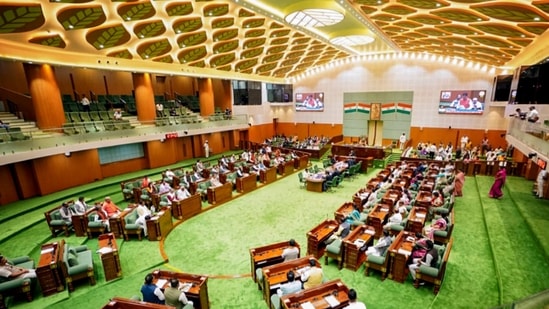
The Chhattisgarh Dharm Swatantraya Vidheyak, 2026 (Freedom of Religion Bill, 2026) was introduced by Deputy Chief Minister Vijay Sharma, who also holds the Home portfolio. The proposed law seeks to replace the Chhattisgarh Dharm Swatantraya Adhiniyam, 1968, which the state had adopted from Madhya Pradesh at the time of its formation in 2000.
The government said the existing law, which largely requires post-conversion intimation to the district magistrate, has become inadequate in the face of changing socio-economic conditions and advances in technology and communication.
The proposed law prohibits conversions through force, coercion, undue influence, allurement, misrepresentation, fraudulent means or marriage, including via digital platforms. It also bars any person from directly or indirectly facilitating such conversions.
The bill defines “allurement” broadly to include monetary benefits, gifts, employment, free education or medical facilities, promises of a better lifestyle or marriage, while “coercion” includes psychological pressure, threats and social boycott. Notably, “mass conversion” is defined as conversion of two or more persons in a single event.
{{/usCountry}}The bill defines “allurement” broadly to include monetary benefits, gifts, employment, free education or medical facilities, promises of a better lifestyle or marriage, while “coercion” includes psychological pressure, threats and social boycott. Notably, “mass conversion” is defined as conversion of two or more persons in a single event.
{{/usCountry}}All offences are cognisable and non-bailable, though reconversion to one’s ancestral religion is excluded.
The bill prescribes stringent punishments. General violations may attract imprisonment of not less than seven years, extendable to 10 years, along with a minimum fine of ₹5 lakh. In cases involving minors, women, persons with mental disabilities, or members of Scheduled Castes, Scheduled Tribes or Other Backward Classes, punishment may range from 10 to 20 years’ imprisonment with a minimum fine of ₹10 lakh.
Mass conversions may invite imprisonment of not less than 10 years, extendable to life, with fines of ₹25 lakh or more, while repeat offenders may face life imprisonment. Public servants found guilty could face imprisonment between 10 and 20 years along with a minimum fine of ₹10 lakh.
The bill also provides for compensation of up to ₹10 lakh to victims of illegal conversion.
The Opposition Congress, however, raised objections, seeking to hand over the bill to a ‘Select Committee’ (generally appointed to examine a specific bill or subject) for review, and boycotted the day’s proceedings after the Chair rejected their objection.
Leader of Opposition Charan Das Mahant said the bill “goes far beyond preventing forced conversions” and instead “creates an atmosphere of fear and surveillance around personal faith and choice.” He objected to the requirement of prior declaration and public disclosure of conversion details, calling it a “direct violation of the right to privacy.”
Senior Congress leader T.S. Singh Deo expressed concern over the definition of “mass conversion,” which includes conversion of two or more persons. “Clubbing even two individuals under ‘mass conversion’ and prescribing life imprisonment is excessive and legally disproportionate,” he said, urging the government to reconsider the penal provisions.
State Congress chief Deepak Baij alleged that the Bill could be used to “target minorities and social workers.” He said terms such as “allurement” and “undue influence” are “vague and open to interpretation,” which could lead to arbitrary action by authorities.
Several opposition MLAs also criticised the provision mandating public display of conversion notices at panchayat offices, tehsil offices and police stations. They argued that such disclosures could expose individuals to social pressure, intimidation, or violence.
Responding to the objections, Sharma accused the Congress of indulging in “vote bank politics” and said the move was necessitated by the prevailing situation in the state. Citing alleged incidents of religious conversions in Narayanpur and Kanker districts of Bastar, he said the government does not intend to curb voluntary conversions. “Any person can choose to convert by their own will. How can we stop that? The issue is whether conversions are taking place through inducement, force or misrepresentation,” Sharma said.
Referring to the earlier law enacted in 1968 during Congress rule in undivided Madhya Pradesh, he said the new bill is an extension and strengthening of the existing framework.
“Nearly 60 years have passed and circumstances have changed. It is surprising that the opposition is walking out on a law that they themselves enacted,” he said, while accusing the Congress of ignoring the potential impact of religious conversions on the state’s culture.
Various states, including Odisha, Madhya Pradesh, Uttar Pradesh, Gujarat, Arunachal Pradesh, Himachal Pradesh, Karnataka, Uttarakhand, and Tamil Nadu, have already enacted similar legislation prohibiting such coercive and unlawful conversions, Maharashtra Minister of State for Home Pankaj Bhoyar said on Wednesday.