E-Paper



Chill is on for Delhi: Jan days coldest in 19 years
The average maximum temperature in Delhi from the start of the year up to January 24 is 16.9 degrees Celsius, according to the IMD data.

 Prefer HTon Google


The bitter cold that has gripped Delhi through January, leading to several weeks where the maximum temperature has been unrelenting, has caused the second coldest spell of winter recorded in the city in more than seven decades, and the coldest start to a year in 19 years, data analysed by HT showed.
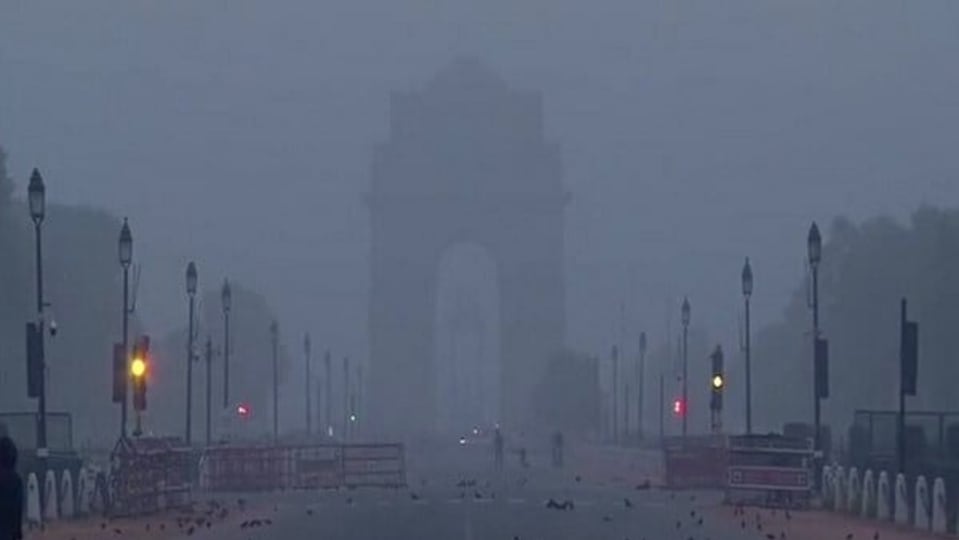
Delhi is also currently also in the middle of the sixth longest spell of consecutive days since 1951 where the day temperature has been significantly below levels considered normal, according to the India Meteorological Department’s (IMD) gridded data set. And if forecasts are any indication, this spell is only likely to become longer.

The average maximum temperature in Delhi from the start of the year up to January 24 is 16.9 degrees Celsius, according to the IMD data. Since 1951, only the January 1 to January 24 period in 2003, when the average was 15.8 degrees Celsius, was colder, it shows.
To be sure, the calculation for average temperature excludes the maximum temperature reading from Tuesday, which was 12.1 degrees Celsius at Delhi’s base weather station Safdarjung, according to IMD. Once the numbers from Tuesday is taken into account, it is likely to further bring down the average day temperature.
This average figure, however, masks what has been experienced by Delhiites in the past 11 days. The maximum temperature from January 14 has been less than normal by 25% or more on every day except the three-day period from January 19 to January 21. Four of these 11 days – January 14, January 15, January 18, and January 24 – had never been as cold in any year since 1951.
These series of records highlight what Delhi residents have been experiencing over the past several weeks – an unrelenting and continuous cold, which sees no relief particularly during the day as sunlight is sparse, if any, leading to gloomy and moisture-laden days which feel a lot colder than what even the thermostat indicates.
HT looked through the IMD data for all spells in history where the maximum temperature in the winter was 9% below than normal. There are only eight such spells including the current one. The longest ever cold day spell is 40 days long (November 23, 1997, to January 1, 1998). Others spells where the maximum temperature has dropped significantly were between 17 to 23 days long. The current one is definitely among the colder ones. The average maximum temperature of 15.8 degrees in the current spell is higher only than the average of 15.4 degrees in the 23-day long spell that started on December 31, 2002 and ended on January 22, 2003.
The only marginal relief from cold weather Delhi has right now is that average minimum temperature of 8.92 degrees this month has been 2.42 degrees higher than normal. From January 14, when maximum temperatures dropped significantly below normal, minimum temperature has been at least 0.7 degrees or 10% above normal. Since January 20, minimum temperature has been at least 2 degrees or 30% above normal.
Daytime temperatures are, however, not expected to improve this week either.
The reason for such a cold start to the year, experts say is a rare natural phenomenon – three intense western disturbances just this month have added a heavy amount of moisture in the air, leading to a dense layer of lower-level clouds which has stretched across the entire north India. This has led to heavy snowfall in the Himalayas over the weekend, causing an intense chill through most of the country with the mercury seen dropping in cities as far as away Mumbai and Hyderabad.
“We generally see this trend once every four to five years. This time around, we had three active western disturbances between January 3 and 5, January 6 to 9 and more recently, from January 21 till 23, each of which added plenty of moisture and have kept a thick layer of low-clouds hanging over the city,” said RK Jenamani, scientist at IMD.
Delhi has already recorded 12 days this month where the maximum temperature was below the 17-degree mark, highlighting the intensity of this cold spell, Jenamani pointed out. Delhi had more such days last in 2003 only, when the capital recorded 19 days in the month of January. “In recent years, this number was higher only in 2003, when Delhi recorded dense fog for the first three weeks,” said Jenamani. He added that Delhi’s maximum is expected to be around 14 degrees Celsius on Wednesday, it will hover around the 16-degree mark on Thursday and Friday.
To be sure, IMD’s gridded dataset covers an area bigger than the administrative boundaries of Delhi as it is based on boxes of latitude and longitude a degree apart. Data for Delhi published by IMD in its bulletins gives a more precise measurement of the temperature within Delhi, but is not publicly available for analysis as a historical time series.
“Normally, such a low [day temperature] towards the end of January is rare. December was warmer than usual this year though, and we have suddenly seen a flurry of western disturbances in January, with the last one fairly active and leading to instant impact,” said a met official.
Owing to these western disturbances, Delhi has already recorded its wettest January ever, with 88.2mm of rainfall received during the month so far.
IMD’s forecast for Republic Day at India Gate shows the maximum is expected to hover between 13 and 15 degrees Celsius, while the minimum will hover between 5 and 7 degrees Celsius.
Delhi’s air quality meanwhile remained in the ‘poor’ category on Tuesday, with an overall air quality index (AQI) of 234 recorded as per Central Pollution Control Board’s daily 4pm bulletin. It was 241 (poor) on Monday.