
 E-Paper



China must de-escalate all along LAC for normal ties with India
PLA deployed additional troops in Eastern Sector prior to 20th National Party Congress in October 2022. They have still not been deinducted.


Chief of Defence Staff General Anil Chauhan on Tuesday confirmed that there has been no de-escalation of the Chinese Army from India’s northern borders since May 2020 and the present situation was a challenge to the Indian Army. He said that negotiations are on with the PLA commanders to ensure that the Chinese troopers go back from Demchok (Charding Ninglung Nullah junction) and the Depsang Bulge area in East Ladakh.
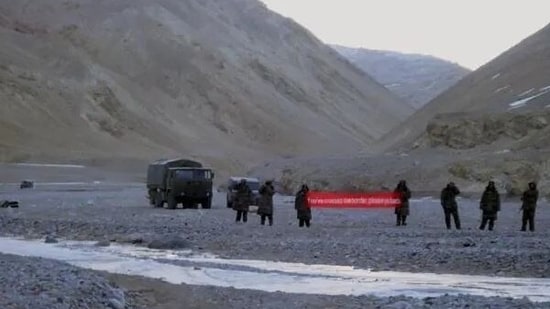
While the CDS was correct to say that PLA deployment in East Ladakh is at the same level as 2020, the same cannot be said about the eastern sector where three combined armed brigades (around 4500 men plus artillery and rockets in each CAB) were inducted by the PLA prior to the 20th National Party Congress of the Communist Party of China in October 2022. Fact is that the PLA reserve troops were inducted from Southern and Eastern Theatre commands into Western Theatre Command facing India to turn Tibet and Sinkiang aka Xinjiang province into military fortresses.
The initial assessment of China watchers was that the additional reserve troops across Siliguri Corridor and Arunachal Pradesh would be de-inducted after President Xi Jinping was appointed as head of China for the third time, but this analysis turned out to be false. Till today, the three CABs are deployed across India’s eastern sector with China and the current assessment is that the additional deployment is permanent.
The additional PLA deployments in the eastern sector including the Tawang region have also forced the Indian Army to pack up its eastern Army Command so that the Chinese military challenge is met if and when the red flag goes up. The Indian Army has also strengthened the entire sensitive Siliguri corridor with missile and rocket regiments to ensure that the military is not caught by surprise by sudden Chinese movement towards Jampheri Ridge across Torsa Nullah on Doklam plateau or through the Amu Chu valley into north Bengal.
Even though the PLA has tried to wriggle out of the disengagement from CNN junction and Depsang Bulge by calling it a legacy issue or prior to May 2020 aggression of Chinese Army, fact is that the ground situation in both these areas was changed by the Chinese in 2020 with additional troop deployments. By deploying additional troops in both Demchok and Depsang Bulge, the PLA have strengthened their positions on ground and are placing military hurdles to Indian Army patrols to these two areas.
Fact is that the India-China bilateral relations will remain abnormal, as External Affairs Minister S Jaishankar puts it, till such time Indian Army patrolling rights to CNN junction and Depsang Bulge are restored and there is de-escalation of PLA all along the 3488 km Line of Actual Control (LAC). This has been put across firmly to the Xi Jinping regime by the Narendra Modi government time and again. The ball is in the Chinese court.


