
 E-Paper



R-Day awardee Col Sofiya Qureshi cited in landmark case by top court much before Op Sindoor
In 2020, in a case that led to granting of Permanent Commission to women, Supreme Court specifically acknowledged her achievements

 Prefer HTon Google


Colonel Sofiya Qureshi, who gained prominence as the face of the Indian Army during the 2025 media briefings for Operation Sindoor against Pakistan-based terrorists, was named a recipient of the Vishisht Seva Medal (VSM) in the 2026 Republic Day honours list, for her “distinguished service of a high order”. But Operation Sindoor's press briefings, which made her a household name in an increasingly online world, was not her only claim to merit or fame.
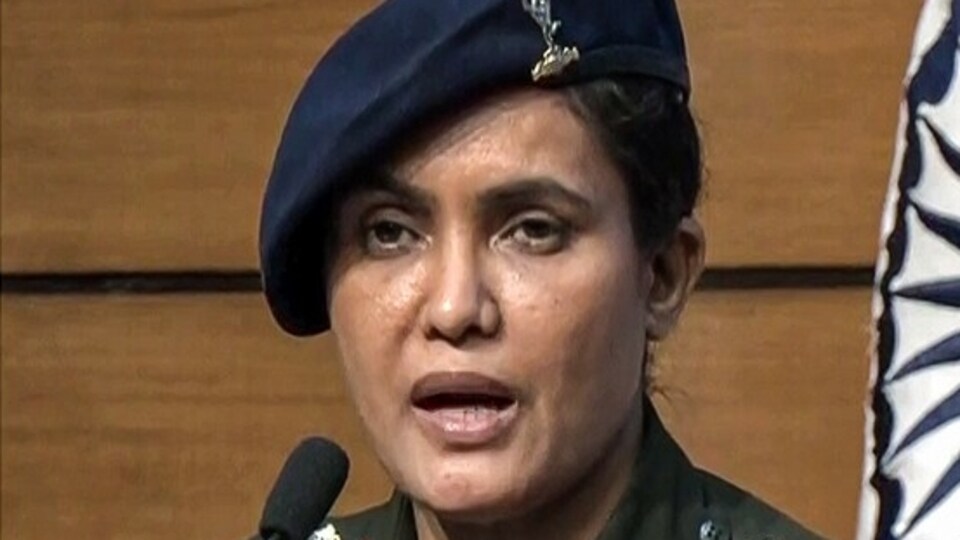
For instance, the R-Day medal recognition comes six years after the Supreme Court of India, in 2020, in a case that led to granting of Permanent Commission (PC) to women, specifically acknowledged her achievements. The SC bench highlighted that the blanket exclusion of women from command appointments was "indefensible".
It noted that Colonel Qureshi’s service demonstrated how female officers work “shoulder to shoulder with their male counterparts", rendering the government's previous arguments against women in such roles as unsustainable in law.
The court cited Colonel Qureshi as a specific example, noting that she was the first woman to lead an Indian Army contingent in a multinational military exercise. It highlighted her leadership of a 40-member contingent during ‘Exercise Force 18’ in 2016, which was the largest foreign military exercise hosted by India at the time.
Further, the bench cited her tenure in the United Nations Peacekeeping Operation in Congo beginning in 2006, where she was responsible for monitoring ceasefires and aiding humanitarian activities.
Controversy over comment about Colonel Qureshi, SC intervened
Despite her stellar record, tough, Colonel Qureshi did become the subject of a controversy due to some allegedly communal remarks made about the officer, who is Muslim, by a minister of Madhya Pradesh's BJP government.
The Supreme Court intervened too, for action against minister Vijay Shah. On January 19, the court directed the state government to decide within two weeks on granting sanction to prosecute Shah for his controversial comments.
This followed earlier reprimands from the Madhya Pradesh High Court, which had ordered an FIR against the minister for using "indecent language" during a public event in May 2025, days after Operation Sindoor brought her to the limelight.
The controversy extended up to the 2026 Republic Day celebrations, as the main opposition party, Congress, criticised the ruling BJP for “allowing” Shah to hoist the national flag at an event in Khandwa despite the pending legal proceedings.
Madhya Pradesh Congress chief Jitu Patwari claimed that the minister's continued presence in his post “challenged the Constitution”, while the BJP maintained that the matter remained sub-judice. Shah, when questioned by the media regarding these objections, declined to comment.
When Sofiya Qureshi became household name
Colonel Qureshi’s national profile rose most visibly during Operation Sindoor, when she and Wing Commander Vyomika Singh from the Indian Air Force (IAF) detailed the strikes conducted against terror targets in Pakistan and Pakistan-occupied Kashmir.
This operation followed the April 22 Pahalgam attack and, according to Colonel Qureshi, validated India's capability for “multi-domain precision warfare”. She was noted for her stoic demeanour and precise communication during the press briefings alongside foreign secretary Vikram Misri.
Born in 1974 to a military family in Vadodara, Gujarat, Colonel Qureshi’s grandfather served as a religious teacher in the army.
She graduated with a master’s degree in biochemistry from Maharaja Sayajirao University in 1997, and earned her commission from the Officers Training Academy (OTA), Chennai.
A member of the Corps of Signals, she earned a Commendation Card for her service during Operation Parakram** along the Punjab border in 2001. Then came commendation for her role in flood relief operations in Northeast India too.
What Col Qureshi said on bravery, gender, age
In a recent address at the ‘Chanakya Defence Dialogue’, Colonel Qureshi asserted that “bravery has no gender”, and described India's youth population as a “strategic reserve”.
She emphasised that modern warfare is increasingly fought with "bytes and bandwidths" rather than just bullets, urging the younger generation to focus on digital literacy and cyber firewalls.
Her career has included serving six years in Congo as a UN military observer, an experience she described as a “moment of pride”.
Following the 2025 conflict, she stated that Operation Sindoor brought a “paradigm shift in warfighting”.


