
 E-Paper



Colonel Sofiya Qureshi, face of Operation Sindoor against Pakistan, on R-Day honours list with Vishisht Seva Medal
The President of India approved 301 military decorations to armed forces and other personnel on Republic Day eve

 Prefer HTon Google


Colonel Sofiya Qureshi, who was a prominent face from the Indian side on a global stage during Operation Sindoor against Pakistan-based terrorists in 2025, has been named as a recipient of the Vishisht Seva Medal in the 2026 Republic Day honours list.
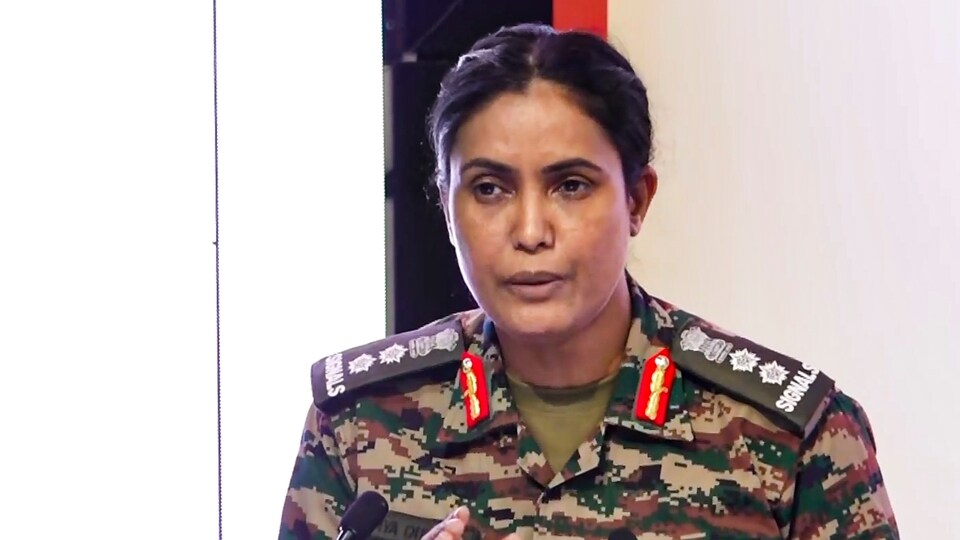
The award, conferred for “distinguished service of a high order”, marks another milestone for the officer. Follow Republic Day parade live updates here.
President Droupadi Murmu approved gallantry awards to 70 armed forces personnel, including six posthumous, on the eve of the 77th Republic Day. The President also approved 301 military decorations to armed forces and other personnel. These include 30 Param Vishisht Seva Medals; four Uttam Yudh Seva Medals; 56 Ati Vishisht Seva Medals; nine Yudh Seva Medals; two Bar to Sena Medals (Distinguished); 43 Sena Medals (Distinguished); eight Nao Sena Medals (Distinguished); 14 Vayu Sena Medals (Distinguished); and 135 Vishisht Seva Medals.
Also read | Astronaut Shubhanshu Shukla gets Ashok Chakra, India's highest peacetime military medal
Who is Colonel Sofiya Qureshi?
Colonel Qureshi in 2016 was the first woman officer to lead a contingent of the Indian Army in a multi-national military exercise. At ‘Exercise Force 18’, a mega-military drill involving ASEAN-Plus countries, she led a 40-member contingent focused on Humanitarian Mine Action (HMA).
Born in 1974 to a military family in Gujarat’s Vadodara, Col Qureshi graduated with a master’s in Biochemistry from Maharaja Sayajirao University in 1997. Her grandfather was a religious teacher in the army, a statement issued by the state government last year noted.
She earned her commission from the Officers Training Academy (OTA), Chennai, where she was noted for her exceptional performance in tactical strategy and signal intelligence.
She is known for her stoic demeanor and precise communication style, particularly during press briefings where she worked with another woman officer, Wing Commander Vyomika Singh of the Indian Air Force.
After Operation Sindoor, following foreign secretary Vikram Misri’s initial statement, Col Qureshi and Wing Commander Vyomika Singh shared the details of how the strikes were carried out.
Col Qureshi played a pivotal role during Operation Parakram along the Punjab border that had followed the Indian Parliament attack in December 2001. She earned a Commendation Card from the general officer commanding-in-chief (GOC-in-C) for her exemplary service.
Her leadership was also recognised during the flood relief operations in Northeast India, where her expertise in managing critical communications led to another commendation from the signal officer-in-chief (SO-in-C).
As part of the United Nations Peacekeeping Operations, she served in Congo for a six-year-tenure, beginning 2006. “Efforts to bring peace to conflict zones have been a moment of pride for me,” she said.


