E-Paper



Collegium clears five new names for Supreme Court
Headed by Chief Justice of India (CJI) Dhananjaya Y Chandrachud, the collegium also proposed the appointment of new chief justices for the high courts of Gauhati, Jharkhand, and Jammu & Kashmir and Ladakh.

 Prefer HTon Google


The Supreme Court collegium on Tuesday recommended five names for appointments in the top court, in a decision that apparently focussed on diversity on the bench and representation of some of the high courts that do not presently have judges in the highest court of the land.
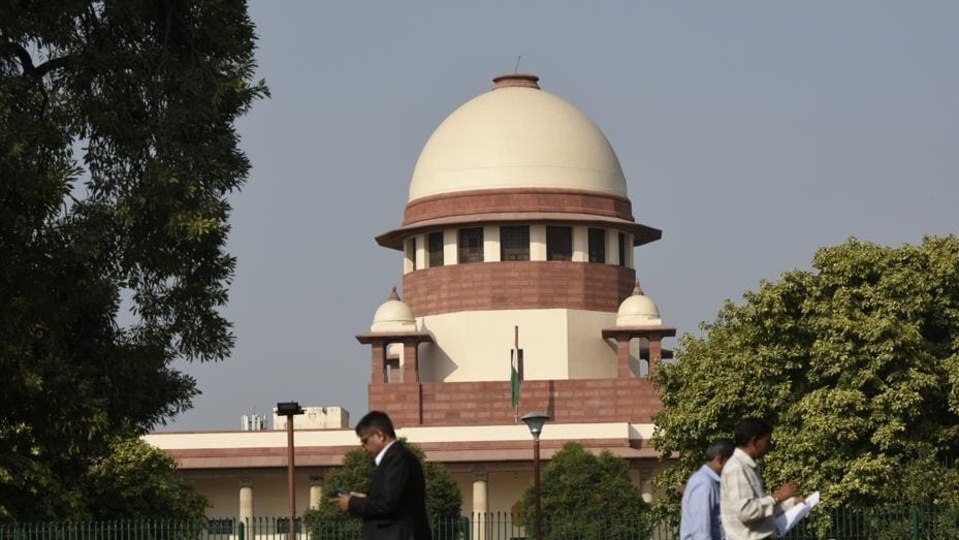
Headed by Chief Justice of India (CJI) Dhananjaya Y Chandrachud, the collegium also proposed the appointment of new chief justices for the high courts of Gauhati, Jharkhand, and Jammu & Kashmir and Ladakh.
For the Supreme Court, the collegium zeroed in on the names of three high court chief justices and two high court judges for elevation to the top court. They are justices Pankaj Mithal (Rajasthan high court chief justice), Sanjay Karol (Patna high court chief justice), PV Sanjay Kumar (Manipur high court chief justice), Ahsanuddin Amanullah (Patna high court judge), and Manoj Misra (Allahabad high court judge).
Apart from the CJI, the judges in the Supreme Court collegium are justices Sanjay Kishan Kaul, SA Nazeer, KM Joseph and MR Shah.
The five names recommended on Tuesday include three from the high courts which are unrepresented in the Supreme Court. At present, there are no judges in the top court with Himachal Pradesh (justice Karol), Telangana (justice Kumar) and Patna (justice Amanullah) as their parent high courts.
Currently, the top court is functioning with 28 judges as against its sanctioned strength of 34.
HT on Tuesday reported that the appointment of justice Dipankar Dutta as a judge of the Supreme Court on Monday is expected to set the ball rolling again for the collegium to make more recommendations for the top court.
The report added that the collegium was likely to meet during the week, and would muse over a judge from the Muslim community in the wake of the January 4 retirement of justice Nazeer, who is the lone Muslim judge in the Supreme Court at this time. Judges from some of the high courts, which are currently not represented in the apex court benches, are also expected to be considered, the report further said.
As recommended by the collegium on Tuesday, justice Amanullah is likely to become the only Muslim judge after the retirement of justice Nazeer early next month. None of these judges will become the CJI even as justice Misra will have the longest tenure among the five — till June 1, 2030.
According to people aware of the matter, due attention was given to factors such as seniority, diversity on the bench, and representation of different high courts while picking judges for the top court. “Several names in the zone of consideration were duly considered on an array of criteria including seniority, merit, representation of the high court etc. These five names were unanimously finalised by the five senior judges following a cordial meeting on Tuesday afternoon,” the people cited above said.
The recommendations will now be sent to the Union government for the final approval by the President. Under the memorandum of procedure (MoP) which guides the appointments to the Supreme Court and high courts, the government can only object once if it does not agree with the collegium’s recommendations, but is bound by the decision after the names are reiterated. The MoP, however, is silent on the time within which the appointments have to be notified by the government.
The recommendations closely follow an apparent climbdown of the government from its antagonistic stance against the judges’ selection mechanism as it notified justice Datta’s appointment more than two months after the collegium’s proposal.
Over the last two months, Union law minister Kiren Rijiju has strongly criticised the collegium system, calling it “opaque”, “alien to the Constitution” and the only system in the world where judges appoint people known to them.
On December 7, vice president Jagdeep Dhankar also commented on the system of selecting judges in his opening address after assuming the office of Rajya Sabha chairperson. Dhankhar said the Supreme Court’s 2015 judgment striking down the National Judicial Appointments Commission Act was a “glaring instance” of “severe compromise” of parliamentary sovereignty and disregard of the “mandate of the people”.
In an evident retort, a Supreme Court bench led by justice Kaul underlined that the Centre is bound to “observe the law of the land” and cannot “frustrate the entire system” of making judicial appointments just because it doesn’t like it. While hearing a case pertaining to delays in appointing judges, justice Kaul also disapproved of public stance by the government functionaries against the collegium system, and asked attorney general R Venkataramani to “advise them” to “exercise control”.
Apart from the names for the Supreme Court, the collegium also sent to the government its recommendations for appointments of three chief justices for the high courts. The recommendations are for justices Sanjaya Kumar Mishra (presently a judge at the Uttarakhand high court) as the chief justice of the Jharkhand high court, N Kotiswar Singh (presently a judge at the Gauhati high court) as the chief Justice of the high court of Jammu & Kashmir and Ladakh and K Vinod Chandran (presently a judge at the Kerala high court) to the Gauhati high court, where he will become the chief justice on retirement of incumbent chief justice RM Chaya on January 11, 2023.
The collegium, in making the recommendation for the chief justices, also factored in the representation of the high courts. Currently, no judge from Manipur (Kotiswar Singh), Orissa (Sanjay Kumar Mishra) or Kerala (Chandran) is heading any high court as its chief justice.
Even as the collegium has made fresh recommendations for high court chiefs, the Centre is yet to clear the September 28 proposals for the transfer of Orissa high court chief justice S Muralidhar to the Madras high court, and appointment of Orissa high court judge Jaswant Singh as the chief justice of the same high court.