
 E-Paper



India should bring back E10 option to ease consumer's concerns, says chief economic advisor
Nageswaran said, “Restoring a lower blend at the pumps, say, E10, alongside the option to buy E20, would calm most public concern."

 Prefer HTon Google


India should look to restore a lower blend of ethanol to ease public concerns and lower its overall use instead of increasing it, chief economic adviser V Anantha Nageswaran has said.
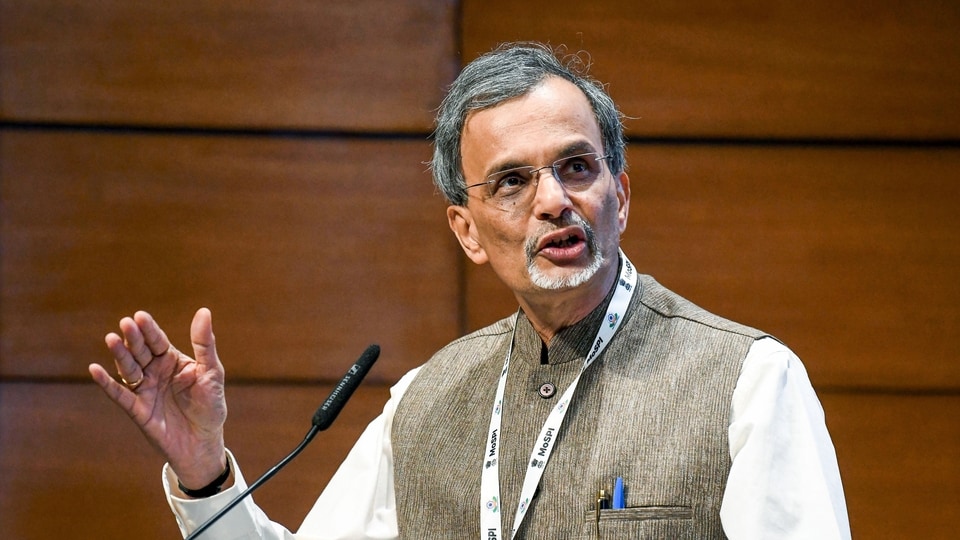
In an opinion piece for The Indian Express, Nageswaran said, “Restoring a lower blend at the pumps, say, E10, alongside the option to buy E20, would calm most public concern, lower total ethanol use instead of raising it, and protect the existing fleet while the retrofit programme catches up.” The piece was co-authored by Akash Poojari, a consultant in India's Department of Economic Affairs.
However, the piece clarified that there was no evidence pointing to damage to engines owing to E20. However, it said there were concerns regarding the impact of the 20 per cent ethanol blend on the older fleet of vehicles.
“India has roughly 75 to 80 million older two-wheelers ... older rubber seals that are not rated for ethanol are a separate problem ... retrofitting those seals... that way will take years,” it said.
Also Read | Trust in E20 fuel needs transparency
This comes amid concerns and criticism over ethanol-blended fuels such as E20 (20% ethanol, 80%petrol). Opposition parties and some consumer groups have criticised the rollout of E20 fuel, alleging that it can cause engine damage and expressing concerns about its suitability for older vehicles that were not designed to run on a 20% ethanol blend. However, oil companies, automakers and the Union government have defended the decision, saying the rollout had been facilitated after careful consideration and testing with various stakeholders.
Oil companies dismiss E20 contamination concerns
State-run oil companies last weeksaid nationwide tests of E20 petrol found no evidence of high moisture or chloride contamination. They said that according to the test reports, the fuel quality remained within prescribed limits across the supply chain, amid concerns over the suitability of blended fuel for older vehicles and its impact on mileage.
In a statement released on Friday (August 14), Indian Oil Corporation (IOC), Bharat Petroleum Corporation Ltd (BPCL) and Hindustan Petroleum Corporation Ltd (HPCL) said the Centre had prescribed specifications for chloride content in ethanol used for blending.
It said that high-frequency monitoring was implemented at refineries, distilleries, depots, terminals and retail outlets to ensure its compliance. The three companies said the exercise covered the entire supply chain and emphasised how fuel quality remains “consistently well within prescribed limits.”
Union ministers back fuel-blending policy
Union minister for petroleum and natural gas, Hardeep Singh Puri, backed the Centre's fuel-blending policy, while accusing certain people of attempting to “create some controversy” around it.
Puri too talked about intensified testing across fuel retail outlets, saying “crack teams” were formed. “What did they find? They found four cases out of 107,000 petrol pumps... So obviously, someone out there is trying to place some things out of context,” he said earlier this month.
Union minister Nitin Gadkari also addressed concerns regarding ethanol-blended fuels in a written reply in the recently concluded Monsoon Session of the Parliament. Gadkari said the transition was taken after successful validation of fuel systems, engine durability, drivability, material compatibility, emissions performance and consumer acceptance.
“The exhaust emissions meet the respective norms (i.e. BS VI vehicles meet the BSVI emission norms when tested with E20). The test for engine durability has not shown any failure due to E20. Tests covering parameters such as engine drivability, startability, corrosion resistance and material compatibility have confirmed that E20 is safe for use under prescribed standards,” his reply read.


