The Supreme Court Collegium headed by Chief Justice of India (CJI) DY Chandrachud on Tuesday recommended the names of five high court judges for appointment as top court judges.
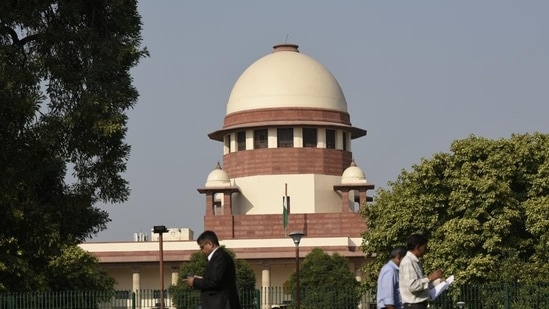
The five judges recommended to be appointed as Supreme Court judges include chief justice of the Rajasthan high court Justice Pankaj Mithal, chief justice of the Patna high court Justice Sanjay Karol, chief justice of the Manipur high Court Justice PV Sanjay Kumar, judge of the Patna high court Justice Ahsanuddin Amanullah and judge of the Allahabad high court Justice Manoj Misra.
The appointment of justice Dipankar Datta as a judge of the Supreme Court on Monday set the ball rolling again for the collegium to make more recommendations for the top court, following an apparent climbdown of the government from its antagonistic stance against the judges’ selection mechanism.
The Supreme Court collegium had decided not to make any fresh recommendation to the government for the appointment of judges in the top court until justice Datta’s name was signed off, according to people aware of the matter.
On Tuesday, the six-member collegium met for the first time after the Centre cleared Justice Datta for elevation as a judge of the Supreme Court to deliberate upon names to fill up the vacancies in the top court, news agency PTI reported.
{{/usCountry}}On Tuesday, the six-member collegium met for the first time after the Centre cleared Justice Datta for elevation as a judge of the Supreme Court to deliberate upon names to fill up the vacancies in the top court, news agency PTI reported.
{{/usCountry}}Justice SA Nazeer, the second-most senior judge who is a part of the collegium for both Supreme Court and high court judges, is retiring on January 4, and thus, the endeavour was to make some recommendations before his retirement.
If the latest recommendations are cleared by the Centre, the working strength of the Supreme Court will rise to 33.
Justice Datta’s name was recommended by the collegium headed by then CJI Uday Umesh Lalit on September 26. The government’s notification for his appointment came through only on December 11.
The gap between the recommendation and the appointment saw justice Chandrachud taking the helm as the CJI on November 9, coinciding with a relentless attack on the collegium system by law minister Kiren Rijiju.
When justice Chandrachud took over, the Supreme Court was short of seven out of 34 judges and his predecessor, CJI Lalit, had demitted office after a failed pursuit to push for more names. CJI Lalit, who had a brief tenure of 74 days, wanted the collegium to recommend four names for the Supreme Court, but he could not garner the consensus of his fellow judges on the procedural aspect of deliberation.