E-Paper



SC collegium likely to recommend more picks after new appointment
The Supreme Court collegium had decided not to make any fresh recommendation to the government for the appointment of judges in the top court until justice Datta’s name was signed off, according to people aware of the matter.

 Prefer HTon Google


The appointment of justice Dipankar Datta as a judge of the Supreme Court on Monday is expected to set the ball rolling again for the collegium to make more recommendations for the top court, following an apparent climbdown of the government from its antagonistic stance against the judges’ selection mechanism.
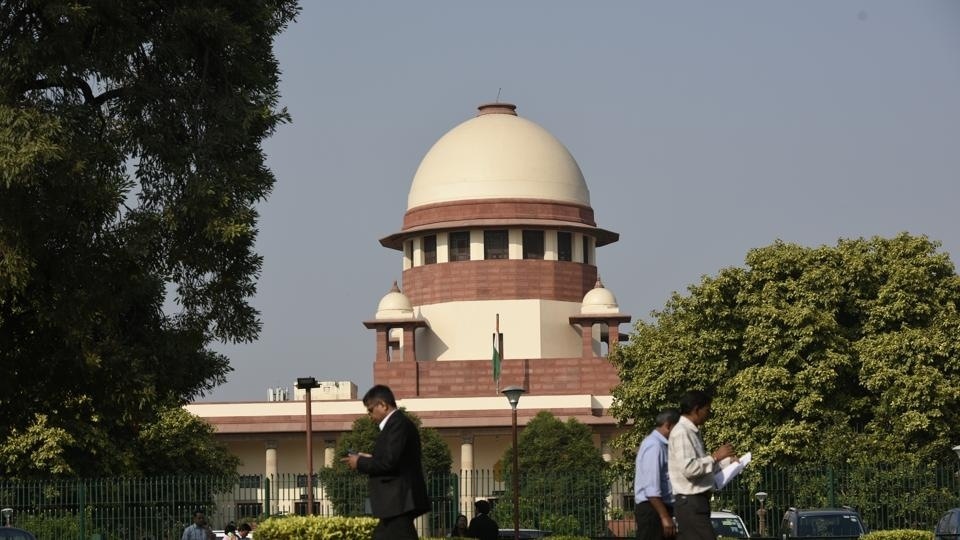
The Supreme Court collegium had decided not to make any fresh recommendation to the government for the appointment of judges in the top court until justice Datta’s name was signed off, according to people aware of the matter.
After withholding the recommendation for more than two months, the government okayed justice Datta’s name on Sunday, which is likely to lead off the first five judges in the collegium to meet this week and finalise more names.
The collegium is likely to meet more than once this week, given the fact that the Supreme Court shuts for the winter break starting December 19, and will reopen only on January 2, those in the know told HT.
Moreover, justice SA Nazeer, the second-most senior judge who is a part of the collegium for both Supreme Court and high court judges, is retiring on January 4, and thus, the endeavour is to make some recommendations before his retirement, they said, seeking anonymity.
Around 10 names, which include high court chief justices and senior judges of the high courts, are going to be in the pool of consideration for the elevation to the top court, the people said. Besides, the collegium may also muse over a judge from the Muslim community in the wake of the January 4 retirement of justice Nazeer, who is the lone Muslim judge in the Supreme Court at this time. Judges from some of the high courts, which are currently not represented in the apex court benches, are also expected to be considered.
With justice Datta’s appointment, the Supreme Court has a strength of 28 out of 34 judges. Next year will see another nine judges demitting office upon turning 65. Justice Chandrachud’s two-year tenure as the Chief Justice of India (CJI) and the head of the collegium till November 10, 2024, will witness a total of 19 vacancies arising in the top court.
Justice Datta’s name was recommended by the collegium headed by then CJI Uday Umesh Lalit on September 26. The government’s notification for his appointment came through only on December 11.
The gap between the recommendation and the appointment saw justice Chandrachud taking the helm as the CJI on November 9, coinciding with a relentless attack on the collegium system by law minister Kiren Rijiju.
When justice Chandrachud took over, the Supreme Court was short of seven out of 34 judges and his predecessor, CJI Lalit, had demitted office after a failed pursuit to push for more names. CJI Lalit, who had a brief tenure of 74 days, wanted the collegium to recommend four names for the Supreme Court, but he could not garner the consensus of his fellow judges on the procedural aspect of deliberation.
Justice Chandrachud’s tenure as the CJI commenced with a sign of turbulence in the relationship between the executive and the judiciary, with law minister Rijiju’s public stance on strong reproach of the collegium. Over the last two months, Rijiju has strongly criticised the collegium system, terming it “opaque”, “alien to the Constitution” and the only system in the world where judges appoint people who are known to them.
The comments from the minister came in while the Centre chose to sit over the recommendations for the appointment of justice Dutta, as well as transfer and appointment of some high court chief justices.
While Rijiju’s comments were tacitly responded to by CJI Chandrachud by making an appeal for “constitutional statesmanship” by the executive and the judiciary when he spoke at the Constitution Day function on November 25, justice Kaul disapproved of the law minister’s public stance during hearings on November 28, stressing that the Centre is bound to “observe the law of the land” and cannot “frustrate the entire system” of making judicial appointments just because it doesn’t like it.
Again, on December 8, the bench led by justice Kaul reminded the government that the latter bound to follow the collegium system “to a T” because that is the law of the land, adding there will be a “breakdown” and an “infinite battle” if everyone starts choosing which law to follow.
During the hearing on December 8, the top court had also taken cognisance of statements made by certain “government functionaries” criticising the collegium system, and asked attorney general R Venkataramani to “advise them” to “exercise control”.
This advice came a day after vice-president Jagdeep Dhankhar commented on the system of selecting judges for constitutional courts in the course of his opening address after assuming the office of Rajya Sabha chairperson on Wednesday. Dhankhar said the Supreme Court’s 2015 judgment striking down the National Judicial Appointments Commission Act was a “glaring instance” of “severe compromise” of parliamentary sovereignty and disregard of the “mandate of the people”.