E-Paper



Consensus eludes MC13 on PSH for food security
A permanent solution in the matter is the “topmost” priority issue for India at the MC13, else the so-called peace clause will continue in perpetuity

 Prefer HTon Google


New Delhi A consensus may elude the 13th ministerial conference (MC13) of World Trade Organisation, as several members including India have raised their demand beyond a permanent solution to public stockholding for food security, which includes allowing procurement of new crops, allowing exports from public stockholding and dispensing with cumbersome compliances, two officials aware of the details said.
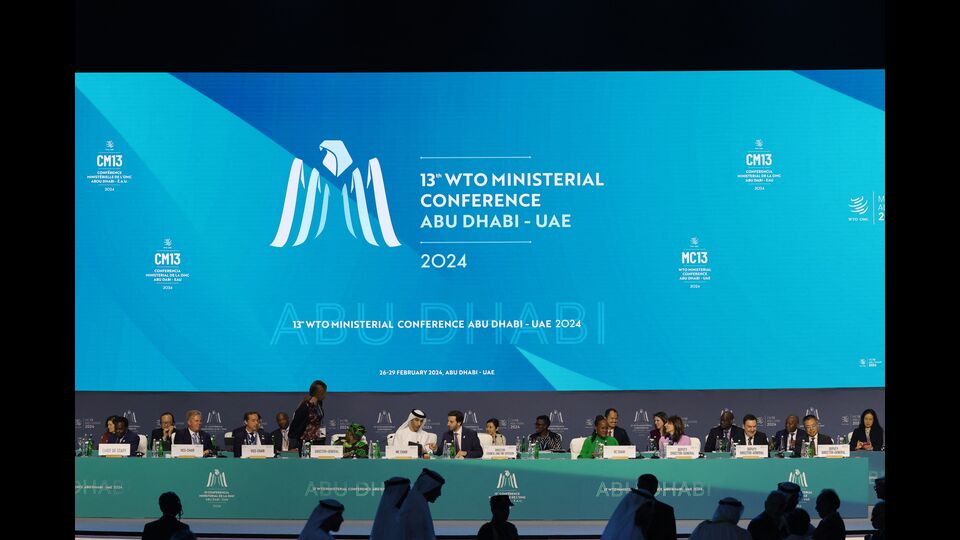
About 80 countries -- the G33 including India, African, Caribbean and Pacific countries, together called ACP – have asked for a permanent solution to public stockholding for food security, with additional exemptions over the existing peace clause, they said, requesting anonymity.
A permanent solution in the matter is the “topmost” priority issue for India at the MC13, else the so-called peace clause will continue in perpetuity, they added. The peace clause is an interim arrangement giving flexibility to countries like India to procure grains from farmers at minimum support prices and build a stockpile to give subsidised or free rations to the poor.
The additional asks include legal certainty of public procurement for stockpiling food grains, allowing stockpiling of new crops, allowing exports of food grains from the public stockholding on government-to-government (G2G) basis, and reducing compliance burden of notifying related activities at the multilateral forum, a second official said. Other members of WTO, mainly developed nations, consider public stockholding as subsidies inimical to fair trade.
India is unlikely to compromise on its food grain procurement system in order to support over 810 million poor people, whom free rations are given though these stockpiles. The mechanism also ensures that Indian farmers -- mostly small and marginal cultivators with tiny landholdings -- are protected from the vagaries of the commodity market by guaranteeing a fair return for their produce, they said.
“Developed countries, however, consider it a trade-distorting mechanism because the government purchases food grains from farmers at administered rates, which are higher than the market rates,” the first official said. WTO rules limit the subsidy that can be provided to farmers while undertaking procurements of food grains.
The G33 wants to improved the ministerial decision adopted at the Bali ministerial (MC9) in December 2013, where members agreed to negotiate a permanent solution on this issue by the MC11, and in the interim, they agreed to exercise due restraint (also called the peace clause) in raising disputes in respect to public stockholding instituted before December 7, 2013, even if countries exceeded their permissible limits.
“After a firm stand taken by (the then commerce minister) Nirmala Sitharaman on this matter at the WTO, its general council (GC) in November 2014 extended the peace clause in perpetuity until a permanent solution is agreed and adopted. The MC10 at Nairobi endorsed the GC decision. However, no outcome was achieved on this matter in subsequent ministerial (MC11) at Buenos Aires and (MC12) at Geneva,” the official said.
While the status quo is still maintained and public stockholding cannot be disputed, India wants the interim arrangement must first be made a permanent clause of the Agreement on Agriculture (AoA) before taking up any other farm-related issues, he added.
Commerce minister Piyush Goyal on Monday affirmed India’s stand in a written communique to the WTO. “I re-emphasize that the development agenda would remain incomplete without a permanent solution on Public Stockholding for food security purposes which is directly related to achieving Sustainable Development Goal of Zero Hunger by 2030,” it said.
WTO adopts new rules facilitating trade in services
WTO on Tuesday adopted new rules facilitating trade in services, also called Services Domestic Regulations (SDR). India initially opposed it as decision of a group of countries ignoring the spirit of multilateralism, but it finally agreed after the group agreed to extend the same benefit to all members unconditionally. It will facilitate the process of recognising educational and other qualifications of professionals – such as doctors and IT professionals -- across the countries.