E-Paper



Construction, demolition waste management: Delhi makes strides but gaps remain
Delhi's construction and demolition waste processing sector has been featured among 'best practices' that can be replicated in other metropolitan cities.

 Prefer HTon Google


New Delhi: India generates an estimated 150 million tons of construction and demolition (C&D) waste every year but the recycling capacity is just around 1 per cent of the waste, an analysis by the Centre for Science and Environment (CSE) shows.
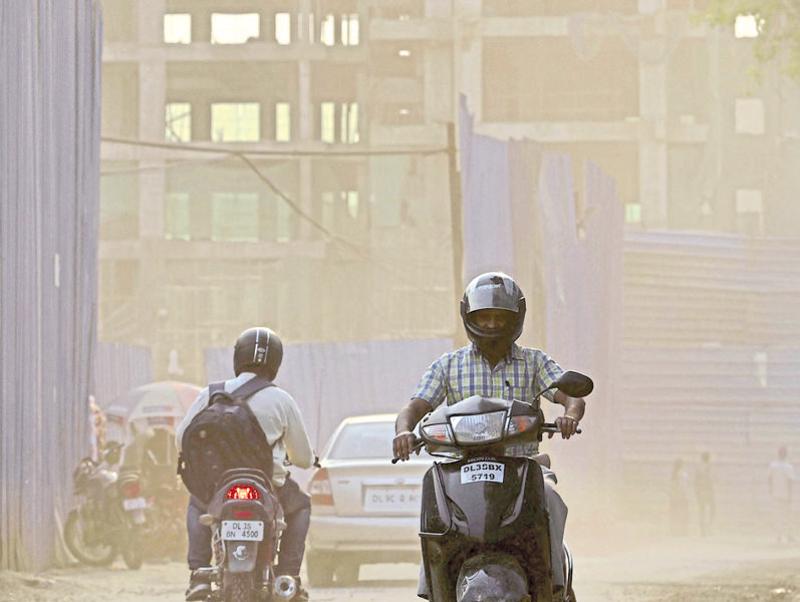
Unlike the relatively poor management of other kinds of municipal solid waste amid a consistently poor show in the annual Swachh Survekshan rankings, Delhi's construction and demolition waste processing sector has been featured among 'best practices' that can be replicated in other metropolitan cities.
Various estimates show that the rapidly expanding city generates around 4000-5000 metric tons of debris and construction waste every day and the local bodies of Delhi have already operationalized four C&D waste processing plants with a cumulative capacity of 4150 tons per day (TPD). Three more processing plants are in the pipeline on the outskirts of the city-- Rani Khera, Libaspur and Tehkhand-- which will further raise the daily processing capacity to 6650 (TPD). However, several concerns regarding the slow ‘uptake’ of recycled products, collection mechanisms and the quality of the recycled products have surfaced from time to time. Uptake refers to recycled products which are purchased either by private buyers or public agencies.
THE STRIDES DELHI HAS MADE
A senior official from the department of environment management (DEMS) of North Delhi Municipal Corporation, which operates the 2000 TPD plant in Burari-Jahangirpuri, said that the unified MCD was the first civic body in the country to set up a largescale C&D waste recycling plant. "Mega urban infrastructure projects were being undertaken before the 2010 Commonwealth games which led to the generation of a huge amount of C&D waste. The erstwhile MCD decided to start the plant in December 2009 with 500 TPD capacity which was later quadrupled to 2000 TPD in 2015. The recycled bricks from the plant have also been used in the construction of the new Supreme Court block," the official remarked.
Data from the North MCD shows that in the last 12 years the facility has processed more than 45 lakh tons of C&D waste which would otherwise have been dumped illegally in plots, drains, on the roadside and in the Yamuna floodplains. The corporation is now constructing a second 1000 TPD facility in north Delhi's rural belt of Ranikhera which is expected to be operationalized next year in 2022.
The C&D plants pulverize mixed construction waste and various fractions are recovered to produce aggregates, which in turn is converted to recycled products like ready mix concrete, cement bricks, hollow bricks, pavement blocks, kerb stones, concrete bricks and manufactured sand. The report titled “Another Brick off the Wall: Improving construction and demolition waste management in Indian cities” shows that as many as 53 cities were expected to set up recycling facilities by 2017 but only 13 cities have done this by 2020. Delhi hosts the largest number of recycling facilities (four) in India.
The five local bodies of the city- the three corporations, Delhi cantonment and NDMC- have designated a total of 212 sites where construction waste can be legally deposited by residential and small-scale generators. Bulk generators are expected to deposit waste directly to the processing plants. The north corporation has 104 designated sites for C&D waste collection (one per ward), the east MCD has 17, the south MCD has 65 such sites, the New Delhi Municipal Council has 25 sites and Delhi cantonment board has one C&D waste dumping station. A senior EDMC official said that in the current winter-pollution season, the corporation has attempted a different approach to improve collection. "The number of collection spots has been reduced from 61 last year to just 17 sites to ensure round the clock monitoring of sites which are mostly municipal stores and local maintenance offices. At the same time, we will push bulk generators to use the Shastri Park facility," EDMC official said.
Last week, the corporation has also decided to start an "on-demand" construction and demolition waste collection service for residents. The charges for waste transportation will be ₹453.78 per tonne from January 2022 but for relief during the current month charges of ₹440.65 per tonne will be levied. EDMC Mayor Shyam Sunder Aggarwal said that the residents can either safely deposit the construction waste in the Shastri park facility free of cost or they can pay the nominal transportation cost and the civic body will help them transport the waste. "People should realize that improper dumping of construction waste badly affects our air and the health of our family members. Compared to normal road dust, the construction waste is much more problematic," he added.
On 6th October 2021, the civic body had also announced punitive action will be taken against developers and builders who fail to deposit construction waste at the Shastri Park facility and their approved building plans could be cancelled.
CHALLENGES THAT REMAIN
While the city continues to progressively add to its processing capacity, the slow uptake of recycled products still remains a key concern. In 2016, the Delhi government had issued an advisory asking all public agencies to mandate 5 per cent use of such products for non-structural applications while examining and approving building plans. The cash-strapped municipal corporations are also increasingly relying on the relatively less expensive recycled products for maintenance works in the municipal wards.
A letter from the plant operators to the city's pollution control board in April 2021 shows that against the off-take target of 15.8 lakh tones of recycled products for all the government departments of Delhi which were fixed by the Ministry of Housing and Urban Affairs (MoHUA), 7.04 lakh tonnes of products were used. However, operators have stated in the communication that the uptake of products has improved. Cumulatively, the four plants processed a total of 12.16 lakh tonnes of construction waste in 2020-21 while 13.11 lakh tons of products were taken up by the government and private users in what is a marked improvement.
A senior SDMC official overseeing the construction waste unit stated that more incentives in the form of additional FAR, building certification or tax rebates should be provided to increase the uptake of recycled material in the private sector.