E-Paper



Countries plan major expansion in fossil fuels disregarding Paris goals: Report
The report said the collective failure of governments to curb fossil fuel production and lower global emissions means that future production needs to decline more steeply

 Prefer HTon Google


Countries are collectively planning fossil fuel production more than they did two years ago, with projected 2030 production exceeding levels consistent with limiting warming to 1.5 °C by over 120%, according to the Stockholm Environment Institute, the International Institute for Sustainable Development, and Climate Analytics report released on Monday.
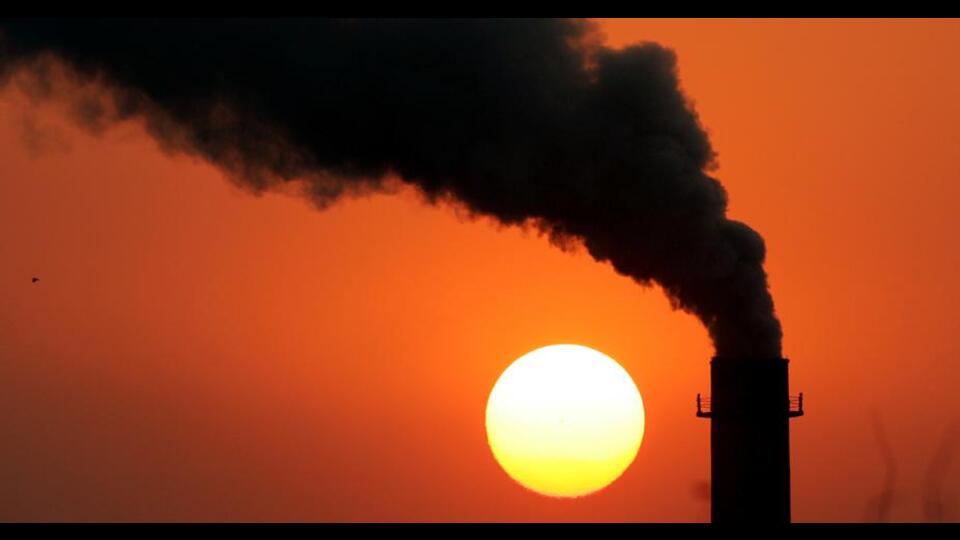
The Swedish non-profit research institute, Canadian think tank, and Berlin-based non-governmental organisation’s “2025 Production Gap Report” said governments now plan even higher levels of coal production to 2035 and gas production to 2050 than they did in 2023. Planned oil production also continues to increase.
The plans undermine Paris Agreement commitments and go against expectations that, under current policies, global demand for coal, oil, and gas will peak before 2030. At the 2023 United Nations Climate Change Conference (COP28) in Dubai, countries agreed to transition away from fossil fuels in a “just” and “equitable” manner. This included the phasing out of inefficient fossil fuel subsidies, or those that do not address energy poverty.
The report said the continued collective failure of governments to curb fossil fuel production and lower global emissions means that future production will need to decline more steeply to compensate. “Reaching net zero greenhouse gas emissions in the second half of the century, as the Paris Agreement calls for, will require cutting fossil fuel production and use to the very lowest levels possible,” the report said.
Fossil fuel reductions will require deliberate, coordinated policies to ensure a just transition. A few major fossil-fuel-producing countries have begun to align production plans with national and international climate goals. Most still have not.
The report said that, as governments submit their third round of nationally determined contributions (NDC) under the Paris Agreement, they must commit to reversing the continued expansion of global fossil fuel production, explicitly integrate plans for reducing production within wider energy transition efforts, and redouble cooperative efforts to ensure a just transition globally.
Derik Broekhoff, the report’s coordinating lead author, said governments in 2023 formally acknowledged the need to move away from fossil fuels to mitigate climate change, an obligation the International Court of Justice has now clearly emphasised.
He said their report makes clear that while many countries have committed to a clean energy transition, many others appear to be stuck using a fossil-fuel-dependent playbook, planning even more production than they were two years ago.
The report provides new analysis for 20 major fossil-fuel-producing countries responsible for about 80% of global fossil fuel production: Australia, Brazil, Canada, China, Colombia, Germany, India, Indonesia, Kazakhstan, Kuwait, Mexico, Nigeria, Norway, Qatar, the Russian Federation, Saudi Arabia, South Africa, the United Arab Emirates (UAE), the United Kingdom (UK), and the United States (US). It shows that 17 of the 20 countries still plan to increase production of at least one fossil fuel to 2030.
China, Germany, India, Indonesia, Kazakhstan, Kuwait, Nigeria, Qatar, Saudi Arabia, the UAE, and the US expect higher production of at least one fossil fuel in 2030 than they had planned in 2023.
Six of the 20 countries are developing domestic fossil fuel production aligned with national and global net-zero targets, up from four in 2023. China, the US, and the Russian Federation were responsible for over half of global extraction-based emissions from all 2022 fossil fuel production.
As the UN Climate Conference (COP30) approaches, experts are concerned that climate change is not being prioritised by parties, owing to factors including a lack of political consensus, a difficult geo-political situation, and the impact of unilateral trade measures.
The EU is trying to forge a consensus on an ambitious NDC. Germany, France, and Hungary have not yet come on board, according to those aware of the matter. An EU NDC may still come through ahead of COP30. Experts are concerned that the EU is not taking the leadership that it is normally expected to, mainly due to the rise of the right wing, which has a different set of priorities. China was expected to submit an economy-wide NDC.