India on Tuesday lambasted Pakistani defence minister Khwaja Asif's "we will get to war" remark over the suspended Indus Waters Treaty, saying that the comments were Islamabad's attempts to "cover its own failings and divert attention away from its human rights abuses."
New Delhi's response comes just a couple of days after Asif threatened to go to war against India if Pakistan's water security was in question. Earlier, India had said that its decision to keep the Indus Waters Treaty in abeyance would remain "unchanged".
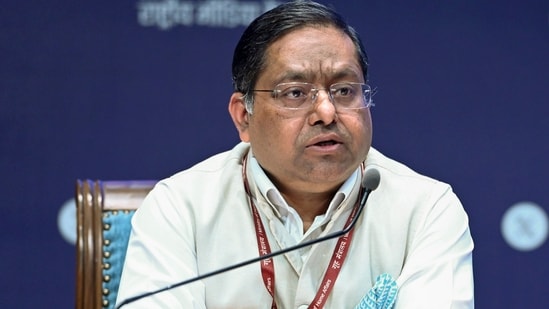
During a weekly press briefing on Tuesday, ministry of external affairs (MEA) spokesperson, Randhir Jaiswal, said, “Regarding the comments made by the Pakistani Defence Minister, we have seen reports on the matter. Such remarks are desperate attempts by Pakistan to cover up its own failings and divert attention away from its human rights abuses. We categorically reject these fabricated claims with the contempt they deserve.”
ALSO READ | Not a single drop of water will flow to Pakistan, says union minister on Indus Water Treaty
{{/usCountry}}ALSO READ | Not a single drop of water will flow to Pakistan, says union minister on Indus Water Treaty
{{/usCountry}}Jaiswal further referred to the ongoing situation in Pakistan-occupied Kashmir, saying that it is a "direct consequence of Pakistan's decades-long policy of systematic economic exploitation, denial of fundamental rights, and administrative oppression in areas under its illegal and forcible occupation."
The MEA spokesperson said that Pakistan has treated civilians in a condemnable manner, using extreme policy brutality, including the blocking of essential supplies and medicines, internet blackouts, and the use of lethal force against unarmed civilians.
"As you know, several people have lost their lives as a result. We hope that the international community will hold Pakistan accountable for its actions, misdeeds, and human rights abuses," Jaiswal added.
What Khwaja Asif said
Khwaja Asif made his statement against India amid the ongoing water crisis and domestic instability within Pakistan.
Following India's decision to continue keeping the Indus Waters Treaty in abeyance, Asif told ARY News on Saturday, "The moment we feel that our national security, and water is part of our national security, is being threatened, we will go to war against India. Definitely."
India had played the Indus Waters Treaty in abeyance in May last year as part of its five big actions against Pakistan after the deadly terrorist attack in Jammu and Kashmir's Pahalgam, which killed 26 people.
He claimed that if Islamabad found evidence that India was acting at an "alarming speed" to disrupt its water supplies, then Pakistan would also consider military action.
While Pakistan's water crisis has been attributed to gross mismanagement by experts, Asif sought to accuse New Delhi of "weaponising water," manipulating flows on the Chenab River, and withholding data.
Indus Waters Treaty
The Indus Waters Treaty was brokered by the World Bank as a mechanism for water-sharing and information exchange between India and Pakistan, for the use of the Indus River water and its five tributaries -- Sutlej, Beas, Ravi, Jhelum and Chenab.
The treaty allocates water from the Western rivers (Chenab, Jhelum, and Indus) to Pakistan and from the Eastern rivers (Ravi, Beas, and Sutlej) to India for unrestricted use.
India is also allowed to extract water from the western rivers for some non-consumptive, agricultural, domestic use and hydroelectric power generation.